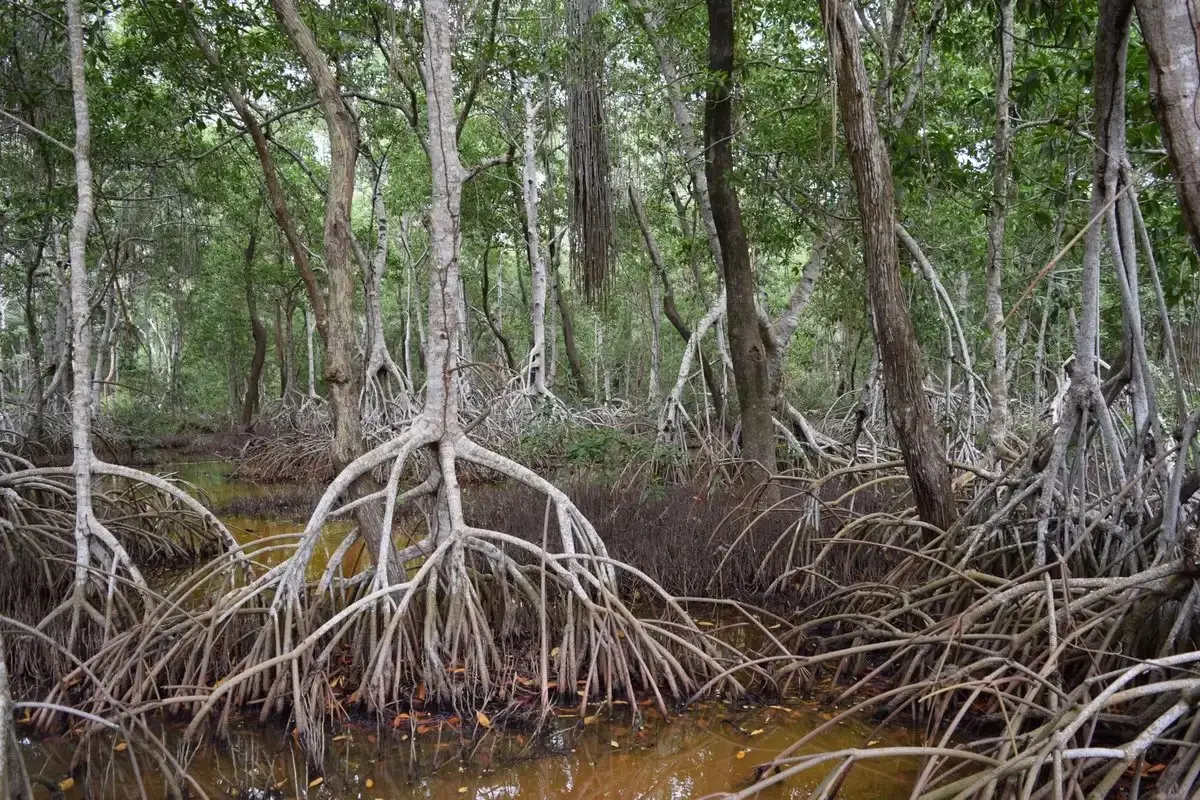

The Yucatán Peninsula, home to 60 percent of Mexico’s mangroves—approximately 4.8 million hectares—which provide vital ecological services for ecosystem function, is at a critical juncture for its conservation, stated Everardo Barba Macías, a researcher at El Colegio de la Frontera Sur (Ecosur).
Despite this outlook, he added, “We are at a very opportune moment to conserve and restore the wetlands we have; it is a collaborative effort between the government, citizens, and academia.”
He highlighted several initiatives for wetland protection, such as iNaturalist, EcoBank, Tsonot, and Cenoteando, which promote participatory monitoring and the recording of species through mobile device photography. Other examples include Big Seaweed Search MX, focused on sargassum, another threat to the coast, and the ACCIÓN Project, dedicated to mangrove restoration.
Mexico ranks second in the world in Ramsar Sites, with 142 wetlands of international importance, covering an area of more than 8.6 million hectares. The national inventory also identifies more than 6,000 wetland complexes that protect a wide range of biodiversity, including mangroves, marshes, and oases. Ramsar Sites are wetlands of international importance recognized by the Ramsar Convention (1971) for their ecological value, biodiversity, and provision of ecosystem services, encompassing swamps, mangroves, rivers, and protected lakes.
During his presentation as part of the outreach activities of the Research, Innovation, and Technological Development System of the State of Yucatán (Siidetey), the specialist explained that wetlands function as natural water filters; they retain sediments and pollutants; they act as natural barriers against storms and hurricanes; and they contribute to climate regulation by capturing atmospheric carbon.
Drawing on his more than 25 years of experience in projects such as the Atlas of Wetlands of the South-Southeast and Their Threats, as well as recent studies on social perception and carbon sequestration in urban wetlands in Tabasco, Barba Macías stated that southeastern Mexico concentrates approximately 30 percent of the country’s water resources and 16 percent of its wetlands, a ratio that underscores the importance of these ecosystems.
The College of the Southern Border (Ecosur) is part of a network of 18 institutions that support studies by the State System of Wetlands and Ecology (Siidetey), with the goal of strengthening the generation and dissemination of scientific knowledge in Yucatán.
In Yucatán alone, wetlands cover more than 600,000 hectares, including mangroves and marshes, which are of high ecological value but, at the same time, are under significant anthropogenic pressure—that is, their development or modification—through intensive human activity. Although protected in areas like Ría Lagartos and Celestún (coastal zones in the eastern part of the state), they suffer from pollution due to waste, unchecked urbanization, agro-industrial activities (pig farming), and changes in land use.
According to studies by the Yucatán Ministry of Sustainable Development (SDS), among the main threats to wetlands are pollution, since the high permeability of the local karst soil allows contamination from waste, agro-industry, and wastewater to easily affect the water table and coastal wetlands, and real estate development, which impacts wetland conservation because changes in land use reduce the extent of mangroves, vital for capturing carbon and protecting the coast, the SDS points out.

Source: jornada