
Brazil’s Carnival, known worldwide as the “festival of flesh” where transgression is welcome, began in 2016 with a strong political undertone, especially in Rio de Janeiro. The parades of the main samba schools not only celebrated Afro-Brazilian culture but also became platforms for national leaders, establishing a direct connection between popular spectacle and official discourse.
This approach was reflected in several key events that took place during the celebrations, from the controversial tribute to President Luiz Inácio Lula da Silva at Rio’s Sambadrome to the recognition of Indigenous leaders in São Paulo. The duality between revelry and the social agenda defined one of the most talked-about editions of the festival.
The opening of Rio de Janeiro’s Carnival, which began with the arrival of King Momo and the handing over of the keys to the city by Mayor Eduardo Paes, was immediately marked by controversy. The political scene wasn’t confined to speeches; it played out directly on the avenue.
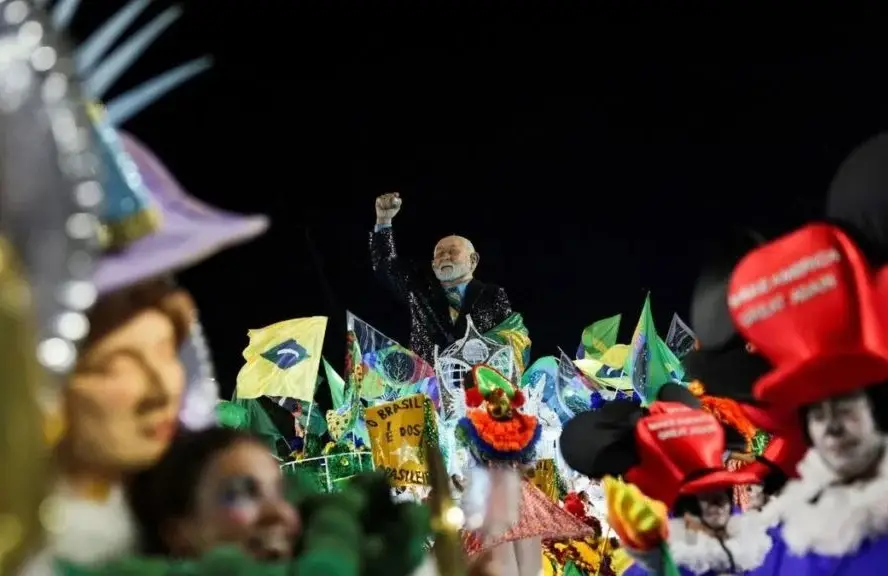
The Acadêmicos de Niterói samba school decided to pay tribute to Luiz Inácio Lula da Silva, the sitting president. This act was considered unprecedented, marking the first time a sitting president had been honored in the famous Sambadrome.
The parades of the 12 main samba schools, a fierce competition featuring giant floats, percussion, and scantily clad samba queens, were the highlight of the first night. Each school chooses a theme, often linked to Afro-Brazilian heritage or social and cultural issues.
Reactions and opposition criticism: The presentation of a float representing the Brazilian president provoked an immediate reaction from the opposition party, Partido Novo, which denounced the act as electoral propaganda.
Within the Acadêmicos de Niterói group, the presence of international and Brazilian sports figures was noted. The school’s presentation was accompanied by:
The party, defined as the start of the “festival of flesh” where transgression and unbridled revelry are permitted, attracted a huge crowd. The gates of the Sambadrome opened at 7:00 PM, and the crowd immediately flooded the stands.
Activity grew throughout the area; flags appeared in the hands of the fans, and anticipation filled the avenue for the first night of the parade. During the presentations of the Emperatriz Leopoldinense, Portela, and Prima Estação do Mangueira schools, the festive atmosphere was constant.
The day of parades was not without incident. In the early hours of yesterday morning, an accident overshadowed the event when a float belonging to the União Maricá samba school lost control and struck several workers at the Sambadrome.
Meanwhile, the Carnival euphoria also extended to downtown Rio de Janeiro. The carnival group Agytoê, founded in 2013, got the crowd dancing in Lapa. This group featured a live band, choreographed ballet, reggae rhythms, and plenty of axé, a musical genre that fuses Afro-Caribbean rhythms.
While Rio grappled with political controversy and the massive spectacle, the second and final day of the official 2026 Carnival parade in São Paulo, Brazil’s and South America’s largest city, focused on cultural diversity and social leadership.
The Anhembi Sambadrome reaffirmed its commitment to recognition during the parade, which took place between Saturday night and early Sunday morning, completing the 14 performances of the Special Group. The central themes of the tributes included:
The Minister of Indigenous Peoples, Sonia Guajajara.
Recognition of Brazilian theater and the artistic revolution driven by Black creators. Mazatlán Carnival: Tradition and Massive Attendance
Crossing borders, the 2026 Mazatlán International Carnival in Mexico also reached its peak. The festival, known for its vibrant presence on the Pacific coast, was highlighted by its first parade, titled “Arriba la Tambora” (Long Live the Drum).
This grand event featured 30 floats that traveled along the city’s main thoroughfares: from the Malecón (boardwalk) and Avenida del Mar to Avenida de los Deportes, near the Gran Acuario (Great Aquarium).
The magnitude of the event was demonstrated by the attendance figures for the pyrotechnic show, known as the “naval battle,” which depicts ships on the sea.
Source: cabinapeninsular