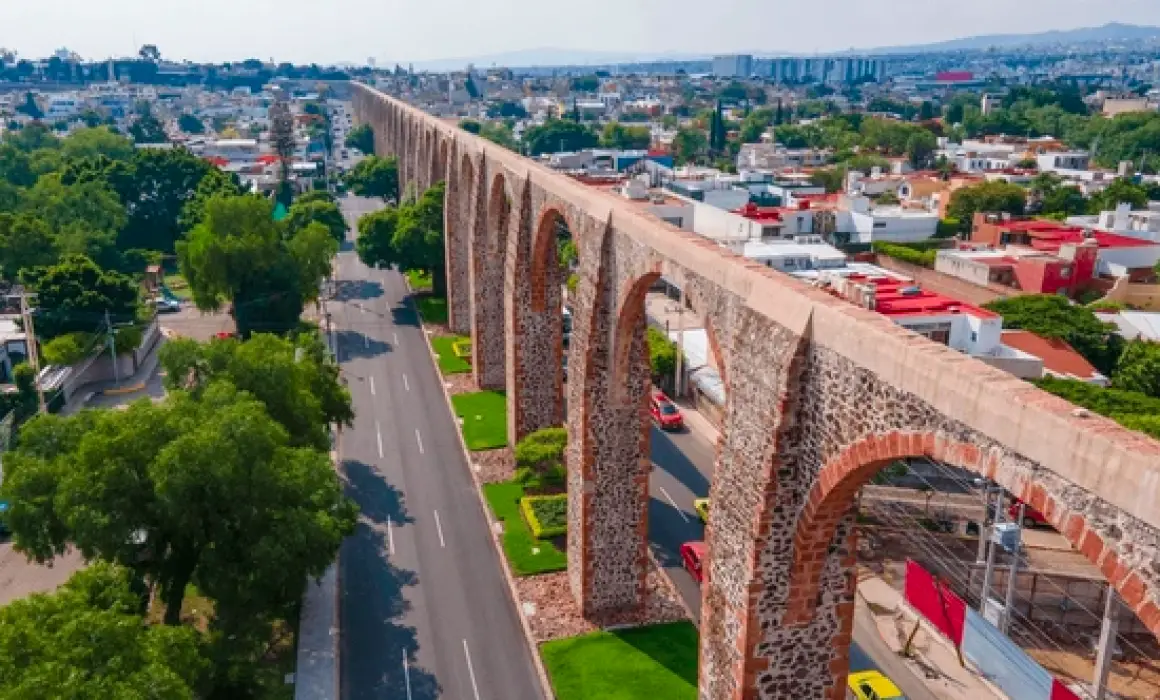

The Aqueduct of Querétaro commemorates its 300th anniversary as one of the most important landmarks of the state’s and the country’s monumental infrastructure. Begun in 1726, this masterpiece of colonial hydraulic engineering has been recognized as a UNESCO World Heritage Site since 1996, solidifying its status as an emblem of identity for the people of Querétaro.
Spanning 1,280 meters and featuring 74 arches, the Aqueduct, also known as the Aqueduct of the Arches, was the most significant hydraulic infrastructure project in New Spain at the time. Its design and functionality allowed for the city’s water supply, fostering its urban growth and improving the quality of life for its inhabitants.
The construction of this work was made possible thanks to the benefactor Don Juan Antonio de Urrutia y Arana, Marquis of Villa del Villar del Águila, whose support proved crucial to the development and prosperity of Querétaro. Three centuries after its construction, the aqueduct remains as a testament to the ingenuity, vision, and historical legacy that have shaped the city’s development.

Source: queretaro.quadratin