
The arrest in the United States of Fernando Luis Esquer Díaz, allegedly caught attempting to smuggle nearly 70 kilograms of methamphetamine into the country, has once again placed Baja California at the center of an uncomfortable debate: the possible infiltration of drug trafficking networks within public service structures.
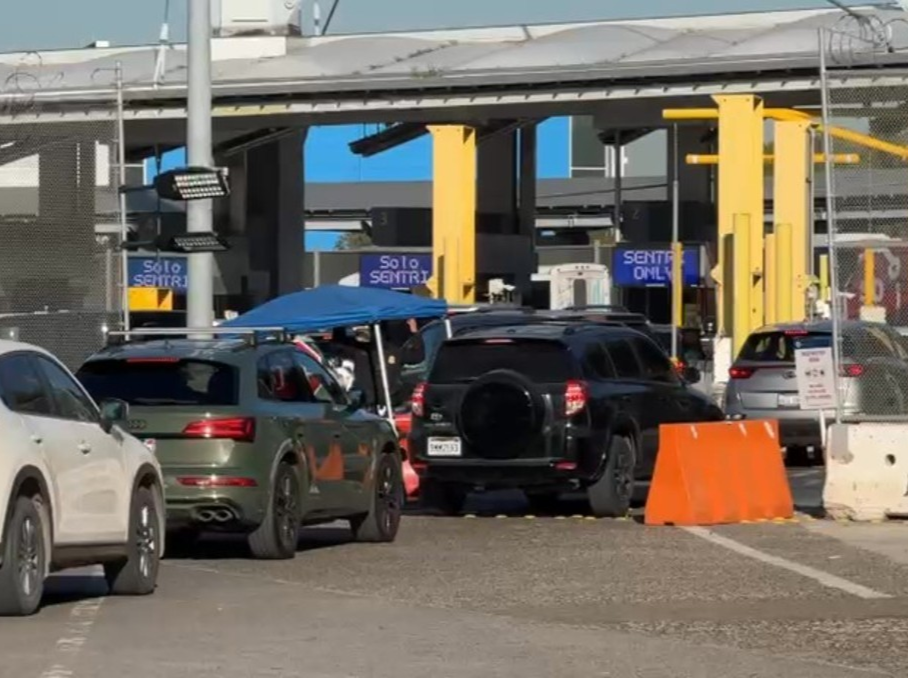
The former ISSSTECALI official was arrested by U.S. Customs and Border Protection agents as he attempted to cross through the Calexico Port of Entry. During a secondary inspection, authorities discovered a hidden shipment of methamphetamine, distributed in dozens of packages inside the vehicle he was driving.
The case is being prosecuted in U.S. federal courts on charges of narcotics importation, a crime that can carry decades in prison in that country.
However, this incident is far from an isolated case.
Officials Arrested Smuggling Drugs into the United States
In recent years, there have been several incidents in which Baja California public servants have been arrested at the border attempting to smuggle drugs into the United States.
One of the most impactful cases was that of Octavio Andree N., an official with the Baja California State Attorney General’s Office, arrested by U.S. authorities at the San Ysidro Port of Entry while attempting to smuggle approximately 30 kilograms of methamphetamine hidden in his vehicle.
Following his arrest, the state Attorney General’s Office confirmed his dismissal.
Similarly, U.S. authorities have arrested, on several occasions, members of the Baja California State Police Force for attempting to smuggle drugs into California, taking advantage of their status as law enforcement officers.
Among the documented cases is that of Mizraim Gascón Berumen, arrested in California while allegedly transporting methamphetamine and chemicals used in the production of synthetic drugs.
Another similar incident involved state agent Víctor Alfonso Moreno Mejía, arrested while attempting to smuggle cocaine into the United States.
The arrests have also targeted personnel connected to the justice system.
At various times, public prosecutors, ministerial police officers, and public servants assigned to investigative units have been investigated or arrested for links to criminal networks or for collaborating with organizations dedicated to drug trafficking and smuggling.
These cases have included leaks of operational information, protection of criminal networks, and direct participation in illicit activities, which has raised alarms within the security institutions themselves.
Suspicions about possible links between political actors and irregular financial networks have also extended to figures in the state political sphere.
Congresswoman and former mayor of Rosarito, Hilda Araceli Brown Figueredo, has been mentioned in financial investigations related to networks linked to the Sinaloa Cartel.
Reports disseminated in the media and financial intelligence analyses indicate that the politician was intercepted in the United States transporting significant amounts of cash, which generated suspicions of possible money laundering operations. Subsequently, her name appeared in sanctions and financial monitoring measures issued by the U.S. Department of the Treasury, in investigations related to economic networks associated with drug trafficking.
Adding to this scenario is another element that has sparked political speculation in Baja California: the cancellation or restriction of U.S. visas for individuals close to state power.
Among the most frequently mentioned cases is that of Carlos Torres Torres, husband of Governor Marina del Pilar Ávila Olmedo.
Although the U.S. government does not usually explain publicly the reasons behind these administrative decisions, diplomacy and security experts point out that visa revocations are typically applied when there are suspicions or investigations related to corruption, money laundering, or links to illicit activities.
At the municipal level, the political environment of the administration headed by Norma Bustamante Martínez has also been the subject of scrutiny in various public debates on corruption and resource management.
For security and intelligence analysts, the repeated cases of officials arrested with drugs at the border raise a troubling hypothesis.

Source: losangelespress