The National Commission of Natural Protected Areas (Conanp) of the Mexican government, through the Sierra Gorda Biosphere Reserve in the state of Guanajuato (RBSGG), reported the first-ever sighting of a jaguar (Panthera onca) within this Natural Protected Area (ANP).
In a statement, Conanp indicated that the jaguar sighting was obtained through camera trapping, a field study in which 75 camera traps were set up with the support of community monitors.
The statement noted that the sighting occurred in an area with extensive patches of continuous forest with “little anthropogenic disturbance, and is located in a corridor for felines,” connecting populations in Central and Eastern Mexico.
The National Commission of Natural Protected Areas (CONANP) indicated that the presence of the jaguar has been added to the list of priority species for conservation that inhabit the aforementioned Reserve, such as the green macaw, the Andean axolotl, the golden eagle, the black bear, and the rattlesnake.
The institution noted that with the presence of the jaguar, the sextet of felines present in Mexico is now complete: ocelot (Leopardus pardalis), margay (Leopardus wiedii), jaguar (Panthera onca), jaguarundi (Herpailurus yagouaroundi), bobcat (Lynx rufus), and puma (Puma concolor) observed in this protected natural area.
According to CONANP, these felines (ocelot, margay, jaguar, jaguarundi, bobcat, and puma) are key predators for the ecological balance of the ecosystems. They regulate herbivore populations, preventing overgrazing, maintaining biodiversity, forest health, and providing vital environmental services.
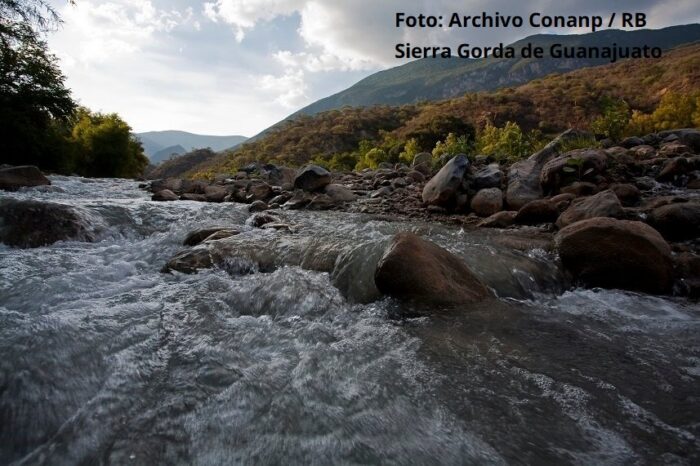
He specified that the Reserve is located in the northeast of the state and encompasses parts of the municipalities of Atarjea, Santa Catarina, San Luis de la Paz, Victoria, and Xichú. Its 236,882 hectares comprise 8.92% of the state’s total territory.
Its physiographic features, climate, soil, vegetation, and location allow for the development of a biodiverse mosaic within the protected natural area, made up of 2,894 species of fungi, flora, and fauna; of which 12 are endangered, 39 are threatened, and 51 are subject to special protection.
The National Commission of Natural Protected Areas (CONANP) noted that the discovery of the feline was made possible by a research project conducted between August 2024 and May 2025 by Juan Felipe Charre-Medellín and his collaborators, with funding from the Toyota Group and Mexico’s Secretariat of Science, Humanities, Technology and Innovation (SECIHTI). EFE
Source: aristeguinoticias