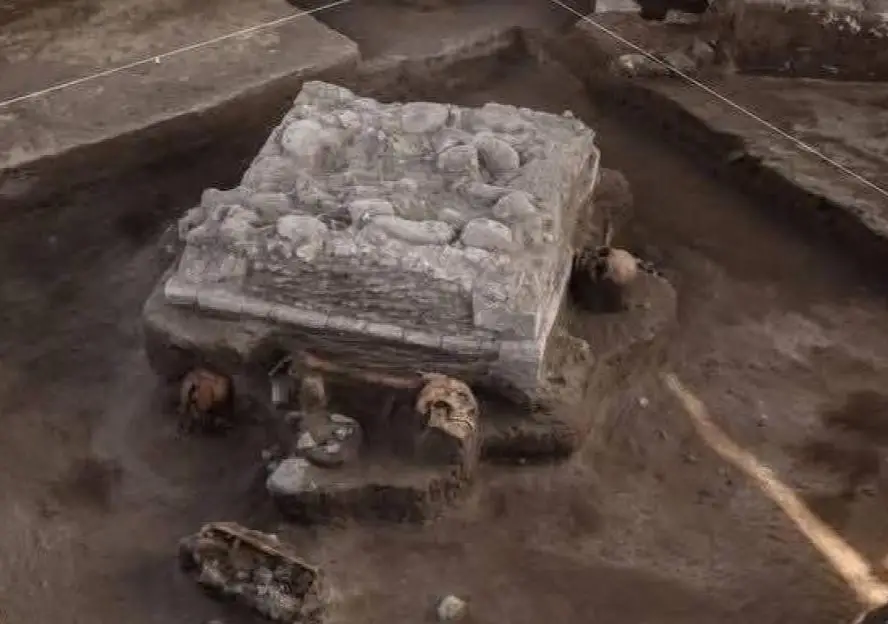

Specialists from the National Institute of Anthropology and History (INAH) discovered a pre-Hispanic structure, consisting of an altar and offerings, near the Tula Archaeological Zone in Hidalgo, during archaeological salvage work associated with the railway project between Mexico City and Querétaro.
INAH specialists indicated that the structure is a possible momoztli, a ceremonial altar associated with Mesoamerican ritual practices. According to preliminary information from the Ministry of Culture, the structure was accompanied by various offerings, which are currently being analyzed.
Authorities stated that the discovery could provide relevant information about the extent and organization of the ancient Toltec city of Tula, as well as its religious practices, possibly linked to the cult of Quetzalcoatl.
“Each discovery like this expands our knowledge of one of Mesoamerica’s great civilizations and reinforces a core tenet of our cultural policy: Mexico’s archaeological heritage is the memory of our people, and the State assumes the responsibility to investigate, safeguard, and transmit it to present and future generations,” stated the Secretary of Culture, Claudia Curiel de Icaza.
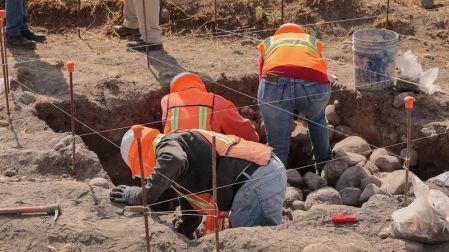
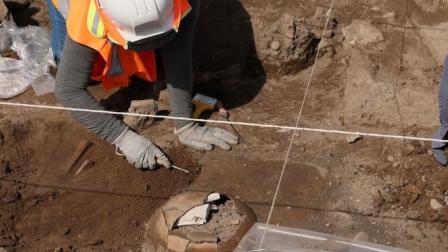
The archaeological team is currently conducting registration, documentation, and controlled excavation at the site. Based on these studies, it will be determined whether the remains can be preserved in their original location or if it will be necessary to adjust the route of the railway project.
The artifact, which was found during the construction of the Mexico City-Querétaro railway, likely corresponds to the Tollan phase of the ancient metropolis (900-1150 CE), reported the National Institute of Anthropology and History (INAH). It was found near the area known as Tula Chico, within the Tula Archaeological Monument Zone, 300 meters from the perimeter wall of the heritage site, during registration and excavation work on the right-of-way of Front 5, at the location identified as Site 17 (Tula), in the municipality of Tula, Hidalgo.
The coordinator of the archaeological salvage project, Víctor Francisco Heredia Guillén, reported that the altar measures approximately one meter on each side. Its construction system features a base of dressed stone and must have had at least three low sections, without steps. The first is a base of quarry stone, apparently andesite, with blocks no larger than 10 centimeters on the outer face; the second section also has a series of modular slabs of the same material, and the upper part is finished with some river stones and basalt rock.
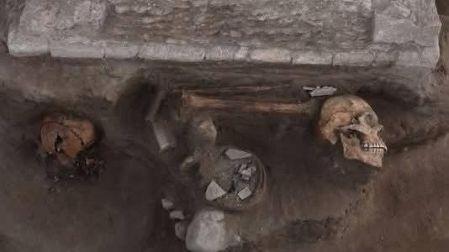
Offerings of human skeletal remains were found at the site, consisting of four skulls and long bones, possibly femurs. Ceramic vessels, obsidian fragments, and blades were also located.
The Mexico City-Querétaro train project involves work in several areas with archaeological potential, and therefore, ongoing monitoring operations are in place to protect cultural heritage.
Source: excelsior