
It wasn’t sudden, but rather a slow, almost orderly retreat, as if someone had given an instruction that everyone understood without needing to hear it spoken aloud. First came the patrols, then the rumors, then the messages on social media. And finally, the fear.
“Close up. Go inside. It’s very bad.”
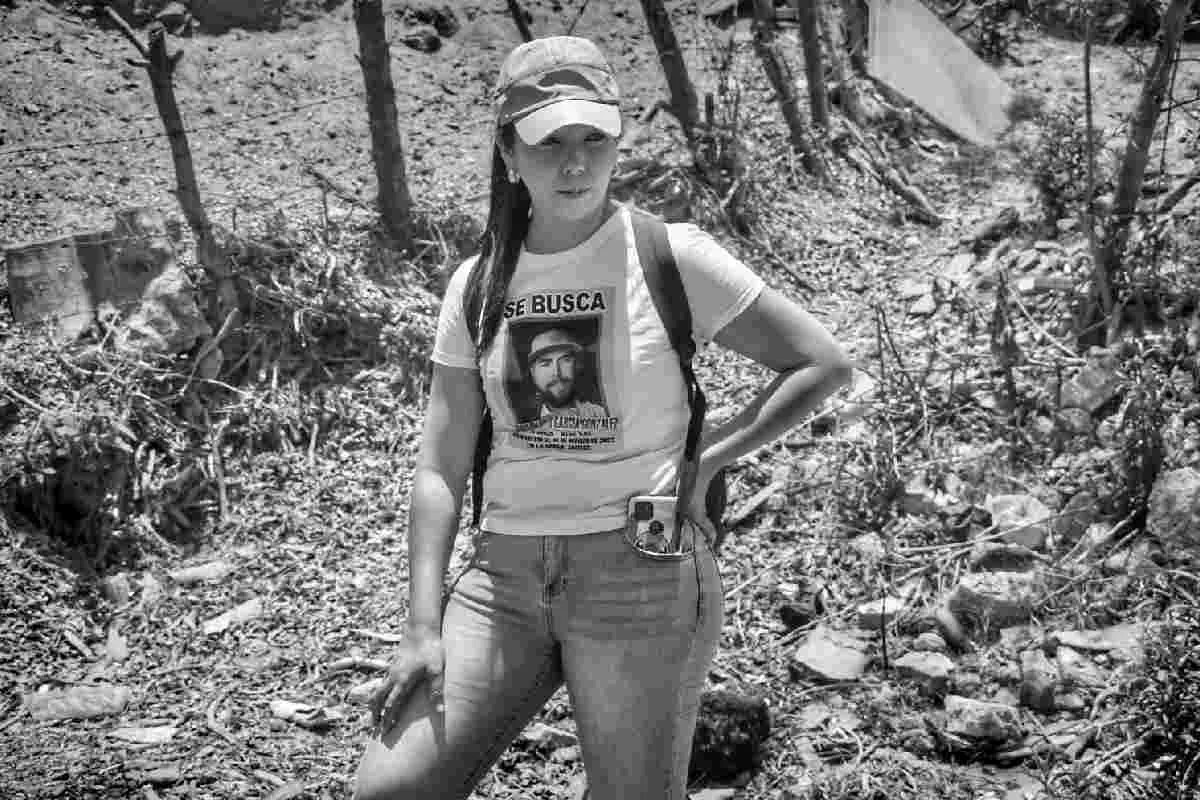
Elizabeth García—who has been searching for her brother, Jorge Alberto García González, since March 18, 2022—says she remembers it clearly. It was a Sunday, and she was working at a food stand when a family came running to warn her of what was already happening outside: rumors of shootings, blocked roads, burning vehicles. In a matter of minutes, the exits from the municipality—towards Guadalajara, towards Morelia, towards neighboring towns—were closed. La Barca, a municipality in Jalisco with about 40,000 inhabitants on the border with Michoacán, was cut off.
“By one in the afternoon, there was nobody left. No businesses open, no cars, no people. It was a ghost town.”
A month after February 22, when Nemesio Oseguera, alias “El Mencho,” was killed, the visible scene is different: the streets are full again, schools have reopened, businesses have raised their shutters. But normalcy is only superficial. Beneath it, fear remains, like an invisible layer that governs daily life.
“It seems calm, but it only seems that way,” says Elizabeth.
In La Barca, the violence isn’t always heard. Sometimes it’s simply seen.
Trucks parked next to a baseball field. Men brandishing weapons in broad daylight. Young people watching, observing, reporting.
“There’s always been this (drug trafficking), but it wasn’t like this before,” says Elizabeth. “Now you see them openly. They’re more brazen.”
They are the “lookouts,” the hawks. For a few days they hid after the violent events of the 22nd. But they returned. And their return, rather than reassuring, only served to confirm who was in charge and impose a veil of silence on the town.
“It seems like there’s no authority. Yes, there’s an army, yes, there are patrols, but they carry on as if nothing’s wrong.”
The scene is repeated in different neighborhoods: armed presence in broad daylight, constant surveillance, territorial control exercised without open confrontation. A violence that doesn’t need to erupt to make itself felt.
Between January 1, 2025, and March 23, 2026, 1,074 reports of disappearances were registered throughout Jalisco, according to the National Registry of Missing and Unlocated Persons. More than half—557 people—remain missing. In municipalities like Guadalajara, Zapopan, and Tlajomulco, the cases number in the hundreds.
In La Barca, during that same period, there are only two formal reports.
“There are no reports here,” says Elizabeth. “But there are missing people. Many more. I couldn’t give you an exact number, but there are at least dozens.”
There are no local search groups. There are no brigades. There are no posters on poles or walls. There are no searches in the field.
Read more: From “El Mencho” to Beltrán Leyva: these are the main drug lords killed in military operations
There are, apparently, no missing people. They don’t exist.
But what there is, is fear.
A few months ago, Elizabeth was in contact with the families of at least five missing minors. She tried to guide them with the typical steps in these cases and with what she has learned from accompanying many cases like that of her own missing brother: report the disappearance, search, trace phones, contact groups.
“They were afraid. Very afraid.”
In some cases, the young people themselves sent messages to their families saying they were “working” and that they would send money soon. In others, nothing more was ever heard from them.
In La Barca, silence isn’t the absence of violence. It’s a way of surviving it.
Juana, a 53-year-old shopkeeper from La Barca, sums it up in one sentence: “We know nothing about him. It’s like he vanished into thin air.”
Her son, José Ramón, disappeared three and a half years ago. He was 29 years old.
There are no leads. No progress. No follow-up. Nor is there any interest from the Jalisco authorities.
“Someone from the state prosecutor’s office came once, said they were investigating, and then they never came back.”

Source: es-us.noticias.yahoo