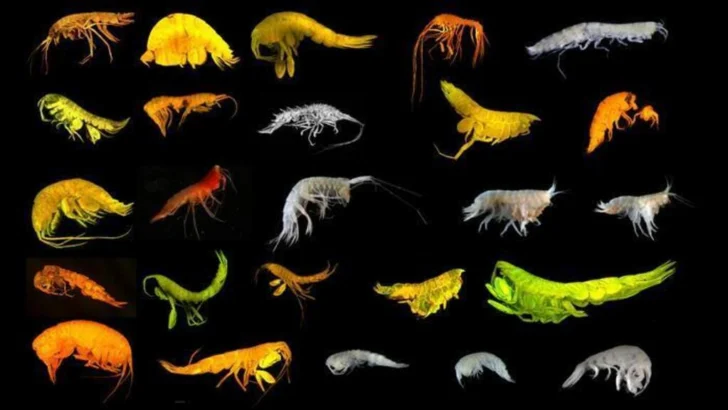
Amphipods resemble the sea fleas found on beaches, under seaweed. Except that those discovered by British researcher Tammy Horton and her Polish colleague Anna Jażdżewska have evolved for millions of years in total darkness, at a depth of 4,000 meters.
Collectively, these 24 new species even form a superfamily whose existence was previously unknown: it’s a bit like knowing that carnivorous mammals existed on Earth, knowing about bears and felines, and then just discovering dogs.
The tiny crustaceans, which display vibrant colors under a microscope, were discovered in the Clarion-Clipperton Zone. This vast abyssal plain is highly coveted, as its muddy bottom is covered with trillions of polymetallic nodules. About the size of a potato, they contain high concentrations of manganese, nickel, copper, and cobalt, making them highly sought after by many countries.
In January, the Trump administration amended US law on deep-sea mining, which should expedite the granting of permits. The consequences for the fragile and unique biodiversity of the deep seabed are even more difficult to assess, as the vast majority of the species that inhabit it remain, for the time being, unknown.
Source: acento