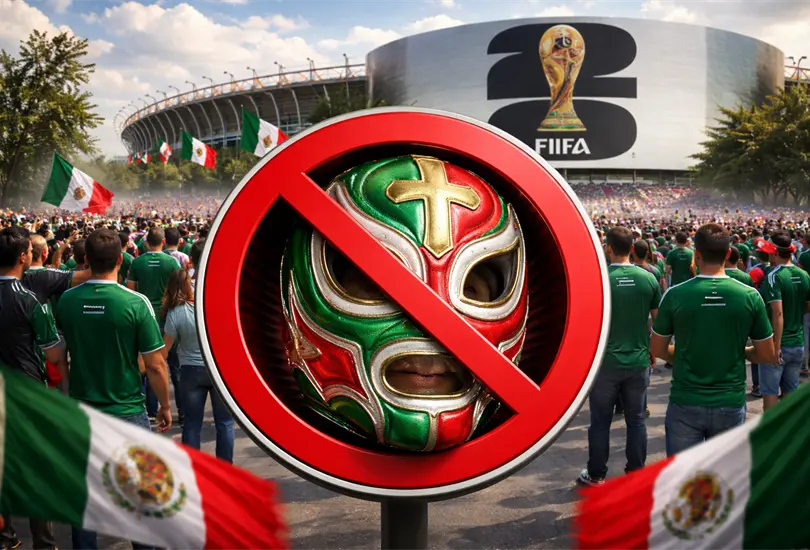
The ban on wrestling masks in Mexican stadiums ahead of the 2026 World Cup has generated surprise and anger among fans. The measure, implemented by FIFA, was evident yesterday during the Mexican National Team’s match against Portugal at Azteca Stadium, where security agents confiscated the masks of several fans who tried to enter wearing them.
According to the organization, the decision is based on international security protocols that aim to prevent attendees from concealing their faces, hindering identification in case of incidents. However, for Mexican fans, the masks represent much more than an accessory: they are a cultural symbol linked to lucha libre (Mexican wrestling), folklore, and national identity.
During the match, several fans expressed their discontent. Some stated that the measure is a “blow to tradition” and that FIFA is unaware of the importance of the masks in Mexican culture. On social media, images of fans being forced to remove their masks quickly went viral, sparking a debate between security and tradition.
This change comes on top of other recent modifications to stadium access protocols. These include the implementation of digital tickets, the prohibition of bulky items such as large flags, and restrictions on items that could cover the face. The intention is to strengthen identity verification and ensure a safe environment at high-profile matches, especially in the context of the 2026 World Cup.
The Mexico vs. Portugal match, which ended in a 0-0 draw, was a showcase not only of sport but also of culture. The presence of Portuguese stars attracted thousands of fans, but the controversy surrounding the masks ended up stealing some of the attention.
The debate over the ban raises a dilemma: how to balance international security with local cultural expressions? For many, the answer should include recognizing Mexican tradition while still adhering to the protective measures required for a global event.
Source: soyreferee