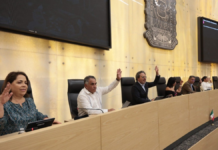
The state Congress unanimously approved on Friday the elimination of so-called “golden pensions,” ensuring that no retired public servant receives a pension paid with public funds exceeding half the salary of the President of the Republic, equivalent to just over 70,000 pesos per month. With this measure, Puebla became the seventh state to adapt its legislation to the federal reform on this matter.
The LXII Legislature approved the reform to Article 127 of the Political Constitution of the United Mexican States, which establishes that the retirement benefits and pensions of trusted personnel in decentralized agencies, state-owned enterprises, national credit institutions, majority state-owned enterprises, and public trusts of the federal, state, and municipal governments may not exceed 50 percent of the remuneration of the head of the federal executive branch.
According to the plenary session, the President of the Republic’s monthly salary is around 135,000 pesos, so the pensions of retired public servants cannot exceed approximately 70,000 pesos per month. The reform also specifies that no public servant may receive, as ordinary remuneration for their work, a salary higher than that of the head of the federal executive branch, and that no public servant may receive compensation equal to or greater than that of their hierarchical superior, except when the excess results from the sum of more than one job.
The ruling clarifies that the armed forces are excluded from this limit, as are retirements or pensions resulting from voluntary contributions to the retirement savings system, which will continue to be regulated by their own scheme.
During the debate, PAN (National Action Party) Deputy Susana Riestra Piña stated her support for the reform, arguing that no one can defend disproportionate pensions. However, she lamented the failure of the proposed amendments intended to provide legal certainty and prevent the reform from being applied retroactively.
For her part, Morena (National Regeneration Movement) Deputy Azucena Rosas Tapia emphasized that the amendment ensures no pension will exceed 50 percent of the President’s salary, with the goal of preventing any public office from being used for personal enrichment, even after leaving office.
Regarding the debate on retroactivity, Rosas Tapia justified resorting to this measure to eliminate privileges that, she asserted, offend the majority of the population. She argued that the new pension cap responds to a social demand to end the excessive benefits enjoyed by high-ranking bureaucrats.

Source: lajornadadeoriente