
Mexico possesses conditions that, in theory, should boost its economic growth; however, these factors have not translated into sustained economic dynamism, according to The Economist in its latest publication.
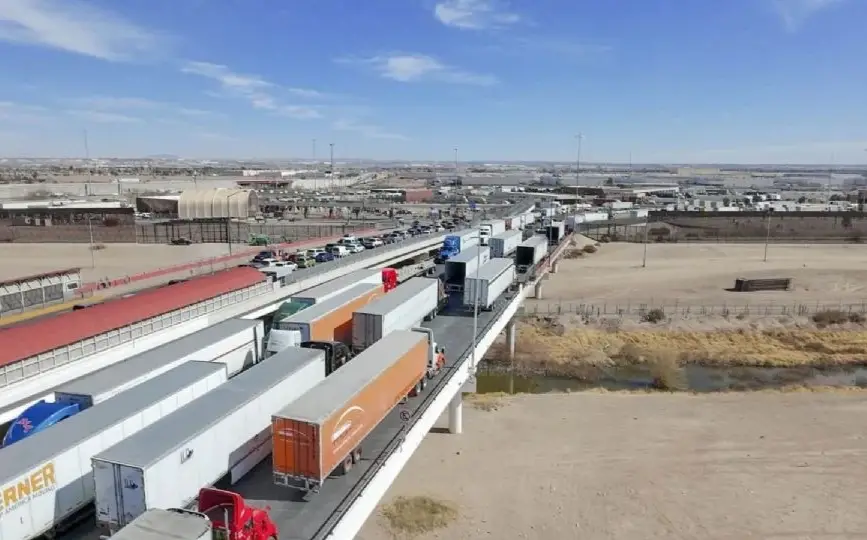
Nearshoring, the relocation of supply chains resulting from tensions between the United States and China, has favored the establishment of new factories in North America, the British magazine states.
Nearshoring has favored the establishment of factories.
Furthermore, the country has consolidated its position as the United States’ main trading partner and has registered growth in exports and foreign direct investment.
Despite this, these factors have not translated into sustained economic dynamism. According to the analysis, Gross Domestic Product (GDP) growth was a mere 0.8% in 2025, one of the lowest levels in years, while per capita income has fallen back to 2017 levels.
This is compounded by a contraction in domestic investment, which limits the potential for expansion.
Internal problems are holding back Mexico’s economy: The Economist
The article warns that blaming external factors, such as US trade policies, is insufficient. Although tariffs and trade uncertainty have had an impact, Mexican exports grew by 7.6%, even resulting in a trade surplus.
“Mexico’s worst economic problems are internal and self-inflicted,” the publication states.
In this context, the analysis argues that the main obstacles are internal and structural. Among them, it mentions reforms implemented since 2018 that have generated legal uncertainty, weakened independent regulatory bodies, and strengthened state control in key sectors such as energy.
These decisions, it notes, have limited private investment, especially in areas where the country needs capital to grow.
The Economist sees risk of economic stagnation for Mexico
Despite Mexico maintaining solid macroeconomic fundamentals—such as a stable monetary policy, a flexible exchange rate, and a respected central bank—the country faces the risk of falling into a scenario of economic stagnation.
The analysis identifies low investment as one of the main problems. Although proposals to incentivize research, training, and development are acknowledged, it warns that these measures could be insufficient if underlying problems are not addressed.
Informality and the tax system: key challenges for the Mexican economy
One of the biggest challenges is the size of the informal economy, where more than half the population works. This sector tends to have low productivity and little investment, which limits overall growth. “More than half of the workers in Mexico are in the informal sector,” the UK magazine states.
“More than half of Mexico’s workers are in the informal sector.”
Furthermore, the social security system and the tax burden on formal employment are cited as factors that discourage formalization. The analysis suggests that a reform that simplifies taxes and reduces regulations could favor the expansion of the formal sector.
Another critical point is the electricity system. Strengthening state control has not been accompanied by sufficient public investment, leading to infrastructure limitations and hindering economic growth.
In this regard, it is argued that greater openness to private investment could contribute to improving efficiency and expanding the capacity of the energy sector.
The Economist says of the ruling party: “Since Morena came to power in 2018, it has pushed through reforms that actively undermine the economy.”
The analysis acknowledges that the current federal administration has identified some of these problems, particularly low investment. However, it warns that more profound changes will be necessary to reverse the stagnation.
Failing to do so, it concludes, risks Mexico continuing to grow below its potential, missing key economic opportunities.
“Morena—under its founder, Andrés Manuel López Obrador, and now under his protégé, Sheinbaum—has shown itself willing to rewrite Mexico’s Constitution to achieve the party’s objectives,” The Economist notes regarding the former president, Morena, and the current president.

Source: lasillarota