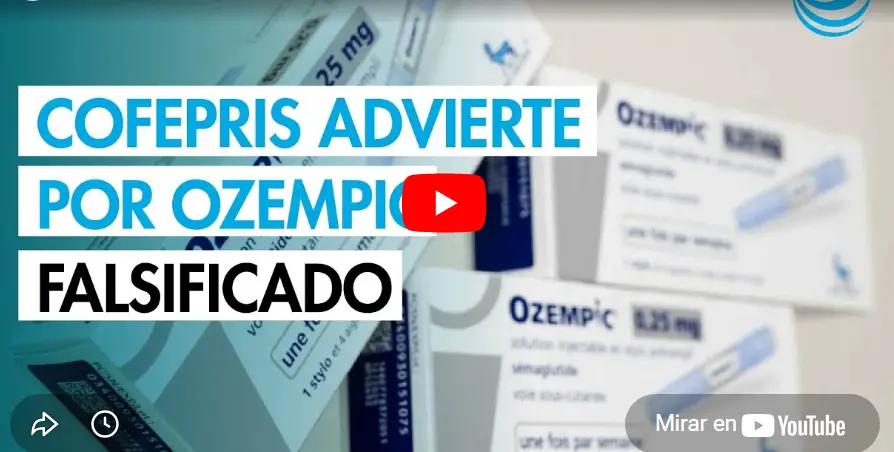

The Federal Commission for Protection against Sanitary Risks (Cofepris) issued a health alert regarding the counterfeiting of the drug Ozempic (semaglutide), used to treat type 2 diabetes and widely used for weight loss.
According to the authority, the counterfeit product, in a 1 mg pre-filled pen presentation, has already been detected in the national market and represents a direct health risk, as it does not meet quality, safety, and efficacy standards.
The technical analysis, derived from information provided by Novo Nordisk Mexico, identified anomalies in specific batches of the drug.
Among the irregularities detected are:
The product does not contain the active ingredient (semaglutide).
The pen was relabeled and does not correspond to the original.
It displays text in a language other than Spanish.
The lot numbers do not match between the packaging and the device.
Furthermore, Cofepris warned that the product’s origin, as well as its storage and transport conditions, are unknown, which increases the risk of contamination or adulteration.
The use of this counterfeit medication can cause serious adverse effects, especially since it is a drug that requires a prescription and professional supervision, according to the General Health Law.
Given this, the health authority issued a series of recommendations:
Verify that the lot and expiration numbers match.
Do not buy medications on social media, apps, or from informal vendors.
Avoid products with suspiciously low prices.
Discontinue use immediately if any anomalies are detected.
It also asked that any adverse reactions or health complaints be reported to official channels.
The Ozempic Boom and Other Weight-Loss Drugs
This case comes amid the global boom in GLP-1 inhibitors, such as Ozempic and Mounjaro, which have transformed obesity treatment and generated unprecedented demand.
This growth has been driven by both their effectiveness and their popularity outside the medical field, which has driven up their price and, at the same time, opened the door to parallel markets and counterfeit products.
Even recent studies show changes in consumption habits: users of these medications tend to reduce their intake of high-calorie foods but maintain occasional indulgences, such as premium chocolate, according to data from the Swiss firm Lindt & Sprüngli.
Cheaper Generics Could Change the Global Market
Meanwhile, the pharmaceutical industry is experiencing a turning point. In countries like India, the expiration of semaglutide patents will allow the entry of more affordable generic versions.
It is expected that:
More than 50 generic semaglutide brands will enter the market.
Prices will drop by up to three times compared to current levels.
Access will be expanded in middle-income countries.
Experts warn that this could significantly increase the number of patients in treatment, but they also emphasize that obesity is a complex disease that cannot be resolved solely with medication.
Source: eleconomista