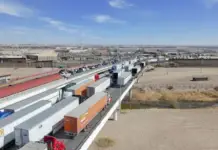

Vesta’s business revolves around acquiring land, developing state-of-the-art industrial parks, and leasing them to blue-chip tenants under long-term operating leases. This model generates predictable rental income, insulated from construction market volatility once properties are stabilized. The portfolio spans 16 Mexican states, strategically positioned to serve key economic hubs like Monterrey, Mexico City, Tijuana, and Guadalajara.
Tenants hail from diverse sectors including automotive, aerospace, electronics, retail, high-tech, pharmaceuticals, food and beverage, and packaging. This tenant mix reduces sector-specific risks while aligning with high-demand industries relocating production closer to the U.S. market. Vesta emphasizes modern facilities with features like high ceilings, energy efficiency, and advanced security, commanding premium rents in competitive markets.
Financial reporting under International Financial Reporting Standards (IFRS) highlights key metrics such as total revenues, adjusted net operating income (NOI), adjusted EBITDA, and funds from operations (FFO). These indicators underscore the company’s ability to convert rental streams into shareholder value through dividends and potential growth.
Mexico’s industrial real estate market has experienced accelerated growth due to nearshoring, where companies shift operations from Asia to North America to mitigate supply chain risks. Vesta is at the forefront, developing parks that support just-in-time manufacturing and e-commerce fulfillment. Proximity to U.S. borders enhances appeal for cross-border trade under USMCA agreements.
The company’s land bank provides a pipeline for future developments, allowing phased expansion without excessive leverage. Emphasis on Class A properties differentiates Vesta from competitors focused on secondary markets or older assets. Rental escalators built into leases help combat inflation, preserving real income growth over time.
Sector drivers include rising foreign direct investment in Mexico’s manufacturing base, infrastructure improvements like new highways and rail lines, and e-commerce penetration boosting last-mile logistics needs. Vesta’s scale enables economies in development and management, supporting higher occupancy rates industry-wide.
Vesta maintains a disciplined approach to capital allocation, balancing development investments with shareholder distributions. As a foreign private issuer on the NYSE via American Depositary Shares (ADS), it files Form 20-F annually and Form 6-K for material updates, ensuring transparency for international investors. Total shares outstanding stand at approximately 884 million ordinary shares.
Dividend payments demonstrate commitment to returns, with installments paid in cash, converted from U.S. dollars to Mexican pesos at prevailing exchange rates via Indeval. This structure provides currency flexibility while prioritizing peso payouts for local efficiency. Management’s discussion in filings often addresses portfolio performance, leasing activity, and market outlook.
Financing strategies include senior notes offerings to fund growth without diluting equity excessively. Such moves extend debt maturities and lock in favorable rates, supporting long-term stability. Investors monitor adjusted NOI and FFO as proxies for operational health and dividend coverage.
North American investors gain diversified exposure to Mexico’s industrial resurgence through Vesta’s NYSE-listed ADS (ticker: VTMX), traded in U.S. dollars. This eliminates direct peso risk for U.S. and Canadian portfolios while capturing upside from USMCA-driven trade. The stock complements REIT holdings by adding emerging market growth potential with developed-market governance.
Vesta’s tenant base overlaps with major U.S. firms expanding in Mexico, creating indirect links to familiar names in autos and tech. For yield-oriented investors, rental-focused cash flows offer stability akin to U.S. industrial REITs but with higher growth prospects. Portfolio allocation to LatAm real estate via Vesta hedges against U.S. market saturation.
Tax-efficient structures for non-Mexican investors, combined with English-language disclosures, lower barriers to entry. Monitoring U.S.-Mexico relations remains key, as policy shifts could amplify or temper nearshoring momentum.
Vesta competes with domestic peers and global players entering Mexico’s industrial space, but its early-mover advantage in prime parks sets it apart. Focus on top-tier locations commands occupancy rates above market averages, supporting rent growth. Development expertise minimizes execution risks compared to newer entrants.
Market dynamics favor landlords as demand outpaces supply in border regions and central corridors. E-commerce giants and automakers anchor demand, with vacancy rates remaining low. Vesta’s size facilitates strategic acquisitions, bolstering its land reserves for sustained expansion.
Peer differentiation lies in asset quality and tenant creditworthiness, reducing downside in economic slowdowns. Scale supports better financing terms, enhancing returns on incremental investments.
Key risks include Mexico’s macroeconomic volatility, such as inflation, peso fluctuations, and interest rate sensitivity impacting development costs. Geopolitical tensions or USMCA revisions could slow nearshoring flows. Investors should track occupancy trends and rent renewals for signs of demand softening.
Regulatory changes in zoning or environmental rules pose hurdles to greenfield projects. Leverage levels merit attention, particularly if cap rates compress amid competition. Upcoming earnings provide visibility into Q1 2026 performance, including leasing updates and NOI guidance.

Source: ad-hoc