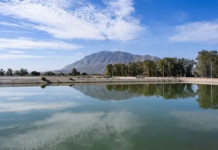
The ecopark in the city of La Paz has established itself as the second most important birdwatching location in the state, with 250 different species recorded there.
Víctor Omar Ayala Pérez, a research professor at the Autonomous University of Baja California Sur, said that the ecopark is an artificial wetland created where the city of La Paz’s wastewater used to flow directly.
He explained that the lagoons now receive treated water from the treatment plant and have become a resting and refuge area for many migratory birds that previously did not visit the area.
“The truth is that the ecopark, being a freshwater wetland, even though it’s artificial, expands the resources available to different bird species.”
The specialist collaborating with the UABCS Bird Laboratory and ProNatura Noroeste said that if the ecopark didn’t exist, the birds that can be observed today, which are directly related to freshwater, simply wouldn’t arrive.
He mentioned that the most abundant species is the Western Sandpiper, a migratory species that uses the ecopark as a wintering, stopover, resting, and supplemental feeding area.
Other important species within the ecopark are those belonging to the Anatidae family, which are directly associated with freshwater. Examples include the Northern Shoveler, the Cinnamon Teal, the Blue-winged Teal, and the Ruddy Duck.
“Most of them breed in the northern United States and Canada and spend the winter here. They are absent during the summer, and there are two duck species that breed here in the ecopark: the whistling duck and the ruddy duck. The latter began breeding in the area two or three years ago after management and conservation efforts by the UABCS Bird Laboratory and ProNatura Noroeste.”
Another important group is the grebes, among which the least grebe stands out. This species had already abandoned the area due to habitat decline, but it returned with the wetland’s recovery.
He said that rails, coots, and various terrestrial species can also be found, including the Baja California Sur masked duck, which is endemic to Baja California Sur.
Ayala Pérez explained that the case of the La Paz ecopark, where oxidation ponds were transformed into an artificial wetland, is an example of what can be done in other places with good quality wastewater. While this water is not suitable for human consumption, it does have the conditions to attract birds and generate a tourism industry around it.
She pointed out that the presence of birds in the ecopark has increased every year, with 13,000 birds recorded last year alone.
She said that since 2000, the UABCS Bird Laboratory and ProNatura Noroeste have been collaborating with the La Paz City Council on the improvement of this artificial wetland, and other organizations such as Niparajá and Cómo Vamos La Paz have gradually joined the effort.
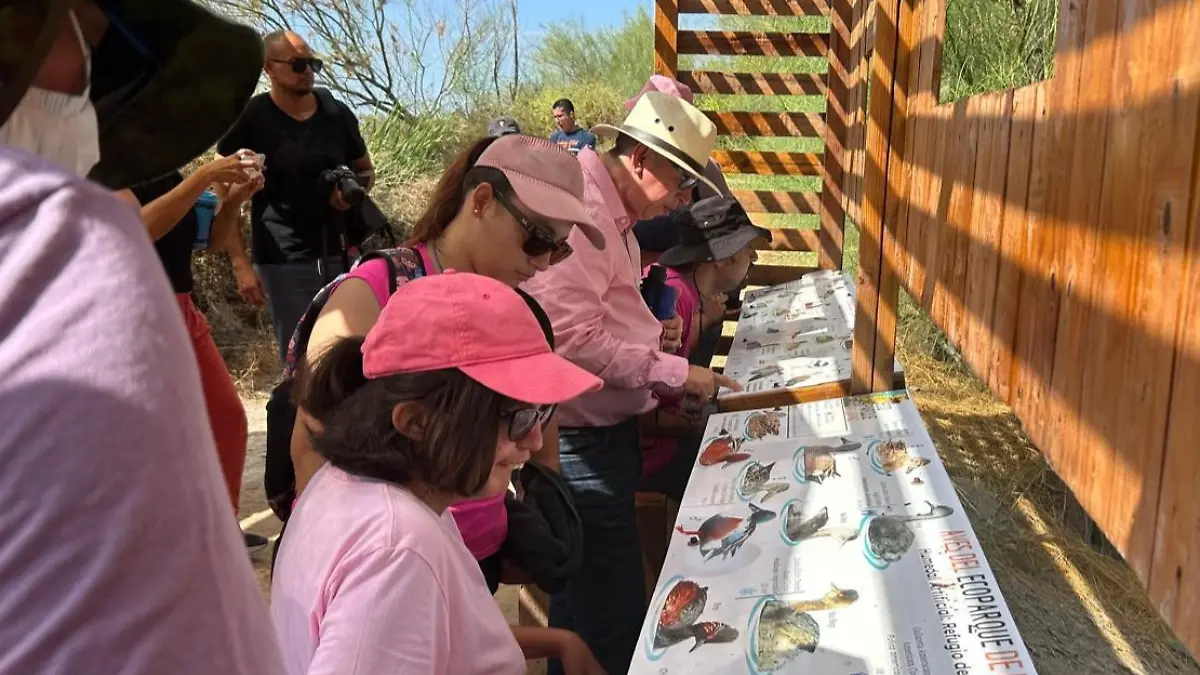
Source: oem