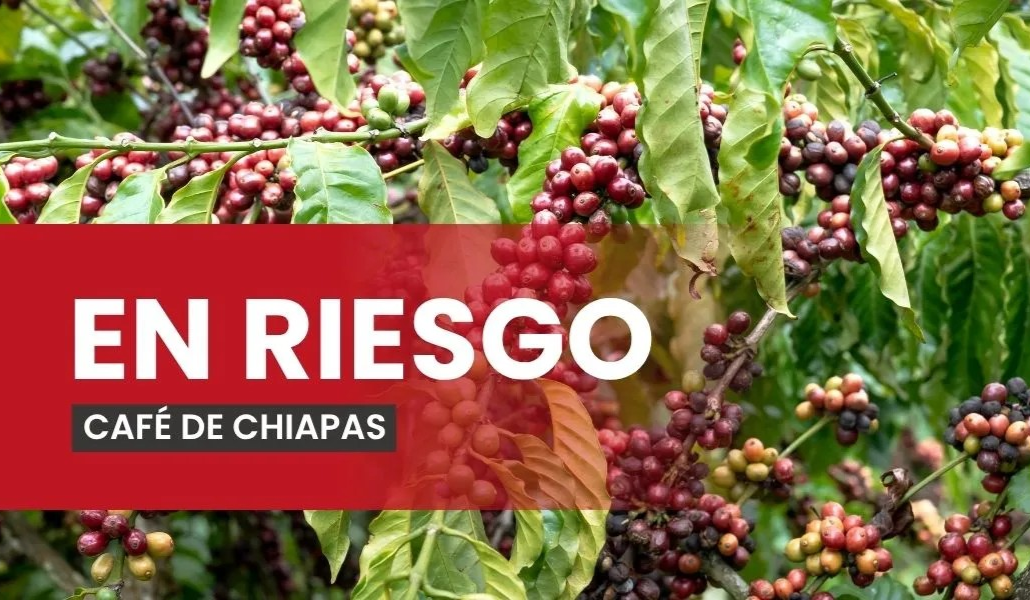

Fires, drought, and hurricanes threaten the coffee plantations that protect biodiversity in Chiapas. This warning comes from researchers who pointed to the significant reduction that climate change could cause in the Sierra Madre of Chiapas.
The cultivation of Arabica coffee could reach its peak impact by mid-century. However, they specified that in areas suitable for growing Coffea arabica in the Sierra Madre of Chiapas, the area will decrease significantly with a hotter and drier climate.
Specialists from ECOSUR and the International Center for Tropical Agriculture (CIAT) stated that their research has shown that forest fires are already destroying areas of forest and coffee plantations every year, and this problem will worsen with higher temperatures.
They also noted that the intensity of hurricanes could increase, causing landslides and floods that damage the plantations. In this regard, they argued that if shade-grown coffee ceases to be profitable, producers could abandon shade farming and expand cattle ranching, destroying the forest cover that protects watersheds, biodiversity, and ecosystem services.
The shade-grown coffee plantations of Chiapas are not simply agricultural plots. Scientific studies have documented that they function as biodiversity repositories: they harbor significant populations of migratory birds, butterflies, amphibians, mammals, and arthropods that would not survive in monocultures.
Furthermore, the forest cover of the coffee plantations captures rainwater, protects against erosion, and stores carbon—environmental services that benefit the entire population of the state, not just coffee growers.
The specialists’ call to producers of the aromatic bean is to promote biodiversity-friendly coffee practices, diversify income sources, implement integrated fire management, create accessible agricultural insurance for small producers, and develop markets that reward sustainable land management practices.

Source: alertachiapas