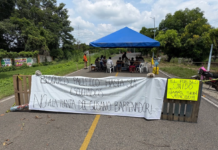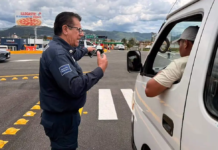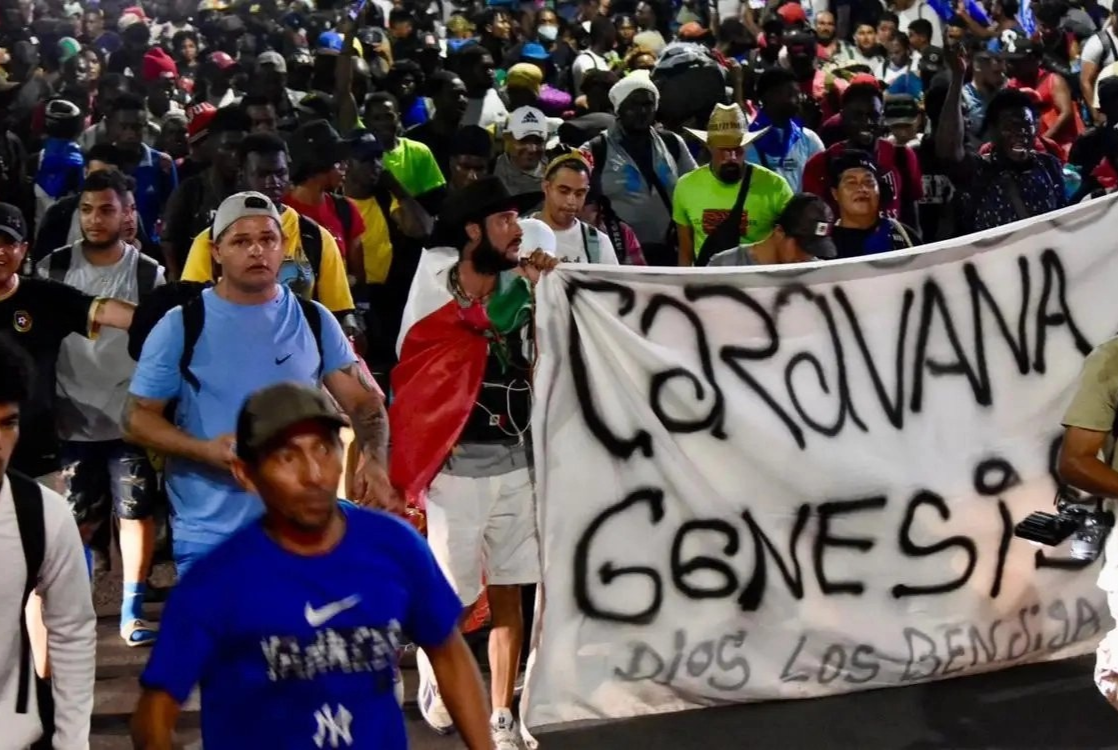

The “Genesis” migrant caravan, which was traveling along the Chiapas coast, was dispersed by the National Migration Institute (INM) near the municipality of Tonalá, where it had arrived on Sunday after a 12-day walk, official sources reported.
The migrants accepted the INM’s offer to be transported by vehicle to other cities in the region, such as Tuxtla Gutiérrez and Villahermosa, the sources indicated.
“The migrants were very tired and suffering from severe dehydration. Most were adults; there were very few children,” said an official who requested anonymity.
On Sunday, upon arriving in Tonalá, they received medical assistance from health and Civil Protection brigades, while the DIF (National System for Integral Family Development) provided them with food, the municipal official said.
He added that the nearly 300 migrants, mainly from Cuba, Venezuela, Haiti, and Central and South American countries, were transported in small groups without resistance and without the use of force.
Luis García Villagrán, coordinator of the Center for Human Dignity AC, accused the National Migration Institute (INM) of deceiving migrants by offering them help with their regularization process but only giving them a 30-day permit, keeping them stranded in southern Mexico because they are still unable to travel to other states.
“They profit from their suffering by allowing them to walk for days on end. They wear them down, and when they are exhausted, they tell them they will help them, but they take them to Tuxtla Gutiérrez or Villahermosa and don’t let them leave, as happens in Tapachula,” he stated.
García Villagrán pointed out that the migrants are only asking for something they are entitled to under international law: access to a regularization process and better job opportunities. This is something they cannot obtain in Tapachula—the main city on the border with Guatemala—because the offices of the Mexican Commission for Refugee Assistance (Comar) and the INM are overwhelmed, and the jobs available offer low wages and long hours.
He added that the southern border is also experiencing a surge in xenophobia, allegedly fueled on social media by government offices, creating a dangerous environment for migrants.
“Migrants just want to work and have better opportunities, something they can’t find in Tapachula, where they are detained against their will. Here, we see them working as waiters, drivers, day laborers, and all sorts of jobs, but with low wages or they are exploited,” he explained.

Source: jornada