
On April 25, 1532, a royal decree changed the destiny of the Central Valleys forever. Today, Oaxaca de Juárez awakens to the ringing of bells and the aroma of chocolate to celebrate the 494th anniversary of its elevation to city status, a title that not only granted it legal standing but also marked the beginning of a cultural resistance that defines it to the world today.
The story behind this anniversary is worthy of a political thriller. What we celebrate today as a distinction bestowed by King Charles I of Spain was, in reality, a shrewd move by the local settlers. At that time, they desperately sought to escape the control of Hernán Cortés, who, as Marquis of the Valley, intended to be the absolute ruler of these lands.
Upon being officially named the “Very Noble and Loyal City of Antequera,” the town became directly dependent on the Crown, achieving an autonomy that allowed for the flourishing of Baroque architecture and the urban layout that thousands of tourists explore today.
Although the royal charter is almost five centuries old, the roots of this land run much deeper. Since the establishment of the Mexica military outpost of Huaxyacac in 1486—”at the nose of the guaje trees”—this spot has been a melting pot of civilizations.
It wasn’t until after Independence that the city recovered its indigenous name, “Oaxaca,” and later, in 1872, added to its identity the surname of the man who changed the course of national history: Benito Juárez. It is precisely this blend of the starkness of the green quarry stone and the Zapotec heritage that earned it recognition as a World Heritage Site in 1987.
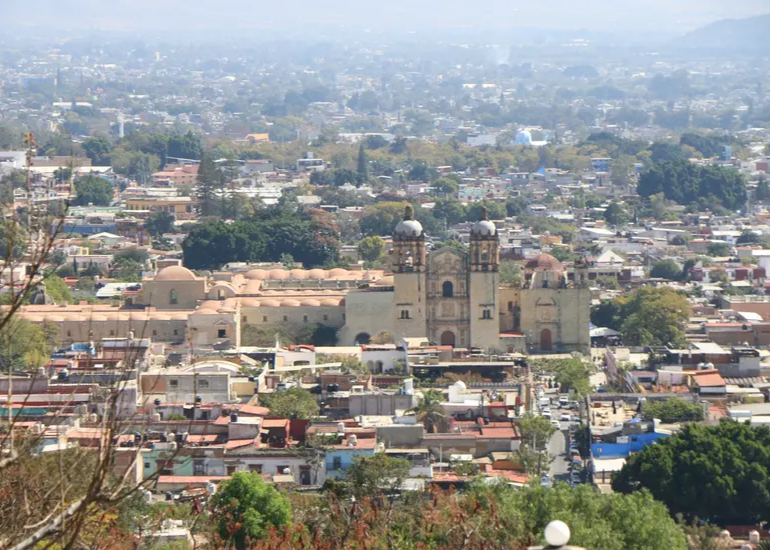
Today, walking through the Historic Center is like walking on the design of Alonso García Bravo, the same urban planner who laid out the nation’s capital. However, Oaxaca possesses its own unique mystique. At 1,550 meters above sea level, the light strikes the walls of the Cathedral and the Temple of Santo Domingo in a unique way, highlighting the green quarry stone that seems to come alive at sunset.
From being the cradle of corn millennia ago to becoming the “City of Seven Moles,” Oaxaca de Juárez celebrates its 494th anniversary not as a museum piece, but as a vibrant metropolis. It is the place where the Guelaguetza festival is felt on every corner and where the colonial past and indigenous pride coexist in an eternal embrace.

Source: nvinoticias