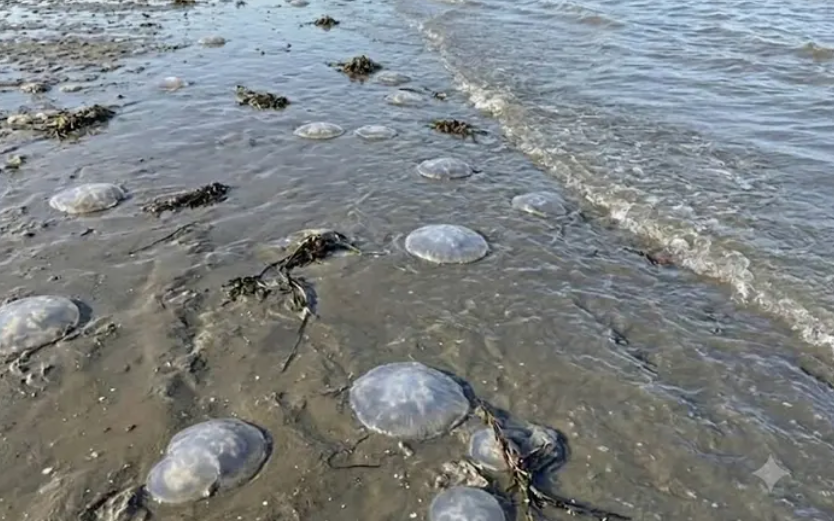

The possible causes behind the massive appearance of jellyfish on the beaches of Santa María Xadani appear to be linked to rising water temperatures, strong wind gusts, and increased tidal levels recorded over the past few days in the Isthmus of Tehuantepec region.
State health authorities explained that these conditions facilitate both the reproduction of the species Stomolophus meleagris—commonly known as the “cannonball jellyfish”—and its movement toward nearshore areas, where the creatures ultimately become stranded with no possibility of returning to the open sea.
The presence of these marine organisms on the beach has begun to spark concern among residents and visitors; consequently, state authorities have issued preventive recommendations to avoid incidents.
Key measures include refraining from handling the jellyfish—even if they appear to be dead—as their tentacles may still harbor active toxins capable of causing skin irritation or severe burns.
The public has also been advised to avoid swimming in areas where these animals are visibly present and to remain attentive to advisories issued by Civil Protection and municipal authorities as monitoring of this phenomenon continues along the Oaxacan coast.
Source: nvinoticias