
With less than a month to go before the start of the 2026 World Cup, Mexico City is scrambling to complete major renovation projects, including Metro stations and the capital’s main airport, Benito Juárez International Airport, in a race against time to host the opening match of the world’s biggest sporting event on June 11.
Some residents are frustrated by the disruptions caused by the construction, which many believe is geared more toward tourists than the residents of Mexico City, known locally as “chilangos.”
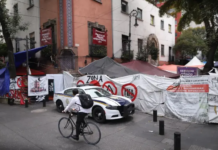
On Calzada de Tlalpan, one of the city’s main thoroughfares, a nearly two-kilometer pedestrian and bicycle corridor is under construction, scheduled to open at the end of May. The construction has led to lane closures and congestion on one of the city’s busiest routes.
“To a certain extent, we understand that it’s to improve our city and give a good impression to the visitors we’ll have the pleasure of receiving,” said Blanca Abascal, a teacher who lives in the area. “But it’s also been a bit chaotic for those of us who live on Tlalpan Avenue, since we can hardly sleep at night because of the noise,” she added.
This year’s World Cup will be co-hosted by Mexico, Canada, and the United States. The Mexican capital will host five matches, beginning with the group stage match between Mexico and South Africa on June 11.
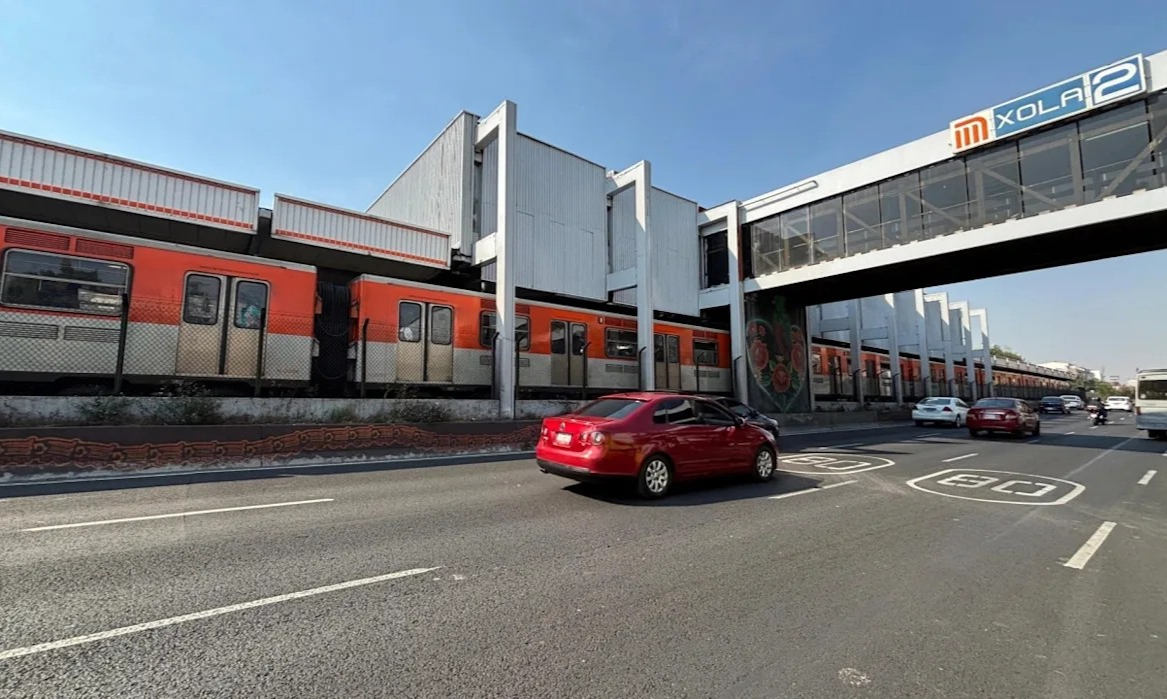
Renovation work is underway at Metro stations such as San Antonio Abad and Auditorio, located in central and western Mexico City, to modernize the stained-glass windows, entrances, and platforms.
“The works focus heavily on aesthetics, rather than structure or maintenance. They simply focus on beautifying certain spaces, like the subway and some streets, and I think that budget could be allocated to other more important aspects, such as the maintenance of the subway itself (…) these are units that are already very old,” complained Halim Castro, a 22-year-old university student.
Authorities of the Mexico City Metro, which transported more than 1.2 billion passengers last year, defend the works as fundamental interventions. Adrián Rubalcava, director of the Mexico City Metro, asserted that the World Cup has served as a catalyst to address historical shortcomings.
“It becomes a pretext to carry out in-depth work on stations that urgently required intervention and that we are going to leave in optimal condition for users permanently,” he stated.
Some residents have also expressed their concern about the distribution of public investment.
“They make things look nice and do a lot of improvements where it’s more well-known, but if you go around Mexico City there’s no transportation, nothing, it’s a total disaster,” lamented Arturo Castro, a retired resident of the capital, who called for more comprehensive planning for the entire city.
At the AICM (Mexico City International Airport), the country’s main air terminal and one of the largest in the Americas, renovation work has led to the closure of some areas, affecting passengers arriving in the capital. “The situation at the airport is simply unsustainable: the endless construction, the disorganization, the flight delays, total chaos,” complained Francisco Ramos, a 42-year-old architect who used the airport last week.
But Mayor Claudia Sheinbaum stated that the projects are progressing as planned, including improvements at the Benito Juárez International Airport and the other airport serving the capital, the Felipe Ángeles International Airport. “They will be finished on time and in the proper manner (…) to welcome millions of tourists and athletes,” he stated last week.

Source: es-us.noticias.yahoo.