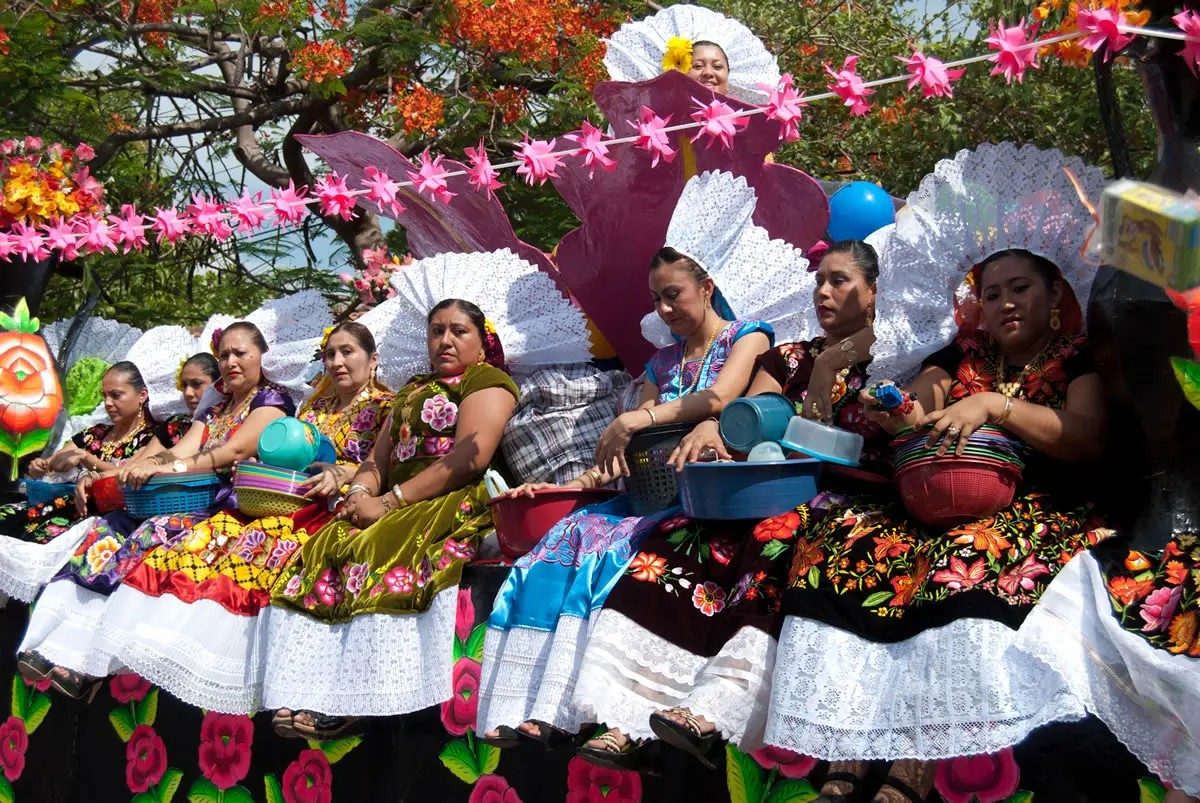

The Zapotec people, originally from southern Mexico, primarily the state of Oaxaca, are one of the country’s richest indigenous cultures in terms of history, language, and social identity.
Heirs to an ancient civilization whose most important center was Monte Albán, the Zapotecs have preserved a distinct identity marked by their language, community traditions, and deep connection to the land.
Today, thousands of Zapotec families undertake long migrations each year to northwestern Mexico, particularly to the state of Sinaloa, where they integrate into the agricultural sector.
In this region, their presence is especially notable in the municipality of Villa Juárez, considered one of the main temporary settlement points for migrant farmworkers.
Driven by the need for employment and better living conditions, Zapotec men and women work as day laborers in the agricultural fields of central Sinaloa, performing essential tasks in the production chain of vegetables destined for export.
Their participation ranges from planting, tending, and managing crops to harvesting, packing, and sorting products such as tomatoes, chili peppers, cucumbers, and other vegetables that supply international markets.
In addition to their economic contribution, the Zapotec population enriches the social and cultural fabric of the host communities. Their language, belonging to the Oto-Manguean family, remains a central element of their identity, although it faces preservation challenges among new generations born outside their place of origin.
Over time, what began as a temporary migration has, in many cases, transformed into a process of rootedness. Numerous Zapotec families have chosen to settle permanently in Villa Juárez and other agricultural communities, building new social networks and consolidating their presence in Sinaloa, without losing their connection to their roots.
Thus, the Zapotec community represents an indispensable workforce for Sinaloa’s agricultural sector. It is also an example of cultural resilience, adaptation, and contribution to regional development, in a context marked by migration and the constant search for better opportunities.
Questions and Answers
Where did the Zapotec population originate?
The Zapotec population originated in southern Mexico, primarily in the state of Oaxaca.
To which region do Zapotecs migrate to work?
They migrate to northwestern Mexico, especially to the state of Sinaloa.
In which labor sector do Zapotecs primarily work in Sinaloa?
They primarily work in the agricultural sector as day laborers.
What types of crops do the Zapotec people cultivate in Sinaloa?
They cultivate tomatoes, chili peppers, cucumbers, and other vegetables destined for export.
What cultural challenge do the Zapotec people face with the new generations?
They face challenges in preserving the Zapotec language among the new generations born outside their place of origin.
What has changed about Zapotec migration over time?
What began as temporary migration has, in many cases, transformed into permanent settlement in agricultural communities in Sinaloa.

Source: tusbuenasnoticias