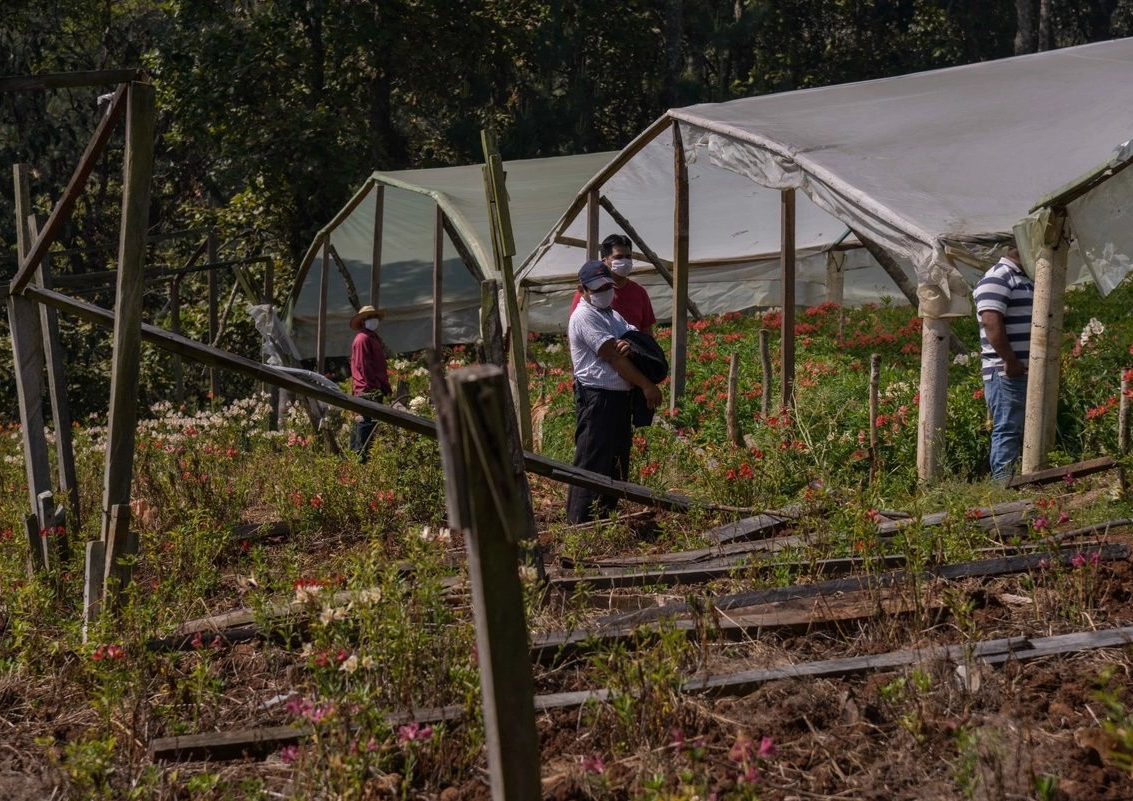

Residents of the municipalities of San Cristóbal and Teopisca expressed their opposition to the construction of a highway that “would directly impact the lands and ways of life of 17 communities and indirectly affect 51 more, jeopardizing our springs, soil, mountains, forests, and the ecological balance that sustains our existence.”
Grouped in the Movement for the Defense of the Territory of the Communities of San Cristóbal and Teopisca, the residents stated that “this highway project threatens to fragment our social fabric, disrupt community life, and profoundly transform our relationship with the land, prioritizing asphalt over the cycles of nature, collective life, and our autonomy.”
They asserted that “the model of ‘progress’ that the State intends to impose does not favor our well-being, but rather seeks to turn our home into a commodity for the benefit of corporations and the accumulation of capital.”
In a statement, they indicated that, furthermore, “it fosters community division through pressure, disinformation, and individual agreements promoted without respect for our collective decisions.”
For the past two months, they added, “our peace has been disrupted by external actors, state officials, and the Agrarian Attorney General’s Office, through the invasion of our lands. Outsiders have entered without community permits to extract soil, conduct soil studies, and perform topographic surveys.”
They asserted that “accessible, clear information has not been provided, nor has it been provided in our native language, violating our collective right to decide on the territory we inhabit and care for.”
They stated that there is a “lack of transparency, as we are summoned to sudden meetings to ‘notify’ us of the construction of a highway, withholding technical, environmental, and legal information.” They added that “there is pressure and a sense of urgency, as they demand immediate answers without giving us the time or information necessary for a genuine consultation.”
They argued that “the authorities are trying to impose the project through deception and social pressure, falsely claiming that other communities have already accepted the project,” while also denouncing that “the Mexican State has failed to fulfill its obligation to guarantee a prior, free, and informed consultation that is culturally appropriate and conducted in good faith, as established by Article 2 of the Political Constitution of the United Mexican States, Convention 169 of the International Labour Organization (ILO), the United Nations Declaration on the Rights of Indigenous Peoples, and the Escazú Agreement.”
The protesters demanded “the immediate cessation of any work, technical intervention, or action related to the highway project until the right to prior, free, and informed consultation is fully guaranteed under international standards, with cultural and linguistic relevance,” and “the immediate delivery of a complete and detailed copy of the project’s final design, including plans, budgets, implementation schedules, and the definitive route with its affected area.”
Likewise, they demanded that “the Environmental Impact Statement (EIS) be presented beforehand by the Ministry of Environment and Natural Resources (Semarnat) in community assemblies, in our communities and in our native languages, before any acceptance or administrative resolution. Environmental information cannot be considered truly public when it is found on platforms inaccessible to the population and written in highly technical language that prevents its understanding.”
They also demanded that “Semarnat guarantee accessible, transparent, and culturally relevant information processes so that communities can fully understand the environmental, social, and cultural impacts of the project,” as well as “the participatory updating of the Territorial Ecological Ordinances of the affected municipalities through community working groups that are culturally relevant and respectful of the land’s purpose, the care of water, the mountains, and the ecosystems that sustain the lives of our peoples.”

Source: jornada