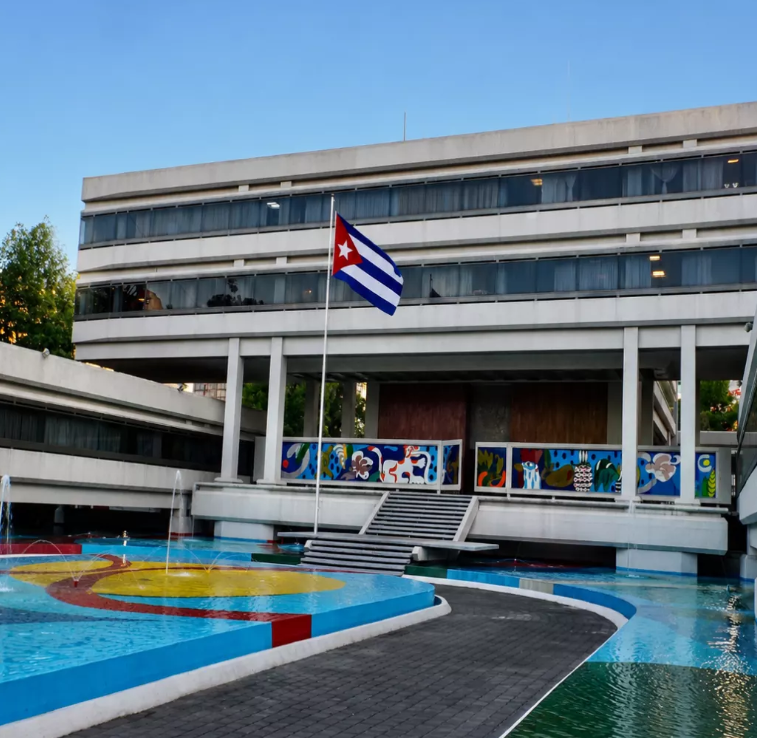

Cubans residing in Mexico have raised their voices to demand that the Cuban Foreign Ministry and the Cuban Consulate in Cancún abandon their stance of silence regarding growing reports of discrimination, employment rejection, and social hostility. According to those affected, the Cuban community in Quintana Roo is suffering the collective consequences of an isolated incident that quickly escalated on social media.
The Catalyst: A Viral Incident and Its Aftermath
Tensions erupted following an altercation in Cancún’s Supermanzana 23 district, where a Cuban national was accused of assaulting a Mexican citizen during a neighborhood dispute. The incident sparked a wave of outrage, led to disturbances outside a residence, and triggered a police operation that—far from concluding with that specific case—resulted in the widespread stigmatization of the Cuban diaspora in the region.
Far from being an isolated occurrence, residents report that the situation has escalated to include unjustified dismissals, obstacles to renting housing, and a hostile atmosphere in the workplace. Activists emphasize that working-class families—who had absolutely no connection to the incident—are paying the price for a narrative of rejection that has become untenable.
Clear Demands Directed at Cuban Authorities
Through a manifesto circulated on social media, the signatories have presented three fundamental demands:
Official Statement: A public declaration from the Foreign Ministry condemning acts of discrimination against its citizens.
Communication Channels: The establishment of direct links with civil society organizations that provide support to migrants in Mexico.
Impartial Consular Support: An active defense of the rights of all Cuban citizens, regardless of their immigration status or political stance.
A Call Against Stigmatization
The phrase “not all of us are the same” has become the rallying cry of this petition. The community insists that the conduct of a single individual should not define the thousands of migrants who, in many cases, live in a state of extreme vulnerability—whether due to a lack of documentation, economic uncertainty, or the migratory limbo they face following their journey along routes toward the United States.
Organizations such as the CISVAC Foundation have sounded the alarm regarding a troubling increase in the hardships faced by Cubans since the beginning of 2026. The lack of an official voice from the consulate in Cancún has fostered a profound sense of abandonment among migrants, who watch as the Cuban State remains conspicuously silent in the face of a crisis that directly impacts their daily survival.
The Contradiction of Official Silence
For many observers, this scenario exposes a painful contradiction: while the Cuban government frequently leverages the narrative of its citizens abroad for political ends, in moments of genuine crisis, consular neglect remains the constant. The silence of authorities in Mexico leaves Cubans in a position of heightened risk, bereft of diplomatic support to mediate social conflicts or defend their integrity against xenophobia.
The Cuban community in Mexico emphasizes that, while they condemn violence, they categorically reject being used as scapegoats. In an increasingly complex migratory climate, the call is urgent: the protection of Cubans abroad cannot be made conditional upon political interests, and it is the responsibility of Havana to look out for those who—whether out of necessity or by choice—have made Mexico their home.
Source: omaritoinforma