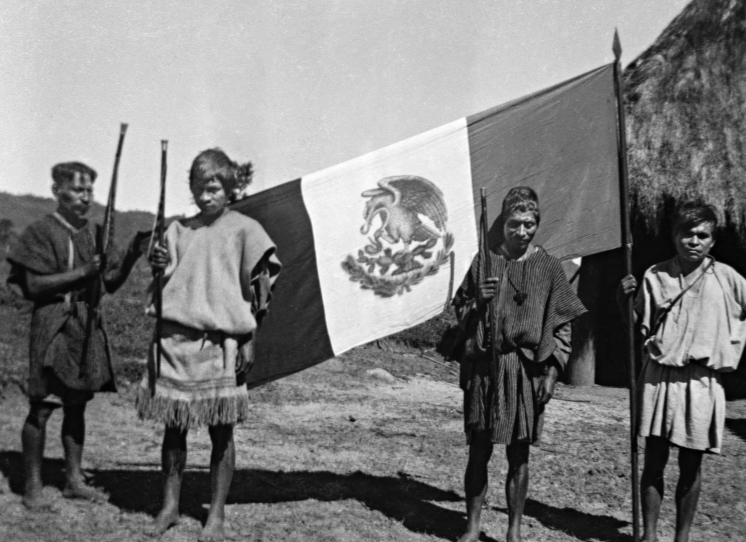

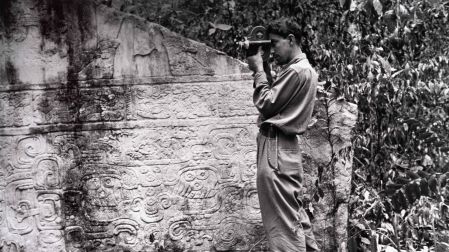
At least 62 photographs by Manuel Álvarez Bravo, Graciela Iturbide, Antonio Turok, Marco Antonio Cruz, Bob Shalkwijk, and 15 other photographers comprise the exhibition “Territories of the Image: Visual Narratives from Chiapas,” which opens today at the Museum and Archive of Photography (MAF). The exhibition explores the role of photography as a document for understanding the social processes that have shaped the geography of Chiapas and its relationship with the rest of the country.
“When we talk about Chiapas, the Zapatista movement (EZLN, which emerged in 1994) is undoubtedly the first point of reference. We recognize some figures who documented it, such as Pedro Valtierra and Antonio Turok, but the exhibition goes beyond that,” Lizbeth Ramírez Chávez, director of the MAF, told Excélsior.
“When we talk about Chiapas, the reference point is undoubtedly the Zapatista movement (EZLN, which emerged in 1994), and we recognize some figures who documented it, such as Pedro Valtierra and Antonio Turok, but the exhibition goes beyond that,” Lizbeth Ramírez Chávez, director of the MAF, told Excélsior.
“We recognize some figures who documented it, such as Pedro Valtierra and Antonio Turok, but the exhibition goes beyond that.” He added: “What struck me was that, when we talk about Chiapas, we don’t just think about the Zapatista movement, which is undoubtedly emblematic and gives them strength, but also about their patron saint festivals, the streets, the indigenous population, and the land. To illustrate this, we will be exhibiting part of the Bats’i Lab archive, located in Chiapas, founded by photographers José Ángel Rodríguez and Isaac Guzmán.”
From this collection, they selected, for example, snapshots by photojournalist Ángeles Torrejón, who shows how life is in Chiapas and, in a way, contributes her perspective to a system dominated by men; or the work of Turok, whom Subcomandante Marcos asked to capture the movement through his lens.
Also featured will be the work of Marco Antonio Cruz, a photographer with a very distinctive aesthetic eye, as well as photographs by the renowned Graciela Iturbide and the founders of Bats’i Lab, an essential collective in the region.”
Ramírez Chávez comments that when people talk about photo archives, they almost always think of Querétaro, Zacatecas, and Pachuca, but Bats’i Lab, founded in 2019, demonstrates that they can offer a perspective further south in the country.
What themes does the exhibition explore?
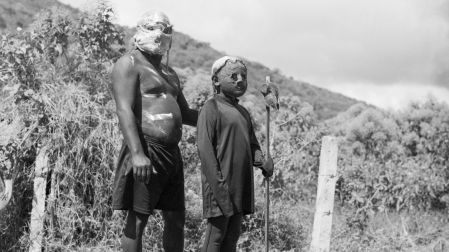
“We are interested in showing how photographers see Chiapas and what it represents for them from a female, foreign, national, and youth perspective, because Isaac and José Ángel (the founders of the collective) told me that Chiapas goes beyond the EZLN, and of course, that’s true.” Therefore, we will showcase the landscapes, patron saint festivals, traditional costumes, masks, characters, communities, and daily life in the state.”
How extensive is Bats’i Lab’s collection? “It’s an immense archive that includes the work of Barry Norris with 107 photographs; Lorenzo Armendariz, with 63; Marcey Jacobson, who contributed 60 prints; Keith Dannemiller, with 90 digital files. In addition, Isaac Guzmán contributed 236 digital files; and the young Diego Moreno, another 100 photographs.
And to these must be added the work of Maruch Santiz, Martha Zarak, Fabián Ontiberos, Daliri Oropeza, Cisco Dietz, and the donations from the photographers mentioned above.
Territories of the Image: Visual Narratives from Chiapas will be on display until June 14 at the MAF, located at República de Guatemala No. 34, in the Historic Center.
Source: excelsior