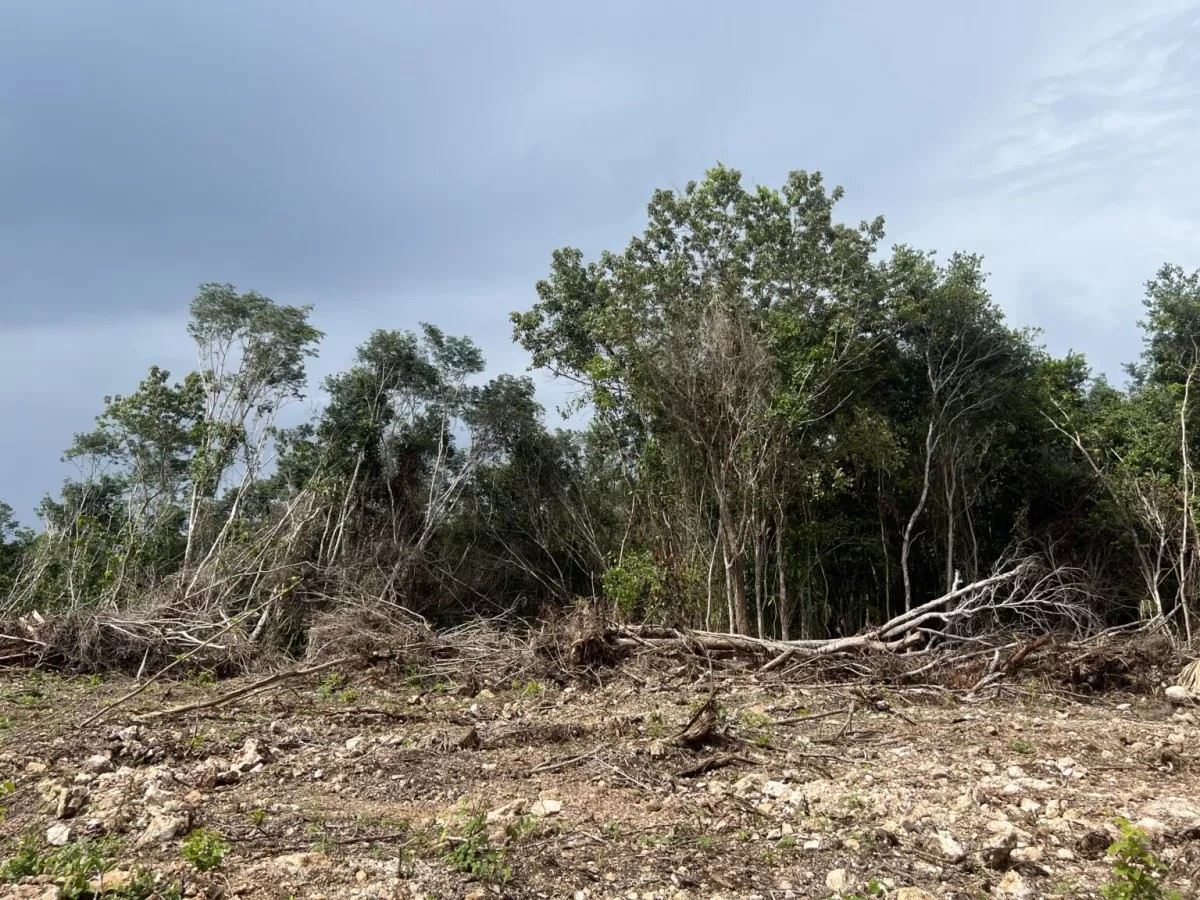

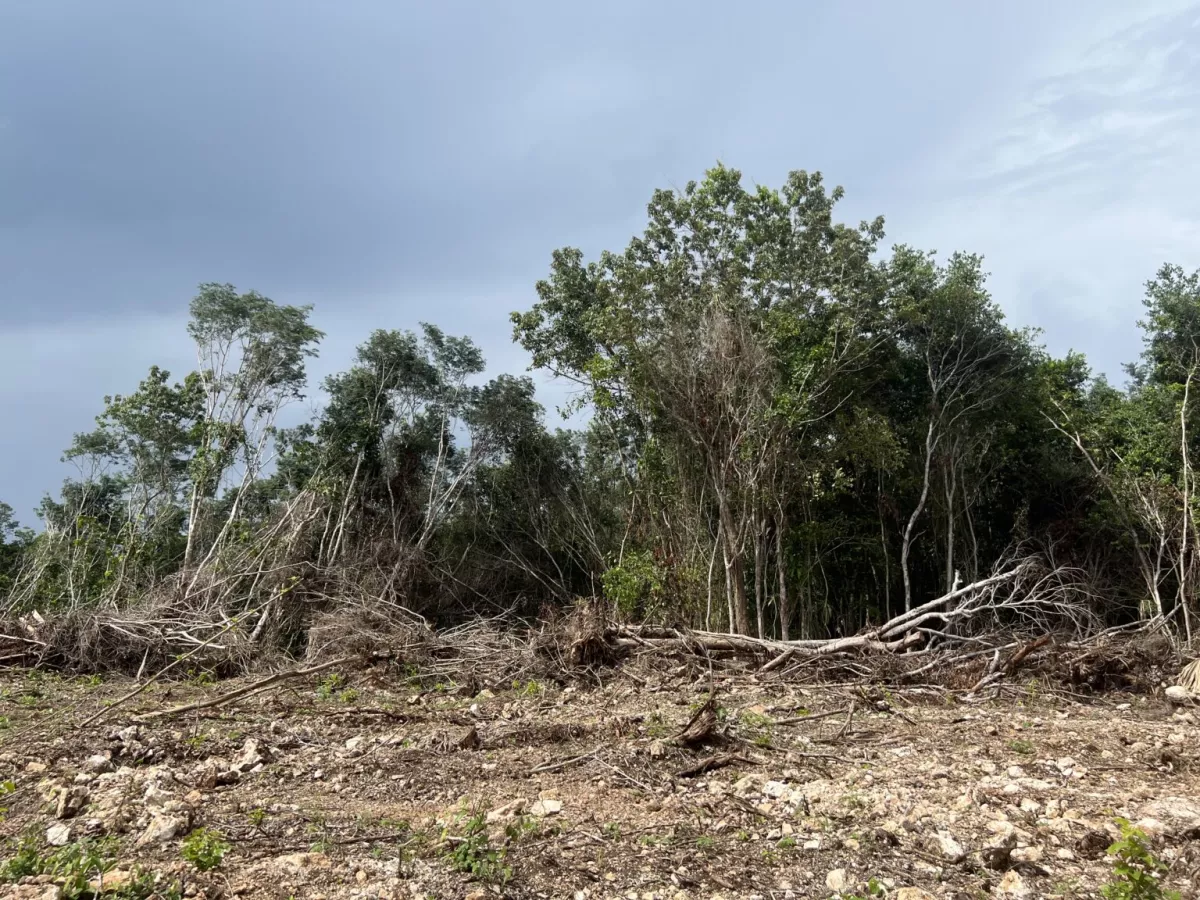
While Yucatán faces growing pressure from the real estate boom, mangrove deforestation, and the expansion of productive activities such as pig farms, the state government, environmental organizations, and private companies launched “Herencia Maya” this week — a new environmental financing initiative designed to secure long-term funding for the conservation of 11 protected natural areas across the state.
The program includes an initial fund of 5.5 million dollars provided by private donors and international organizations, which will be used over the next five years.
In addition, the state government, the Mérida City Council, and allied organizations are expected to match those contributions “peso for peso.” Altogether, the initiative aims to mobilize more than 20 million dollars to protect over 581,000 hectares of territory in Yucatán.
Governor Joaquín Díaz Mena led the launch of the “Herencia Maya” Project Finance for Permanence (PFP), an initiative intended to guarantee long-term resources for the conservation of 11 protected natural areas in the state.
Real Estate Growth and Pressure on Water Resources
In an interview, Neira Silva Rosado acknowledged that accelerated and disorganized urban growth is already generating visible impacts on water resources, mangroves, and natural reserves throughout Yucatán.
“This real estate growth boom has already unleashed different problems. We are already facing water shortages in some areas because we cannot extract enough water, especially when there are real estate developments such as apartment buildings and rapid population growth that infrastructure cannot keep up with.”
The official also explained that real estate expansion and land speculation along coastal areas are contributing factors behind mangrove degradation in Yucatán.
“This is linked to real estate growth and speculation over owning homes in those areas. That has generated environmental impacts. We need to begin regulating human growth and development in these zones.”
Silva Rosado admitted that environmental authorities often arrive too late to areas affected by illegal logging and land clearing due to the lack of permanent surveillance.
“Sometimes when logging begins, by the time we find out, one or two days have already passed because we cannot maintain constant presence in protected natural areas. Projects like this allow us to have people in the field supporting conservation efforts all the time.”
Forest Loss and Environmental Monitoring
Between 2016 and 2025, the Forest Cover Change Information System (SICAMFOR) estimated a loss of 180,967 hectares of forest cover in Yucatán.
The municipality of Tizimín recorded one of the largest losses, with a net reduction of 3,374 hectares of forest land, mainly due to agro-industrial expansion and cattle ranching.
As a result, one of the main objectives of “Herencia Maya” will be financing park rangers, permanent wildfire brigades, monitoring systems, and environmental restoration projects in areas such as the Ring of Cenotes and the Puuc Biocultural Reserve.
Pig Farms: Another Environmental Concern
Alongside real estate growth, the pork industry has become one of the sectors under the strongest environmental scrutiny in Yucatán because of wastewater management and its impact on cenotes, aquifers, and local communities.
Just weeks ago, Profepa confirmed the complete removal of 41,570 pigs from the Santa María farm operated by Pecuaria Peninsular in the municipality of Santa María Chi following a permanent closure imposed in September 2025 due to repeated environmental violations.
According to Profepa, the company discharged wastewater without authorization, failed to properly characterize sludge waste, and ignored corrective measures. The closure also resulted in a fine exceeding 18.6 million pesos.
The case became one of the peninsula’s most visible environmental conflicts after years of complaints from Mayan communities and civil organizations alleging water contamination and health impacts caused by the farm’s operations.
Mariana Boy Tamborrell stated that the removal of the animals and the remediation process represented a response to longstanding community demands.
Meanwhile, Neira Silva Rosado said the state government continues monitoring pig farms and working with the industry to improve operational and waste-management processes.
“One of the actions is, obviously, the supervision and closure of farms that were not properly treating their wastewater. Another is working together with the industry to improve their systems and prevent contamination events.”
Silva Rosado confirmed that only one of the estimated 157 pig farms in the state has been permanently closed so far, although several others remain under review for environmental noncompliance.
She also revealed that the state is developing a real-time water quality monitoring system to identify critical contamination zones.
“We cannot say contamination is everywhere. We have specific hotspots, and we must identify those areas and work directly on them. That is why we are developing real-time water monitoring systems.”
Mangroves and Cenotes at Risk
Across the Yucatán Peninsula, agricultural expansion, urbanization, tourism, and other human activities are contaminating underground water systems and cenotes, accelerating mangrove degradation, threatening wildlife populations, and putting ancestral cultural heritage at risk.
Yucatán contains 10 priority mangrove sites covering approximately 96,873 hectares. In 2025, Semarnat reported the loss of around 150,000 hectares of mangrove areas nationwide.
Governor Joaquín Díaz Mena acknowledged that the state had suffered environmental deterioration for years, though he stated that his administration aims to promote a different development model.
“For many years, natural resources were seen as inexhaustible. There was deforestation and environmental deterioration. We decided to change that vision. This government understands that development cannot happen by destroying Yucatán’s natural heritage.”
The governor reported that more than 500,000 trees have already been planted since 2024 and announced a goal of 1.2 million trees during his administration.
“It is not just about planting trees. It is about restoring forests, generating life, capturing carbon, and ensuring future generations inherit a green state rich in natural wealth.”
He also stated that the administration is seeking land outside mangrove zones to build housing in Yucatán’s coastal towns.
Mérida and the Threat to the Kúxtal Reserve
Cecilia Patrón Laviada warned that the Kúxtal ecological reserve — which provides 50% of the water supply for Mérida and serves as habitat for 168 bird species — faces constant pressure from irregular urban expansion.
“Every day we receive reports of illegal land clearing and housing construction projects that clearly lack permits. The city is growing, and that represents a permanent threat.”
She emphasized that Mérida’s growth cannot be separated from environmental protection.
“Mérida cannot grow without Kúxtal, and Kúxtal cannot survive without a city committed to protecting it consciously.”
Patrón Laviada also stressed that natural reserves cannot depend solely on the political will of individual administrations.
“A natural reserve cannot survive through isolated projects or changing priorities every three years. It needs permanence and guardians who remain committed.”
WWF Warns About Mangrove Degradation
María José Villanueva Noriega explained that mangrove degradation is not caused only by direct deforestation, but also by disruptions in water flows due to infrastructure projects, highways, and urban developments.
“Many times mangroves die because water flows are blocked by roads or housing construction.”
She stressed that mangroves depend on the peninsula’s entire underground water system.
“Mangroves are the final link of the entire watershed. Rivers here are underground, and all the water produced in the region eventually reaches the mangroves. Everything happening in between must be protected to prevent contamination.”
Villanueva added that mangrove restoration is a long and complex process, often taking between five and ten years or even longer.
“Sometimes restoration is not about planting vegetation, but about reopening water channels so the water can flow again. It is like unclogging an artery.”
She highlighted that “Herencia Maya” represents Mexico’s first state-level Project Finance for Permanence (PFP), an international mechanism designed to secure long-term funding for environmental conservation.
The project aims to strengthen protection across more than 275 kilometers of Yucatán’s northern coastline and over 54,000 hectares of mangroves.
“Usually PFP projects occur at the national level or involve federal protected areas. That is why ‘Herencia Maya’ is so special — it is the first one led by a state government.”
Private Companies Join Environmental Financing
Private companies are also participating in the financing of “Herencia Maya.”
Bepensa — a Mexican business group founded in Mérida in 1946 and composed of more than 40 companies across beverage, automotive, industrial, spirits, and financial service divisions — together with The Coca-Cola Foundation, will contribute more than 2 million dollars to the environmental fund.
Organizers described private-sector participation as one of the key pillars for maintaining the long-term conservation model and guaranteeing resources beyond public budgets.
Agustín Menéndez Reyes, Director of Public Affairs, Communication, and Sustainability at Bepensa Bebidas, highlighted the importance of private-sector involvement because water security is strategically important for both industry and local communities.
“We are talking about the largest underground water system in the world. This initiative not only gives Yucatán the opportunity to better conserve its protected natural areas, biodiversity, flora, and fauna, but also contributes to a positive environmental impact overall.”
Menéndez Reyes explained that the 11 protected areas included in the program cover nearly 15% of the state’s territory.
“We are proud, with all the responsibility this implies, to lead this first phase of ‘Herencia Maya’ together with WWF. We understand that we are a company capable of helping these projects exist and generate a real positive impact.”
He also defended the need for more companies to join similar environmental initiatives.
“This program is a collective action. Nobody can do it alone. We need collective efforts because isolated actions lose their impact.”
María José Villanueva Noriega also called on more companies to support long-term environmental financing programs such as “Herencia Maya.”
“Companies depend on Yucatán’s natural resources and the resources of every place where they operate. We need more businesses to invest in keeping nature intact so they can continue operating.”
Villanueva argued that Mexico has the economic capacity and business leadership needed to replicate similar conservation models in other states with high biodiversity and environmental pressure.
“I am convinced Mexico has both the economy and the business leadership required to achieve this. Hopefully this first step, despite initial skepticism, proves otherwise.”
Source: politica.expansion