
Here is the clean translation of the article into English, maintaining its analytical tone and completely removing any hidden metadata or web structural elements:
The Internal War in Morena: Sheinbaum’s Judicial Rectification Furiously Rattles the Radical Wing and Lenia Batres
The internal war within Morena has ceased to be a mere political rumor and is starting to turn into an authentic battle for control of the Federal Judiciary. President Claudia Sheinbaum Pardo has just pushed forward a profound modification to the controversial judicial reform inherited from Andrés Manuel López Obrador, and the political message behind this decision has completely shaken the most radical wing of obradorismo. Although National Palace attempts to sell the move as a “technical adjustment” or a “logistical measure,” the legal and political reality is far more explosive: the ruling party itself has just implicitly recognized that the judicial election pushed by Morena was born with severe structural errors, constitutional risks, and an enormous possibility of institutional collapse. And in the midst of this earthquake, one name appears completely furious: Lenia Batres Guadarrama.
The new initiative promoted by Sheinbaum aims to postpone the judicial election until 2028, drastically reduce the number of candidacies, tighten evaluation filters, impose mandatory technical examinations, and create more rigorous mechanisms for selecting judges, magistrates, and ministers. Legally, this represents much more than an administrative modification. In reality, it constitutes an authentic constitutional rectification of the judicial model that Morena previously presented as “the great democratization of Mexican justice.” What was once boasted as an institutional revolution now urgently needs to be corrected because the first electoral trial in 2025 ended up exposing alarming flaws: improvised profiles, candidates lacking solid experience, chaotic ballots, low citizen participation, and growing questioning regarding the country’s true judicial independence. The problem could no longer be hidden or sugarcoated.
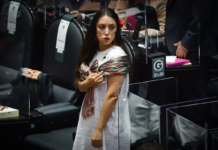
And that is precisely where the true political conflict begins. Because the new rules driven by Sheinbaum’s inner circle directly affect the most radical profiles completely aligned with hardline obradorismo. Among them, the name of Lenia Batres quickly became the center of the storm. Various political reports indicate that the minister is completely outraged because she interprets this counter-reform as a deliberate move to block her path toward the presidency of the Supreme Court of Justice of the Nation (SCJN). From her perspective, the message is crystal clear: the more technical the requirements are, the more controls exist, and the more weight legal examinations and professional experience carry, the less room there will be for candidacies driven solely by ideological affinity or political closeness to the movement of the so-called Fourth Transformation.
Internal tensions have reportedly intensified to such a degree that, according to versions already circulating in political circles close to the ruling party, Lenia Batres has even sought to approach Andrés Manuel López Obrador directly to express her disagreement and question why Sheinbaum is “dismantling” one of obradorismo’s most emblematic reforms. The anger has a underlying reason: the new model proposed by National Palace practically destroys the political scenario that allowed certain profiles to dominate the future of the Supreme Court through highly politicized electoral structures. What once seemed like an open path toward ideological control of the country’s highest court is now beginning to fill with technical filters, specialized evaluations, and institutional controls that could completely alter the future composition of the Judiciary.
Yet, behind this dispute lies an even deeper issue: the federal government’s fear of the economic and financial impact of the judicial reform. The drop in GDP, growing distrust among foreign investors, and international concern over the weakening of the Rule of Law began to exert enormous pressure on National Palace. Within business, financial, and diplomatic sectors, the perception began to grow that Mexico was moving dangerously toward the absolute politicization of justice. And when a country projects the image that its judges might answer more to partisan interests than to constitutional criteria, legal certainty simply vanishes. Without legal certainty, solid investment, economic stability, and institutional trust cannot exist. That is the true reason why the government is now attempting to rebuild credibility before the damage becomes irreversible.
From a constitutional standpoint, the concern is extremely serious. The Judiciary does not exist to obey the government in turn, nor to become a political arm of any administration. Its essential function is to serve as a counterweight, control excesses of public power, guarantee human rights, and preserve constitutional balance. For this reason, numerous specialists began to warn that a judicial system completely subjected to electoral dynamics, political campaigns, and partisan structures could destroy the judicial independence required by any modern constitutional democracy. What this new initiative attempts to correct today is precisely the risk of Mexican justice ending up subordinated to political interests rather than the principle of legality.
The proposal also reveals something politically devastating for Morena: the tacit acknowledgment that the original judicial reform was not properly designed. If it had truly functioned as promised, there would be no need to postpone elections, redesign committees, tighten filters, or rebuild evaluation mechanisms just a few months after its implementation. The government attempts to justify the change by arguing logistical issues in organizing the 2027 elections and the judicial vote simultaneously, but the actual content of the initiative proves something much more serious. The ruling party detected that the system was losing social legitimacy, technical credibility, and economic confidence at a dangerously fast pace. Now, it is trying to contain the crisis before it completely explodes.
Meanwhile, a widening ideological fracture is becoming increasingly evident within Morena. On one side stands the radical sector that sought to completely transform the Supreme Court into an organ aligned with the political project of the Fourth Transformation. On the other appears the pragmatic wing that understood that destroying institutional counterweights can generate devastating economic consequences and international isolation. In the middle of that struggle, Lenia Batres seems to have become the most visible symbol of the clash between both visions. Consequently, the tension is no longer solely legal; it is now an open battle for the political future of the regime and for control of the Mexican judicial system.
Today, the big question is brutally simple: Has Sheinbaum just begun the silent dismantling of López Obrador’s judicial reform? Because while the public discourse talks about “technical adjustments,” what we are actually witnessing is a complete reconstruction of the rules that will define who can control the Supreme Court in the coming years. And if the new conditions end up blocking paths for profiles considered too radical or excessively politicized, then the message for Lenia Batres will be devastating: the dream of politically dominating the country’s highest court might be ending before it even has a chance to begin.
Source: mexicodailypost