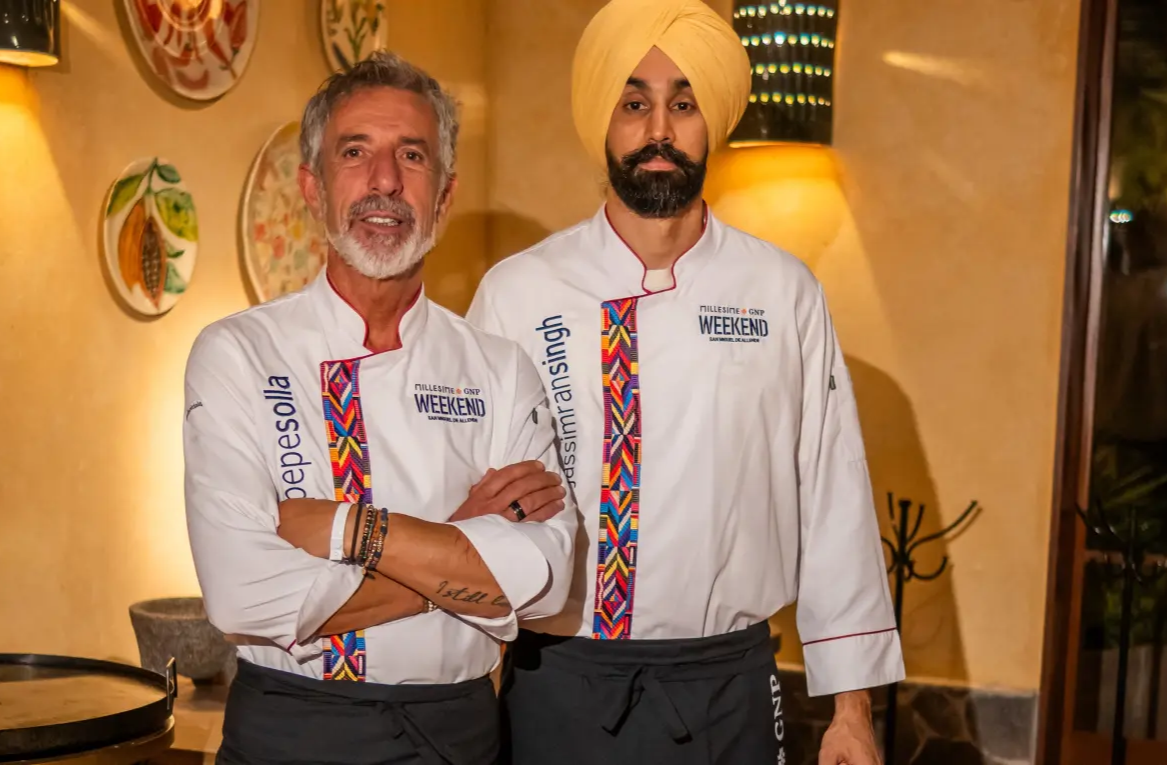

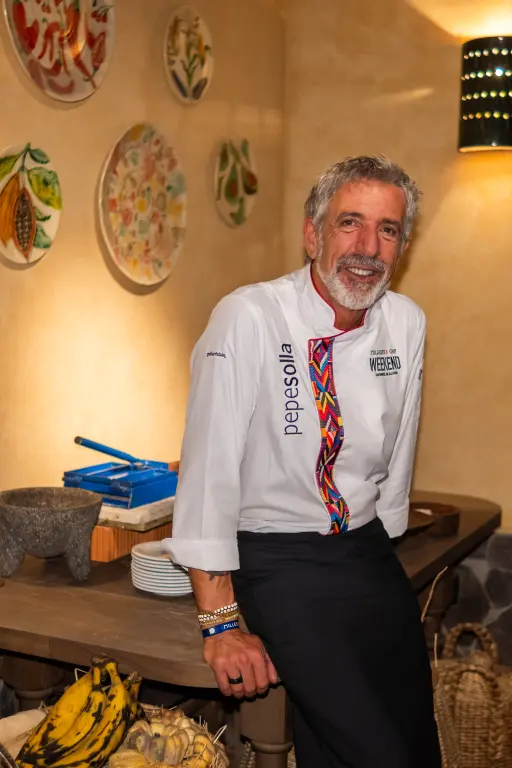
San Miguel de Allende once again put its tables at the center of its tourism conversation. During Millesime GNP Weekend, Pirules Garden Kitchen—the restaurant led by chef Odín Rocha inside Rosewood San Miguel de Allende—hosted one of the gathering’s Cenas de Altura (High-End Dinners): a collaboration between Jassimran Singh from Crown Shy in New York and Pepe Solla from Casa Solla in Pontevedra, Spain.
The dinner was not limited to bringing together international names. It functioned as an interpretation of the current moment in destination gastronomy: limited-seating experiences, unrepeatable menus, guest chefs, and hotels that no longer just offer lodging, but also moments capable of justifying a trip. On that map, San Miguel de Allende appears less like a postcard and more like a city beginning to command attention through its kitchens.
Pirules as a starting point
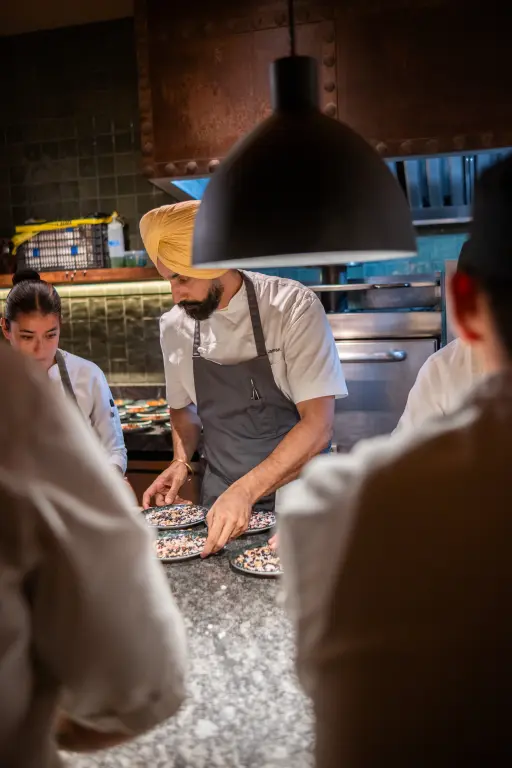
Pirules works from a direct relationship with its surroundings: garden, fire, local produce, and an idea of hospitality that accompanies without becoming the main character. In a dinner of this type, the venue does not just provide the space; it also defines the tone.
Odín Rocha was the host of a table where three culinary interpretations coexisted: the multicultural energy of New York, the Atlantic precision of Galicia, and the Mexican sensitivity of San Miguel. The result was a dinner built as a route, rather than a mere succession of dishes.
A table between New York and Galicia
Jassimran Singh brought to the dinner the perspective of Crown Shy, a New York restaurant where cuisine is understood through the intersection of cultures, techniques, and urban references. His participation contributed less predictable combinations, with ingredients that moved between marine, spiced, and vegetal elements.
Pepe Solla, at the helm of Casa Solla, represented a more restrained Galician cuisine, tied to the product and the memory of the territory. His proposal did not need to resort to excess to make a statement: it did so through recognizable flavors, crafted with technique and depth.
That difference between both cooks was part of the night’s interest. The dinner allowed guests to see two ways of understanding haute cuisine: one more cosmopolitan, the other more deeply rooted in its origin. Pirules, from San Miguel de Allende, functioned as the common ground.
The dinner opened with a Pai Pai oyster with sherry and celery, paired with Tío Pepe from Jerez, Spain. It was a saline and direct start, designed to cleanse the palate and establish a first coordinate: the sea.
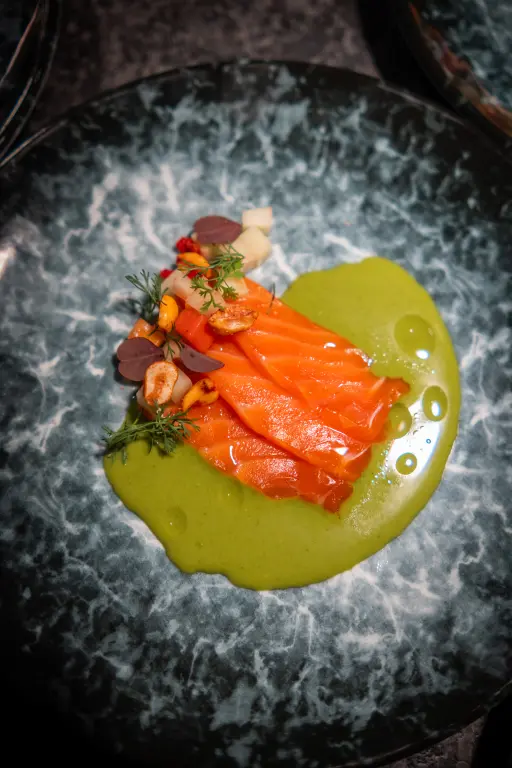
The second course was an Ora King salmon crudo with beets, accompanied by Louis Roederer Brut from Champagne. The fat of the fish found a contrast in the earthy sweetness of the beet and the acidity of the sparkling wine. Next came a green tomatillo gazpachuelo with tuna, also served with Champagne, where the Iberian reference crossed paths with a Mexican ingredient without forcing the local interpretation.
One of the most intense dishes was the cod with ’nduja and artichokes, paired with Bonanza Chardonnay from California. There, the crossover cuisine was clearly felt: salinity, spiciness, fat, and a vegetal base all on the same plate.
The part most closely linked to Galicia appeared with the cured beef meatballs, cachelos (Galician potatoes), and smoked cheese cream, accompanied by Duetto from Santo Tomás from Baja California. The dish took the dinner to a warmer and deeper zone: meat, potato, smoke, and Mexican wine inside an international experience.
The closing of the menu returned to Mexico with chocolate, corn, and chili, served with Mezcal Creyente Tobalá from Oaxaca. It was not a decorative or complacent finale: it was a way of returning the dinner to the territory where it was taking place.
The pairing, selected by sommelier Pablo Mata, traced its own narrative. It did not just accompany the dishes; it helped construct the story of the dinner. The selection traveled through Spain, France, the United States, and Mexico, with a significant presence of domestic wine through Santo Tomás.
The Cena de Altura at Pirules left behind a broader takeaway: today, haute gastronomy also functions as tourism infrastructure. A table of this kind activates the hotel, restaurant, service, sommellerie, and destination narrative; it converts a stay into an experience with an unrepeatable date, venue, and protagonists.
Therein lies the difference between a memorable dinner and a destination experience. The first ends when you leave the table; the second leaves you with a reason to return.
Source: eleconomista