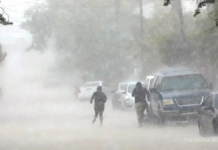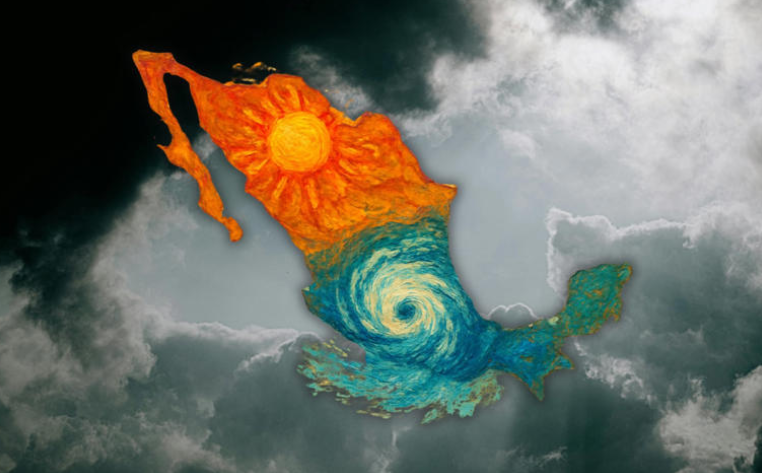

The National Meteorological Service (SMN) has warned of the arrival of an out-of-season cold front that, beginning today, will bring a polar air mass with wind gusts of up to 80 kilometers per hour, thunderstorms, and heavy rainfall across numerous states.
At the same time, the U.S. National Oceanic and Atmospheric Administration (NOAA) has officially confirmed the onset of the El Niño phenomenon, with a 63% probability of reaching a “very strong” category by late 2026 and early 2027.
Although these systems operate on different time scales, together they create a situation in which prevention and constant monitoring of official weather sources become essential.
Why is there talk of a “polar cold wall” while extreme heat continues?
The term describes the strength with which the cold front will move across the country.
According to the SMN, this system, combined with cyclonic circulation, low-pressure channels, and moisture from the Pacific Ocean, Gulf of Mexico, and Caribbean Sea, will create a sharp boundary between two air masses.
Wind gusts could exceed 80 kilometers per hour in some northern regions, causing dust storms and sudden temperature drops in areas that had previously been experiencing intense heat.
This coexistence of extreme weather conditions is why so many states are currently under alert.
Which states are under alert for heavy rain and strong winds?
The SMN has issued preventive warnings for a large portion of the country. Intense rainfall, accompanied by hail and thunderstorms, is expected in:
- Tamaulipas
- San Luis Potosí
- Hidalgo
- Puebla
- Veracruz
- Oaxaca
- Chiapas
Very heavy rainfall, with risks of flooding and landslides, is forecast for:
- Nuevo León
- Michoacán
- Querétaro
- Tlaxcala
- Guerrero
Additionally, moderate to heavy rain is expected in:
- Mexico City
- State of Mexico
- Jalisco
- Colima
- Chihuahua
- Coahuila
- Tabasco
In all these areas, Civil Protection authorities recommend following official weather updates and avoiding flooded roads and swollen rivers.
Is there a risk of a tropical cyclone at the same time?
Alongside the cold front, two low-pressure systems in the Pacific Ocean have the potential to develop into tropical cyclones.
One of them could strengthen off Mexico’s southern coast during the day, increasing moisture inflow and intensifying rainfall across western, central, southern, and southeastern Mexico.
Forecasts indicate that Guerrero, Oaxaca, and Chiapas could experience torrential rainfall, high waves, and strong coastal winds.
For this reason, warnings extend not only to mountainous and urban areas but also to communities along the southern Pacific coast.
The heat wave is not over
While storms dominate the headlines, the heat wave remains active.
The SMN reported that maximum temperatures between 40°C and 45°C (104°F–113°F) will continue in:
- Sonora
- Sinaloa
- Chihuahua
- Durango
- Nayarit
- Baja California
Other parts of Jalisco, Colima, Michoacán, Guerrero, Oaxaca, and Chiapas will also remain under very hot conditions, especially during the weekend.
In contrast, mountainous areas of Durango could see temperatures near 0°C (32°F), with the possibility of frost during the early morning hours.
These dramatic temperature swings require precautions against both heat-related illnesses and sudden cold conditions.
Why is NOAA warning about a potentially historic El Niño?
While Mexico deals with immediate weather impacts, NOAA has confirmed that El Niño conditions are already established.
After analyzing sea surface temperatures in the equatorial Pacific and related atmospheric patterns, the Climate Prediction Center determined that conditions are consistent with an event that could reach exceptional intensity.
Current projections show a 63% chance that El Niño will reach a “very strong” category between November 2026 and January 2027.
If this occurs, it could rank among the strongest El Niño events recorded in modern history.
What effects could a major El Niño have?
Strong El Niño events often significantly alter global weather patterns. NOAA and the European Centre for Medium-Range Weather Forecasts indicate that such events are commonly associated with:
- Higher global average temperatures.
- Prolonged droughts in key agricultural regions.
- Extreme rainfall and flooding in other areas.
- Changes in tropical cyclone activity across various ocean basins.
- Impacts on agriculture and water supplies.
Experts emphasize that it is still too early to determine the exact magnitude of the phenomenon or its final effects, but current forecasts suggest that close monitoring will be necessary throughout the coming months.
Source: msn