
Police Disperse Protesters Opposing Recycling Plant and Landfill Project in Tlaxcala
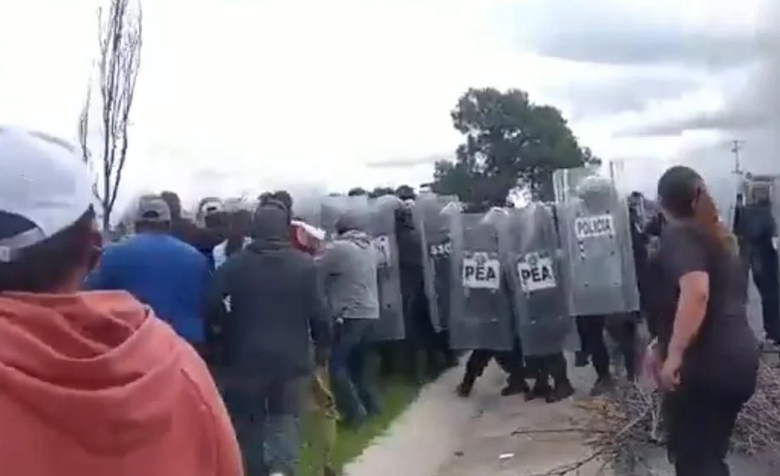
Riot police dispersed residents of San Pedro Ecatepec, a small rural community in the municipality of Atlangatepec, northern Tlaxcala, using tear gas on Wednesday. The residents oppose the installation of a recycling plant and landfill due to concerns about environmental impacts in a region whose economy depends on agriculture, livestock, and local water resources.
The protest occurred while specialized personnel were conducting technical studies on the land where a Circular Economy Development Hub for Well-Being (PODECIBI), an initiative promoted by the federal government, is planned.
Residents argue that the complex would be located approximately 700 meters from the residential area and have expressed concerns about the volume of waste it could receive from different municipalities, as well as the project’s actual ability to process it without causing environmental damage.
Conflict Escalates
The conflict intensified after state authorities alleged that the protesters prevented the technical studies from being carried out and allegedly detained technical personnel.
In an official statement, the Government of Tlaxcala asserted that some individuals entered the property to obstruct the specialists’ work and that, according to preliminary reports, some participants carried objects used as improvised weapons and engaged in acts of intimidation.
The state administration also reported alleged harassment, vehicle inspections, restrictions on the work of specialized personnel, and the presence of individuals who appeared to be under the influence, creating what it described as an atmosphere of tension and risk.
The residents rejected these accusations, insisting that they never attacked the specialists or the security forces.
According to their version of events, the confrontation began when they demanded access to and the opportunity to review the samples being collected at the site. Residents interviewed stated that they distrust the official studies because, they claim, authorities have denied the existence of aquifers and other environmental features that they believe could be affected by the project.
Residents Report Use of Tear Gas
During a live broadcast from the scene, a resident stated that police began firing tear gas and claimed that some officers even drew their firearms despite, according to her, not having been attacked.
On banners and signs, protesters expressed their opposition to the project with messages defending the region’s water resources, flora, fauna, and the right to a healthy environment.
They also denied having detained anyone and reiterated that they were only seeking access to the technical information gathered during the studies.
“The Governor’s spokesperson said that only 10 people in San Pedro Ecatepec opposed the project. Now they’ve seen that we are not just 10 people—we are an entire municipality. We are many communities, and it’s unfair because they pretend to care about the people, but it’s clear they don’t. They’re attacking us in a way that shouldn’t happen. We’re only asking for our rights,” one resident said.
Later, a local reporter documented riot police intensifying the operation and launching additional rounds of tear gas to disperse the demonstrators.
“We’re going to leave—they’re raining tear gas and stones… They’re firing more tear gas,” the reporter narrated while filming a helicopter from the State Security Secretariat flying over the area as columns of smoke rose from the protest site.
Another banner displayed by residents read:
“San Pedro Ecatepec is not an industrial zone.”
Why Residents Oppose the Project
The opposition is closely tied to the community’s characteristics. San Pedro Ecatepec is located in one of Tlaxcala’s most rural and agricultural regions. According to the 2020 Census, it has approximately 1,500 inhabitants, and its economy relies primarily on rain-fed agriculture, forage production, cattle and sheep farming, and dairy production.
Residents also emphasize the community’s proximity to the Atlangatepec Lagoon, the largest body of water in Tlaxcala and home to numerous plant and animal species, including migratory birds that visit the area each year.
About the PODECIBI Project
The project is part of the Circular Economy Development Hubs for Well-Being (PODECIBI), which the federal government defines as complexes dedicated to sustainable production, recycling, material recovery, and the reduction of waste and pollution.
According to the official project description, the Tlaxcala PODECIBI will cover just over 20 hectares across two sites located in Atlangatepec and meets the requirements for access to tax incentives and programs that promote the circular economy.
While the state government maintains that the studies are intended to generate scientific, technical, and environmental information to assess the project’s feasibility, residents continue to demand guarantees that the facility will not endanger the natural resources that support the community’s economy and daily life.
Source: reforma