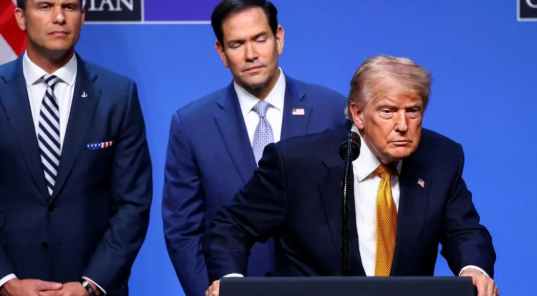

U.S. Secretary of State Marco Rubio announced that he will lead a ministerial meeting on July 15 in Washington, featuring representatives from more than 60 countries across the Western Hemisphere, Europe, and Asia.
According to the State Department, the meeting aims to analyze the resurgence of political violence and coordinate strategies to address this phenomenon, which the U.S. government views as a growing threat to international security.
As of now, Mexican Foreign Minister Roberto Velasco is not among the invitees to this meeting organized by the U.S. government. This situation has drawn attention, as it is not the first time Mexico has been excluded from a security initiative driven by the current U.S. administration.
In March, the Mexican government also failed to receive an invitation to a summit convened by President Donald Trump—attended by Latin American leaders—to promote a hemispheric shield against narco-terrorism.
This summit follows President Donald Trump’s signing of a new counter-terrorism strategy in May. That plan places special emphasis on identifying and combating groups the White House considers promoters of political violence.
The U.S. strategy focuses on actions that fall within the definition of terrorism, such as assassinations, kidnappings, violent threats against government officials, attacks on official facilities, assaults on law enforcement, and attacks targeting critical infrastructure or military personnel.
The initiative also arises against the backdrop of the September assassination of conservative activist Charlie Kirk. Following his death, U.S. government advisors pushed for a coordinated effort to investigate and combat leftist groups accused of inciting violence, although specific organizations were not publicly identified.
Source: tvazteca