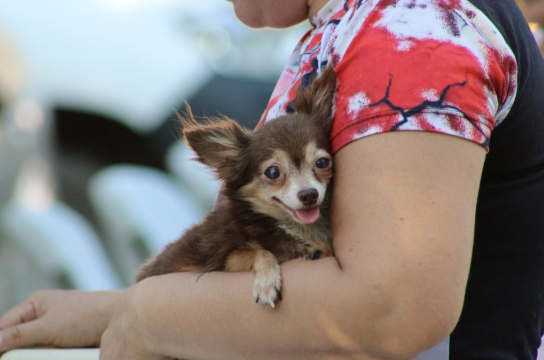

Yucatán ranks among the states in the country with the highest presence of pets in households, according to the 2025 National Self-Reported Well-Being Survey (ENBIARE) conducted by the National Institute of Statistics and Geography (INEGI). The study shows that living with companion animals is part of the daily life of a large proportion of Yucatán families.
According to the survey results, 71.6% of households in the state have at least one pet, placing Yucatán sixth nationwide. This figure indicates that nearly seven out of every ten households have a dog, cat, or another companion animal.
This trend reflects a transformation in the way many families view their companion animals, which are increasingly occupying a more important place within the family environment.
ENBIARE 2025 Places Yucatán Among the Top States
The INEGI report shows that Hidalgo and Tlaxcala lead the national ranking, with 73.0% of households having pets. They are followed by Oaxaca, with 72.9%; Puebla, with 72.5%; Campeche, with 71.8%; and Yucatán, with 71.6%.
In contrast, Mexico City recorded the lowest percentage in the country, with 56.0% of households having companion animals. It is followed by Tabasco, with 58.8%, and Quintana Roo, with 59.3%.
Specialists Highlight the Importance of Responsible Pet Ownership
According to veterinarian María Fernanda López, this increase reflects an evolution in the relationship between people and their pets, with animals now considered part of the family.
“Today, dogs and cats are no longer seen only as household guardians or occasional companion animals. In many families, they are considered another family member, so there is a greater willingness to invest in their food, medical care, and quality of life,” explained María Fernanda López.
The specialist warned that the growing number of pets in Yucatán also brings greater responsibilities. She emphasized the need to strengthen vaccination, spaying and neutering, and responsible pet ownership campaigns in order to prevent abandonment and reduce the population of stray dogs and cats.
She also reminded that caring for a companion animal goes beyond simply providing food and requires ongoing attention to preserve both the animal’s well-being and that of the people who live with it.
“It also requires ensuring veterinary checkups, vaccinations, deworming, adequate spaces for the animal, and quality time together, all of which have an impact on both the animal’s health and the health of the people around it,” she concluded.
Source: 24horasyucatan