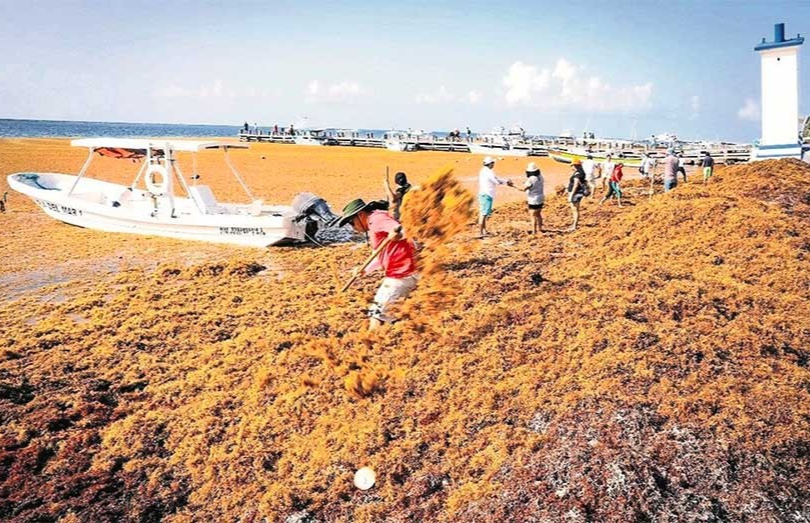

Facing a decline in tourism that has already led to staff layoffs in some hotels due to factors such as the unprecedented arrival of sargassum, international conflicts, wars, reduced airline seat availability, and other challenges, small and medium-sized businesses have signed a collaboration agreement to promote the circular economy.
Through this initiative, they aim to encourage local consumption and positively impact at least 10 percent of sales, according to COPARMEX president Jovita Portillo.
Speaking at a press conference following a meeting with representatives from five small and medium-sized businesses, Portillo explained that the first half of the year has produced lower-than-expected economic activity. Hotel occupancy has ranged between 40 and 80 percent, while restaurant revenues have dropped by approximately 30 percent, creating a difficult business environment.
She explained that the collaboration agreement is intended to allow each participating business organization to offer benefits based on the products or services they provide.
“That is what we are doing. As we know, there are organizations that already offer programs such as local resident pricing. In the same way, restaurants and other businesses can create a circular economy among companies and sectors, generating benefits for members of each business chamber, as well as for employees and even the general public.”
As a result, businesses will focus more on the domestic market, particularly on formal-sector workers and companies that drive the country’s economy, by offering special prices and promotions to business members, employees, and the general public.
Portillo emphasized the importance of making the initiative successful during the coming months, from August through December, traditionally the slowest period for tourism. The objective is to end the year with greater stability, preserve jobs, and continue meeting tax, labor, and regulatory obligations.
She noted that the results of the program will be closely monitored to determine its effectiveness and whether it should continue beyond its first year. If positive results are achieved, more businesses are expected to join the initiative.
The business leader added that the situation extends beyond declining revenues. Maintaining formal employment involves significant obligations, including taxes, permits, and social security contributions. For that reason, businesses need to create a sustainable economic ecosystem that allows them to remain viable.
Finally, the COPARMEX president announced that the business sector will soon meet to finalize a sustainable proposal to present to the federal government. The proposal seeks the creation of support and unemployment insurance mechanisms, arguing that while retirement savings funds (AFORES) exist, additional forms of economic protection should also be developed.
Source: jornada