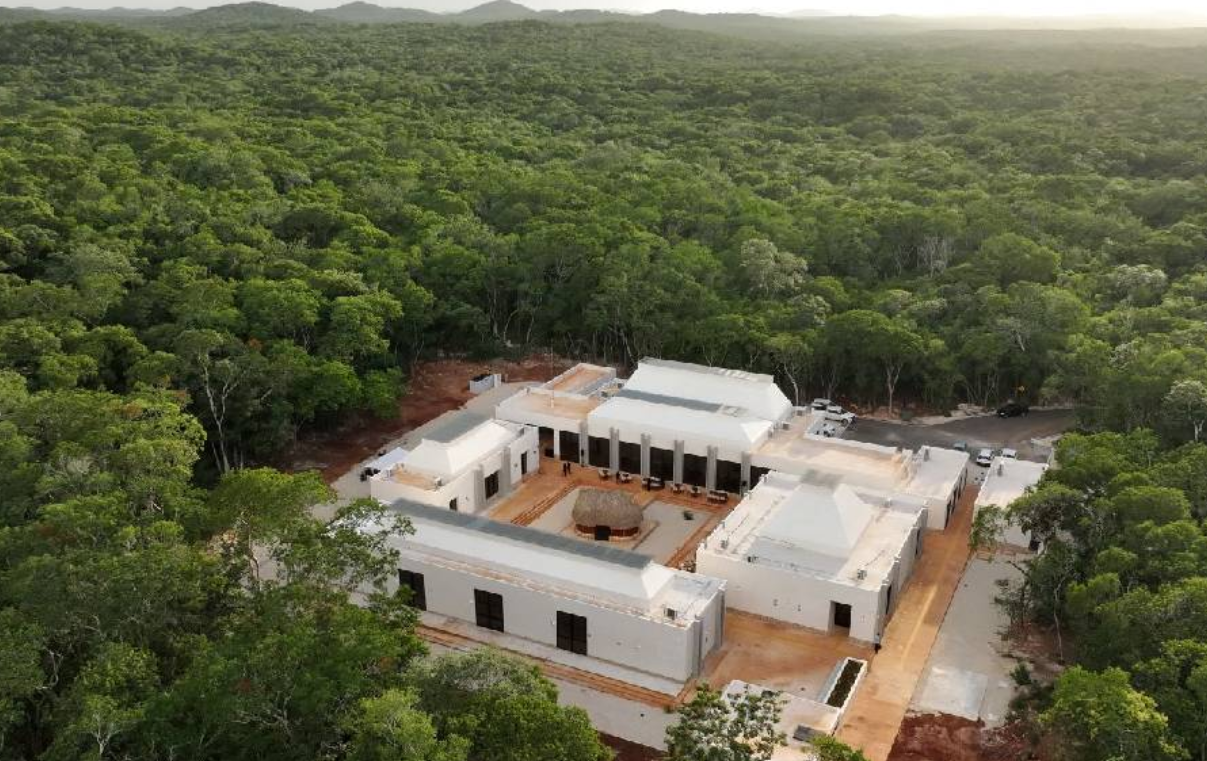

With an investment of 227 million pesos, the Ministry of Culture of the Government of Mexico, through the National Institute of Anthropology and History (INAH), inaugurated the Puuc Archaeological Museum at the Kabah Archaeological Zone in Yucatán.
The museum houses 251 cultural artifacts and presents the results of two decades of research on one of the most significant regions of the Maya civilization, which includes the ancient cities of Uxmal, Sayil, Labná, and Xlapak.
The museum was inaugurated by Claudia Curiel de Icaza, Secretary of Culture of the Government of Mexico; Patricia Martín Briceño, Secretary of Culture and the Arts of Yucatán; Omar Vázquez Herrera and Víctor Martínez Rojas, directors of INAH at the federal and Yucatán levels, respectively; and Lourdes Toscano Hernández and José Huchim Herrera, directors of the Kabah and Uxmal archaeological sites.
The Secretary of Culture stated that, with this museum, “we open a new gateway to learn about, understand, and experience one of the most extraordinary regions of the Maya civilization.”
Curiel de Icaza added that every artifact on display “is a testament to the societies that inhabited our territory, an archaeological heritage that allows us to reconstruct history, ask new questions, and connect with the people who centuries ago built these cities, traveled these roads, and shaped a cultural horizon that continues to amaze us. At the same time, it reminds us that Maya culture belongs not only to the past but remains alive in the languages, knowledge, community practices, and ways of understanding the land preserved by the Maya people, who continue to give identity and strength to Yucatán.”
For his part, Omar Vázquez, head of INAH, emphasized the museum’s importance for the preservation, study, and dissemination of archaeological and ethnographic heritage.
“Opening its doors brings an ancestral legacy closer not only to tourists but also to the people of the surrounding communities, who are the ones who keep it alive,” he said.
A History Built by Generations
The museum houses 189 archaeological artifacts recovered through research projects conducted over the past 20 years, as well as a collection of 62 historical and artistic pieces that enrich the museum’s narrative.
Together, the more than 250 objects on display illustrate the social, political, economic, and religious organization of the ancient cities of the Puuc region.
The exhibition incorporates interactive resources and an immersive experience designed to help visitors better understand the Maya civilization and the archaeological research carried out by INAH.
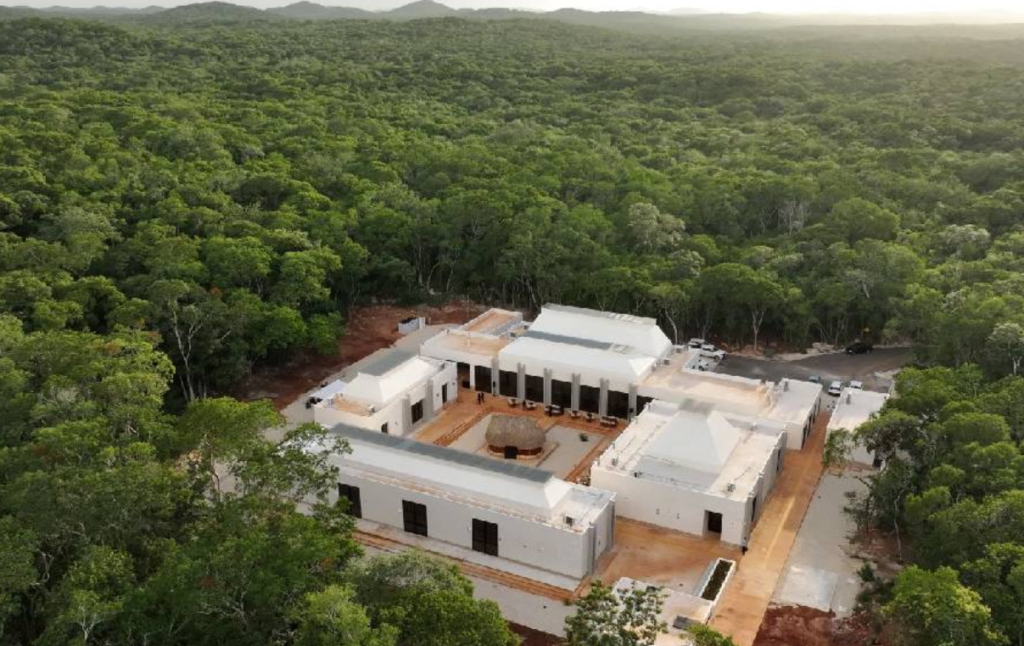
Built on an area of 2,739 square meters, the Puuc Archaeological Museum takes architectural inspiration from the Nunnery Quadrangle (Cuadrángulo de las Monjas) at Uxmal, one of the most iconic examples of Puuc architecture.
Its design recreates the Maya conception of the universe through a visitor route organized around a central space—represented by a traditional Maya house—from which the four cardinal directions extend. This layout allows visitors to understand the close relationship between architecture, cosmology, and territory.
New Visitor Services
As part of the project, a Visitor Services Unit was also built at the Kabah Archaeological Zone, covering 196 square meters and improving the visitor experience at the site.
The project included an investment of 211,683,703 pesos for the construction of the museum and 15,959,698 pesos for the Visitor Services Unit.
Source: aristeguinoticias