
The Guadalajara Metropolitan Area in the state of Jalisco has become a clear example of what experts describe as “water bankruptcy,” a condition caused by excessive water extraction and environmental degradation that leaves ecosystems unable to regenerate naturally.
“When we talk about a crisis, we refer to the possibility of restoring what has been damaged. Now we are facing water bankruptcy because what must be evaluated is whether there is still the capacity to recover what remains, under the premise that some of the damage may be irreversible,” said Arturo Gleason, a researcher at the University of Guadalajara (UdeG) specializing in water systems.
The warning is supported by a growing body of evidence, the most recent being the distribution of contaminated water by the Intermunicipal Water Supply and Sewerage System (SIAPA), the agency responsible for providing water throughout the metropolitan area under the administration of the Jalisco state government.
Reports of poor water quality began circulating at the beginning of this year and have continued ever since, prompting the state government to acknowledge the issue and present a Water Plan for the city. The proposal, however, has generated more questions than answers.
Centuries of Water Pollution
Guadalajara was permanently founded in February 1542 on the banks of the San Juan de Dios River. According to the most common interpretation, the city’s name means “river that runs among stones.”
For centuries, residents relied on water from the Atemajac River and nearby springs such as Agua Blanca, Agua Azul, San Andrés, Mexicaltzingo, and Los Colomos.
Water contamination began during the 17th century, when the city’s first public drainage system was built. Human waste was discharged directly into the San Juan de Dios River, which by the end of the 19th century had become an open sewer. During the rainy season, polluted floodwaters frequently inundated the city. Authorities eventually enclosed the river underground, creating what is now Calzada Independencia.
Beginning in the second half of the 20th century, rapid population growth and the development of an industrial corridor in the neighboring municipality of El Salto made existing water sources insufficient.
As a result, in 1957 Guadalajara began extracting water from Lake Chapala through an open canal. In 1991, the system was integrated into an aqueduct that now supplies approximately 63 percent of the city’s drinking water.
The remaining supply comes from:
- 22% from overexploited aquifers.
- 14% from the Calderón–La Red–El Salto–El Zapotillo reservoir system.
- 1% from natural springs.
The “Day Zero” of Water
Since the late 1990s, experts had warned that Guadalajara needed additional water sources. Over the following decades, multiple projects were proposed but ultimately failed because of political disagreements, technical and environmental concerns, or significant social impacts.
Among the most controversial was the proposal to raise the El Zapotillo Dam to 105 meters, a project that threatened to flood the communities of Temacapulín, Acasico, and Palmarejo in the Los Altos region of Jalisco.
On February 10, 2021, the Calderón and La Red reservoirs ran dry, causing intermittent water service across Guadalajara, particularly in the northern part of the city.
According to Rodrigo Flores Elizondo, a researcher at ITESO, this event became known as “Water Day Zero.”
To address the shortages, the state government implemented emergency measures including:
- Water delivery by tanker trucks.
- Public water storage tanks.
- Scheduled water rationing across much of the metropolitan area.
Researchers argue that these measures remain insufficient.
In the article Five Years After Guadalajara’s Water Day Zero: What Have We Learned?, published by ITESO in March, Flores Elizondo concluded that the city’s water system remains highly vulnerable even to relatively small droughts, with no comprehensive response strategy beyond increasing water supply.
What About Water Treatment?
On January 25, 2008, Miguel Ángel López Rocha, an eight-year-old boy, fell into the waters of the Santiago River while playing.
Nineteen days later, he died at the General Hospital of the West from multiple organ failure caused by acute arsenic poisoning.
Although the Jalisco state government at the time, led by Emilio González Márquez, refused to accept responsibility for the river’s contamination, Miguel Ángel was officially recognized as a victim in 2015.
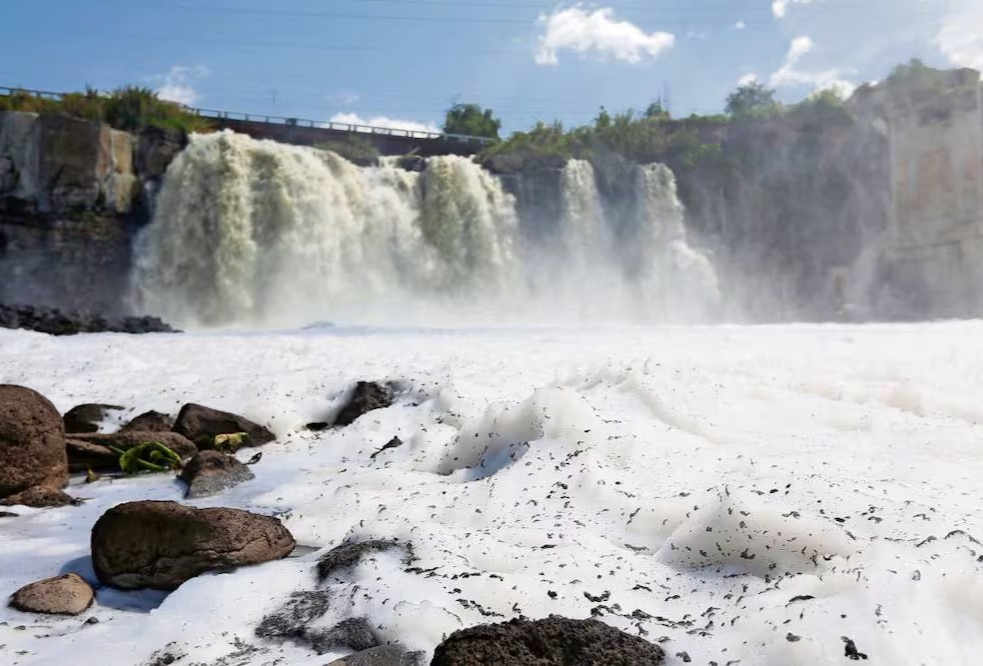
Since then, organizations including Un Salto de Vida, the Citizens’ Committee for Environmental Defense of El Salto, and the Mexican Institute for Community Development (IMDEC) have documented thousands of deaths from cancer and other illnesses they attribute to the severe pollution of the Santiago River.
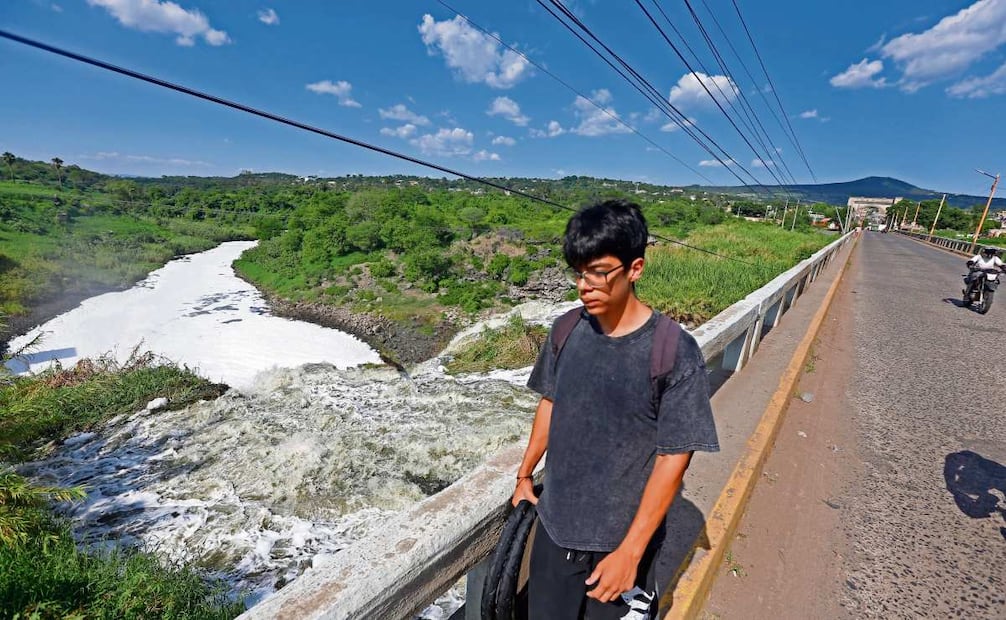
These groups argue that untreated wastewater discharged by industries, residential developments, landfills, and other sources remains the principal cause of contamination in the Lerma–Chapala–Santiago–Pacific Basin, Mexico’s second-longest river system.
Despite multiple government initiatives, efforts to restore the river have so far failed.
According to the latest report from the National Water Quality Monitoring Network, published by the federal government in May, the section of the Santiago River flowing through El Salto and Juanacatlán contains between 460,000 and 46 million fecal coliform colony-forming units (CFU) per 100 milliliters, whereas acceptable health standards require concentrations below 100 CFU per 100 milliliters.
Water samples collected in 2025 also showed that dissolved oxygen levels reached a maximum of only 2.53 milligrams per liter, far below the 5 mg/L generally considered necessary to sustain aquatic life.
A Partial Diagnosis
After acknowledging problems with the water distributed by SIAPA, the Jalisco state government announced at the end of June a plan containing 32 actions intended to improve the metropolitan area’s water system.
A few weeks later, lawmakers received a document titled Technical Bases for Prioritizing Strategic Interventions for Water Security in the Guadalajara Metropolitan Area, a report exceeding 400 pages that has been criticized by specialists.
According to researcher Arturo Gleason, the document is improvised, lacks depth, and is filled with generalities.
He noted that page 8 explicitly states:
“These technical bases do not constitute strategic planning instruments, nor do they predetermine the specific solutions to be adopted. They also do not, by themselves, represent decisions regarding programming, financing, authorization, or implementation.”
When asked to provide more detailed information, the state government directed the public to its Strategic Comprehensive Water Management Plan for the Guadalajara Metropolitan Area, which includes three primary reports and 31 annexes, totaling more than 1,800 pages.
The plan estimates that implementing the proposed 32 actions between 2026 and 2030 would require an investment of approximately 42.217 billion pesos in areas including water treatment, distribution, and infrastructure.
The documents also acknowledge that much of the information used to prepare the diagnosis is fragmented, incomplete, and inconsistent.
According to the report:
“One of the principal findings of the diagnostic process is not only the identification of existing constraints, but also the recognition that significant information still needs to be consolidated to reduce uncertainty. Among the most important gaps are the absence of standardized inventories regarding the condition and age of infrastructure assets; the lack of comparable balances between nominal, available, and utilized capacity; fragmented records on operation, maintenance, and failures; and the limited territorial integration of watershed, network, and service studies.”
Source: eluniversal