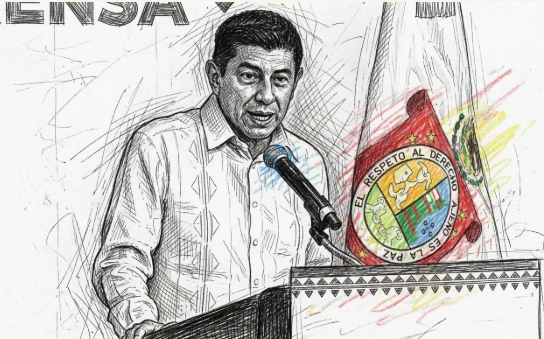

Oaxaca Governor Salomón Jara announced during his press conference on July 20, 2026, that his administration will compile a list of news outlets it considers critical of his government, warning that officials will stop responding to questions from those media organizations.
The governor argued that the measure is a response to news coverage driven by opposition to his administration, sparking a broad debate over freedom of expression and the public’s right to information in the state.
The proposal emerges amid a politically tense environment marked by institutional disputes and growing concerns among journalists about the limits of public scrutiny.
Administration’s Position and Journalistic Response
Speaking to reporters at the Government Palace, the governor stated that the outlets included on the list lack objectivity in the questions they ask. He also intensified his political criticism by accusing Oaxaca City Mayor Ray Chagoya of financing destabilization campaigns through close associates.
These disputes highlight growing fractures within the state’s political landscape and the use of official communication platforms to address partisan disagreements.
Journalist associations and civil society organizations quickly condemned the proposal, describing it as a form of prior censorship that undermines government accountability.
Legal experts noted that press conferences and transparency initiatives are not dependent on a government’s approval of the media. Instead, they are constitutional obligations funded with public resources to guarantee citizens’ access to information.
Implications for Freedom of Expression in Oaxaca
The creation of an exclusionary list of media outlets represents a direct challenge to democratic standards and journalistic work in the state.
Human rights organizations have warned that labeling critical media with derogatory terms weakens the rule of law and increases the risks faced by journalists in one of Mexico’s most vulnerable regions for press freedom.
For its part, the state administration insists that the measures are intended to curb systematic disinformation campaigns. However, legal and media experts emphasize that the appropriate institutional response to inaccurate reporting is the right of reply, not restricting access to official channels of communication.
The debate over the relationship between the executive branch and the media continues to grow as a major public issue in Oaxaca.
Source: diariodeconfianza