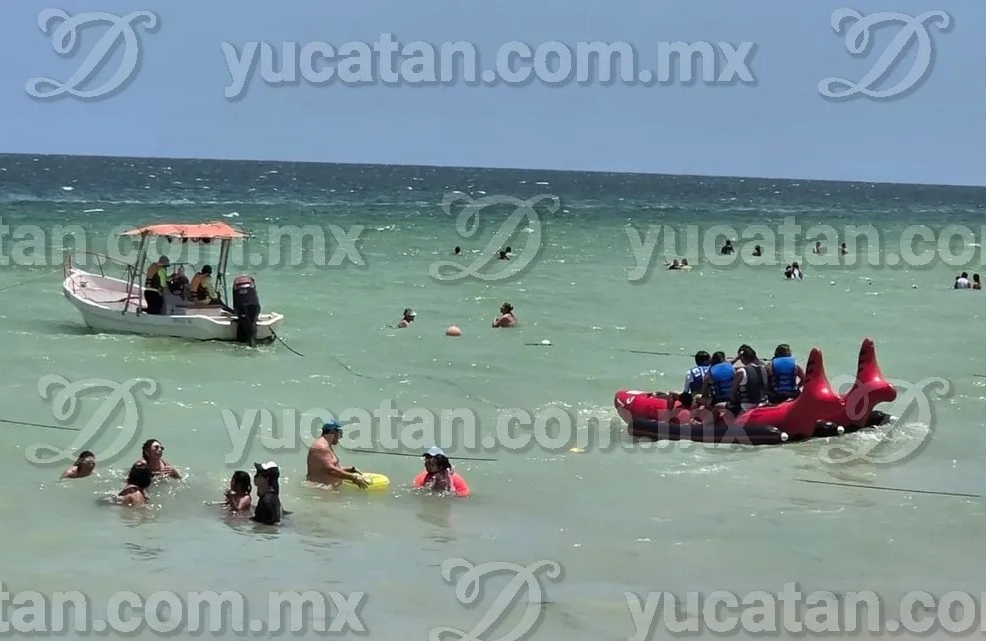

Yucatán Beaches With the Best Water Quality Stand Out During Summer Vacation Season
The Yucatán beaches that stand out the most for the quality of their seawater are located in areas of Progreso, Telchac Puerto, Celestún, and Chabihau, with the remaining beaches along the state’s coastline ranking very close behind.
All Yucatán beaches are suitable for recreational use during these summer vacations, according to monitoring carried out by the Federal Commission for the Protection against Health Risks (Cofepris), released on July 9 of this year.
When is water at a beach considered a health risk?
The monitoring used the levels of the Most Probable Number (MPN) of Enterococci per 100 milliliters of water. A beach is considered to represent a health risk if it exceeds 200 MPN/100 ml.

Telchac, Celestún, Chabihau, and Chelem stand out among the coastal areas with the best water quality in Yucatán, guaranteeing a safe environment for visitors.
The port of Progreso offers suitable waters for swimmers this summer after registering minimum bacteria levels in Cofepris monitoring conducted before the vacation period.

This is an indicator of the bacteriological quality of the water, specifically regarding the presence of enterococci, a type of bacteria. A high MPN value indicates greater fecal contamination in the water and may be an indicator of the presence of other pathogens.
In general, all Yucatán beaches have minimum levels of enterococci MPN/100 ml, ranging between 10 (such as those mentioned at the beginning) and 16 MPN.

To provide an idea of the difference compared with contaminated beaches in other states that are not suitable for recreational use, the so-called Playa Blanca in Tijuana registers 10,745 MPN/100 ml.
Are Quintana Roo beaches suitable for recreational use?

In Quintana Roo, where many Yucatán residents travel during vacations, all beaches are also suitable for recreational use, as is the case in Campeche.
In this neighboring state, the beach with the highest MPN/100 ml level in the Yucatán Peninsula is located: Manigua, in Ciudad del Carmen, with 47 MPN, which does not prevent it from being visited or used for swimming.

The Cofepris Summer 2026 Pre-Vacation Beach Monitoring in Yucatán was carried out between June 15 and June 24, measuring the bacteriological quality of seawater in enterococci MPN/100 ml.
Results of water analysis on Yucatán beaches
The results for Yucatán beaches were the following:
- Telchac I and Telchac II: 10 MPN/100 ml
- Progreso I, II, and III: 15 MPN
- Progreso IV: 10 MPN
- Chelem I: 15 MPN Enterococci/100 ml
- Chelem II: 16
- Chuburná Puerto I: 12
- Chuburná Puerto II: 13 MPN
- Chicxulub: 13
- Celestún I: 13 MPN
- Celestún II: 10 MPN
- Sisal: 12
- San Benito: 12
- San Crisanto: 12
- Chabihau: 10
- Santa Clara: 12
- Dzilam de Bravo: 16
Other results:
- Playa Bonita, San Felipe: 13 MPN
- Río Lagartos: 13
- Las Coloradas: 12
- El Cuyo: 13
- Uaymitún: 11 MPN Enterococci/100 ml
Meanwhile, in Quintana Roo, seawater bacteriological quality monitoring was carried out from June 15 to June 25.
Results for Quintana Roo beaches
In Cancún, the results were:
- Puerto Morelos: 14 MPN/100 ml
- Delfines: 11
- Marlín: 13
- Tortugas: 10 MPN
- Langosta: 13
- Las Perlas: 14
- Del Niño: 15
In Cozumel:
- Las Casitas, Centro, Dzul Ha, Chankanaab, Rastas, Bonita, Caletita, and San Martín I and II: 10 MPN/100 ml each
- Chen Río: 11
In Isla Mujeres:
- Playa Centro: 20 MPN
- Playa Norte: 27
In the Riviera Maya:
- Chunzubul, Porto Real, Public Beach, Lancheros, Punta Esmeralda I, II, and III: 10 MPN/100 ml each
- Paamul: 13
In Mahahual:
- Restaurante Tequila area: 13 MPN
- Mini Super Carolina area: 14
- El Faro: 10
- Hotel 40 Cañones: 10
In Tulum:
- Playa Zamas: 10 MPN/100 ml
- Maya I: 12
- Maya II, Maya III, and Xcacel: 10
Results for Campeche beaches
In Campeche, monitoring was carried out between June 16 and June 30.
In the municipality of Campeche:
- San Lorenzo and Bonita beaches: 10 MPN/100 ml
- Sombrerón: 12
In Champotón:
- Boca del Río: 42
- Punta Xen: 14
- Palmeras: 11
- Isla Arena: 35 MPN
In Ciudad del Carmen:
- Manigua: 47 MPN/100 ml
- Norte I: 13
- Norte II: 10
- Bahamita: 12
- Puerto Real: 16
- Isla Aguada: 11 MPN
- Viaducto: 10
- Zacatal (bridge): 46 MPN
In Seybaplaya:
- Payucán and Villa Madero beaches: 11 MPN/100 ml
Beaches that are not suitable for swimming
The beaches in Mexico that are not suitable for recreational use were the following:
In Baja California:
- Tijuana I, which includes San Antonio del Mar, registered 5,244 MPN Enterococci/100 ml
- Baja Malibú: 1,466
- Playa Blanca: 10,745 MPN, making it the most contaminated beach in the country
Other beaches not suitable for recreational use:
- Playa Del Cuale in Puerto Vallarta, Jalisco: 235 MPN
- Playa Principal in Puerto Escondido, Oaxaca: 315 MPN
- Tumbau II and José Martí in Veracruz: 202 and 978 MPN/100 ml, respectively
Cofepris reported that, in coordination with state health authorities and the National Network of Public Health Laboratories, seawater samples were collected during the weeks prior to the 2026 summer vacation period in order to determine whether each beach represented a health risk.
Water quality on the country’s most visited beaches
Cofepris also reported that laboratory analyses conducted on 2,279 water samples from 289 of the most visited public beaches in the country’s main tourist destinations showed that 284 beaches are suitable for recreational use.
The only beaches in the country that are not suitable for recreational use are those mentioned above, as they exceeded the established quality criteria for protecting visitors.
Cofepris reminded that factors affecting water quality include storm drains, treated wastewater discharges, irregular settlements, informal commerce and fish-cleaning activities, as well as high numbers of swimmers during certain seasons and the lack of adequate sanitation and sewage infrastructure.
Health / Beaches in Mexico
Official analyses confirm that beaches are suitable this summer.
Before the vacation period
Cofepris reported that, together with state health authorities and the National Network of Public Health Laboratories, seawater samples were collected during the weeks before the 2026 summer vacation period to determine whether beaches represented a health risk.
Samples
It also reported that laboratory analyses carried out on 2,279 water samples from 289 high-visitor beaches in the country’s main tourist destinations showed that 284 beaches are suitable for recreational use.
Source: yucatan