
Mexico announced on Tuesday the arrest of 12 people who allegedly belonged to criminal cells dedicated to extorting producers, transporters, and packers in the western state of Michoacán, the country’s largest avocado-producing state and one of its most violent.
The arrests came just days after the Mexican government decided to reinforce security in Michoacán with 1,557 military personnel following threats against United States inspectors that led to the temporary suspension of avocado exports.
Federal Security Secretary Omar García Harfuch said the arrests were carried out Monday during 11 simultaneous raids involving police and military forces, as well as officials from the Attorney General’s Office.
The 12 detainees are accused of being members of criminal cells dedicated to collecting extortion payments from producers, workers, transporters, and packers in the avocado, livestock, and meat sectors, García Harfuch explained during the morning presidential press conference.
Extortion is one of the crimes that most severely affects Mexican business owners and merchants, who say they lose millions of dollars every year through payments to criminal organizations. Since last year, President Claudia Sheinbaum’s government has implemented a national plan to combat extortion.
Among those arrested is Cristian Maximiliano “N,” alias “X1,” who is linked to a group made up of former members of the criminal organization “Los Caballeros Templarios.” The Cártel Jalisco Nueva Generación, Cárteles Unidos, La Familia Michoacana, and Los Viagras also operate in Michoacán and have been designated by the United States as terrorist organizations.
During the raids, authorities seized six firearms, vehicles, a signal jammer, tactical equipment, narcotics, and cash, according to the federal Security Cabinet.
Protecting avocado production
Since last week, federal authorities have activated a broad security plan in Michoacán that included the establishment of 29 operational bases in five municipalities, 17 surveillance bases at avocado packing facilities, and an operations center in Uruapan, said Defense Secretary General Ricardo Trevilla Trejo.
In addition, 228 National Guard personnel were deployed to strengthen surveillance on the state’s highways, while security was reinforced at the five avocado inspection checkpoints operated by the National Service for Agro-Alimentary Public Health, Safety, and Quality, Trevilla Trejo said.
With the new contingent of personnel, Michoacán now has 9,500 military personnel carrying out security operations.
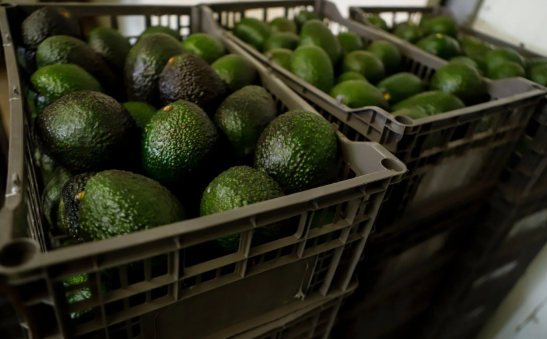
The increased security measures were agreed upon after the United States announced in the middle of last week the suspension of inspections in Michoacán, citing threats against its interests, which resulted in the halt of avocado exports.
Nearly 90% of Mexico’s avocado exports are destined for the United States.
As part of the commercial relationship between the two countries, the U.S. Department of Agriculture sends inspectors to monitor plantations and packing facilities in Mexico to ensure that exported products do not carry pests that could affect U.S. farmers.
The United States decided last Friday to partially resume inspection activities for avocados destined for export, based on commitments made by the Mexican government, the security measures implemented in Michoacán, and the ongoing assessment by U.S. authorities.
In February 2022 and June 2024, U.S. authorities also temporarily suspended inspection activities in Michoacán due to threats against their officials.
Source: lancasteronline