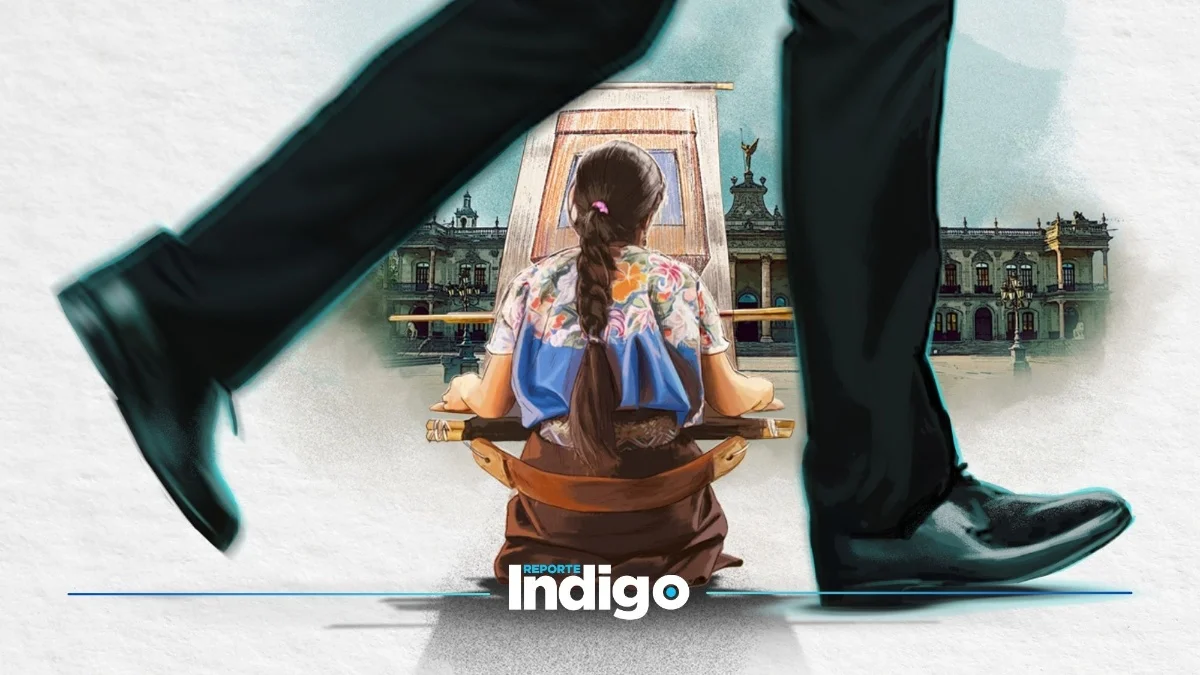

Approximately one in every 14 people in Nuevo León describes themselves as wholly or partially Indigenous. However, despite being a large and growing demographic group, they face structural deficiencies such as racism, invisibility, lack of representation, and insufficient funding in the state.
Although the state has taken various measures to close the discrimination gap affecting Indigenous people, such as the enactment of the Law on the Rights of Indigenous and Afro-Mexican People or the implementation of affirmative actions in electoral processes, today Indigenous communities in Nuevo León remain invisible and still lack political representation.
For example, in the 2023–2024 electoral process guidelines, affirmative actions were implemented requiring each political party or coalition to present a candidate formula made up of people who self-identified as Indigenous; however, as of today, there is no legislator in the State Congress who identifies themselves as Indigenous.
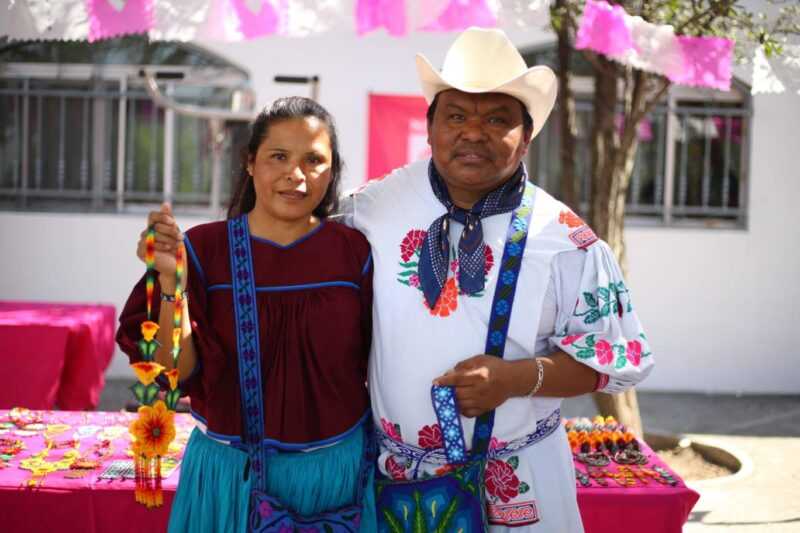
In this context, Porfirio Hernández, representative of the State Council of Indigenous Peoples in Nuevo León, presented an initiative before Congress seeking to guarantee Indigenous political representation.
According to his explanation in an interview, the initiative seeks to incorporate affirmative actions into the formulas for electing proportional-representation legislators, rather than in the plurality elections, which are decided by vote, as currently occurs.
In this way, political parties would be required to nominate at least one person belonging to an Indigenous community on their proportional-representation lists.
The aim is to guarantee the presence of Indigenous populations in the State Congress so that Indigenous communities can advance in the recognition of their rights and the creation of public policies that benefit them.
“In this quota that the political parties distribute among themselves, we as Indigenous people do not have representation. This means that we do not have effective participation so that we can be present in this State Congress. This results in these Indigenous communities that exist in Nuevo León being abandoned,” Porfirio Hernández told the media after presenting his legislative initiative.
Nuevo León Has Not Allocated a Budget to Indigenous Peoples
On September 30, 2024, under the administration of Andrés Manuel López Obrador, Article 2 of the Mexican Constitution was amended to recognize Indigenous and Afro-Mexican peoples and communities as subjects of public law, with legal personality and their own assets.
Since then, the federal budget has included direct funding for Indigenous peoples and communities through Transversal Annex 10 of the Federal Expenditure Budget and the Social Infrastructure Contributions Fund, where a section for Indigenous Peoples was created.
However, according to Porfirio Hernández, the funding does not reach Nuevo León, nor does it reach Tamaulipas, because they are considered “states that do not have Indigenous populations.” An idea that is not only false, but also makes the needs of Indigenous people living in urban settings invisible.
Likewise, because Nuevo León does not have Indigenous representation at any level of government, mechanisms have not been implemented to claim the resources from the federal budget allocation at the state or municipal levels.
“(Tamaulipas and Nuevo León) are states that are considered not to have Indigenous peoples (…) The error lies in these terminologies, and because of this, people today, those who live in urban environments, are not included in social programs, nor are they considered in public policies,” Porfirio Hernández explained in an interview.
The Myth: Nuevo León Is Not a State Formed by Indigenous Peoples
Based on the argument that there are no Indigenous peoples in the state, Indigenous people living in Nuevo León are systematically discriminated against and made invisible, affecting their ability to exercise their rights.
But it is false to say that there are no Indigenous peoples in Nuevo León. The Secretariat of Equality and Inclusion (SII) recognizes that more than 457,000 people in the state describe themselves as wholly or partially Indigenous, while the 2020 Census shows that 75,000 people speak an Indigenous language in the state, mainly Nahuatl and Tének.
There are also historical and archaeological records documenting the existence of Indigenous communities that settled in northeastern Mexico before the conquest, so it cannot be claimed that Nuevo León has no Indigenous peoples.
Aldo Salazar, a political scientist and anthropologist, explained in an interview that the myth that there are no Indigenous people or Indigenous peoples was deliberately created in order to promote an industrial and modern image that benefits business circles and produces “disciplined and obedient workers.”
“The image that businessmen and politicians have sought to project of Monterrey for more than a century is that of a purely industrial city focused on modernity, the future, and what is new. Therefore, everything that clashes with that image and identity is excluded and erased from our official history, from our official books,” Aldo Salazar stated.
Source: verificado