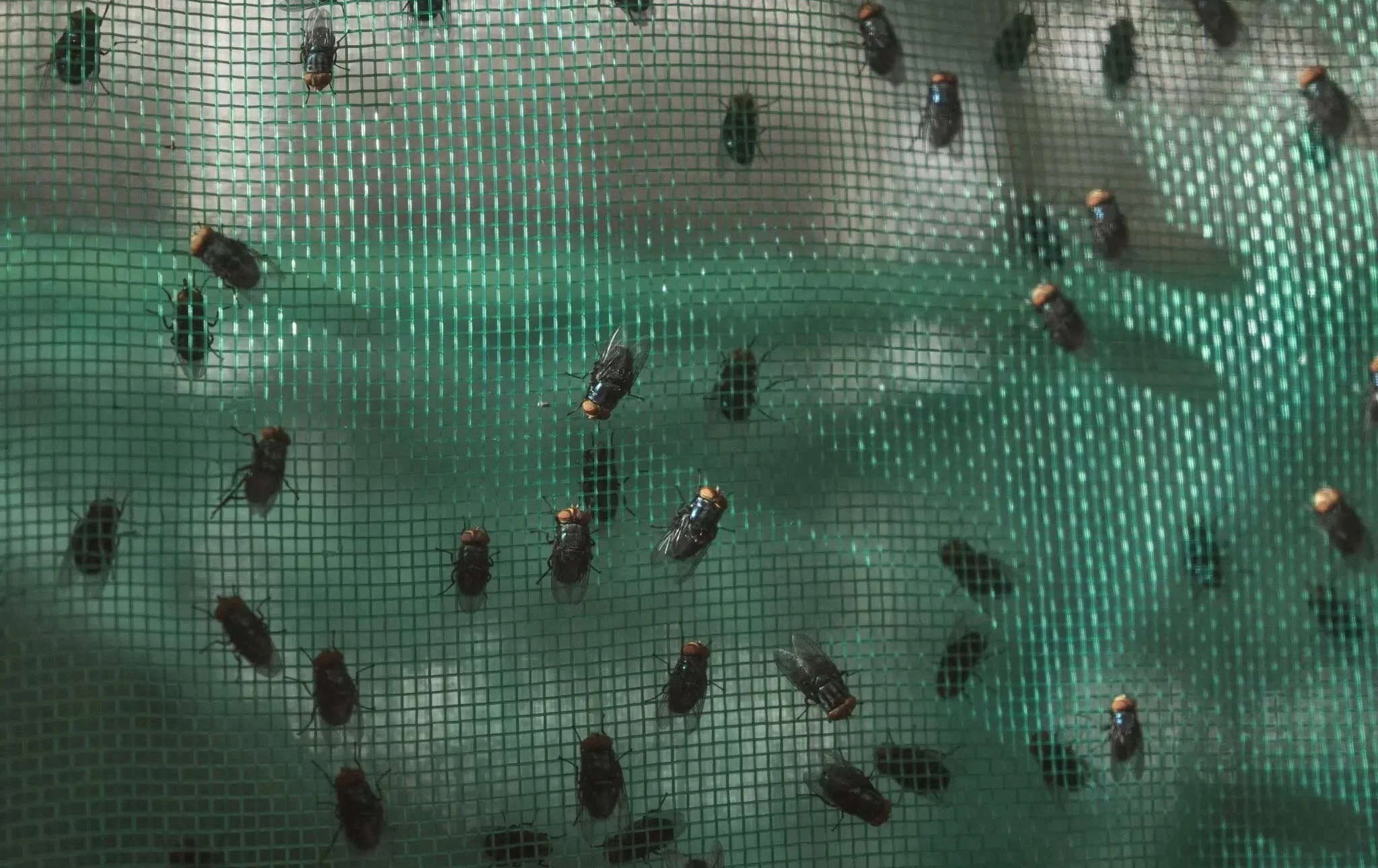

The state currently has 64 active cases of New World screwworm in 29 municipalities, following the recent addition of Ojinaga, Namiquipa, Moris, and Valle de Zaragoza to the list of affected areas.
As of September 3, the report from the National Service for Agro-Alimentary Public Health, Safety and Quality (Senasica) places Chihuahua 16th nationwide in terms of active New World screwworm cases, among the 30 states affected by this pest.
Matamoros leads the number of active New World screwworm cases with eight infections. In descending order, it is closely followed by San Francisco de Borja with seven cases and Guadalupe y Calvo with five.
The spread of the pest is progressing differently across the remaining localities. Allende, Balleza, El Tule, Guazapares, and Santa Bárbara each have three individual cases. Meanwhile, the municipalities with two cases each are Aldama, Chihuahua, Chínipas, Coronado, Delicias, Huejotitán, Meoqui, and Saucillo.
Finally, a large group of municipalities report a single active case: Camargo, Hidalgo del Parral, Jiménez, La Cruz, López, Morelos, Moris, Namiquipa, Ojinaga, Rosales, Rosario, Santa Isabel, and Satevó.
Cattle are the most affected species, with 50 active cases of New World screwworm. They are followed at a considerable distance by dogs, with seven cases, and horses, with four. At the lower end of the animal health statistics are pigs, with two reported cases, and sheep, with just one active case.
The Secretary of Rural Development, Mauro Parada, recently said that they are waiting for sterile fly production to increase so that aerial dispersal can begin in several regions of the state to combat New World screwworm.
He explained that for now, the facility in Chiapas produces 40 million flies per week, but its production capacity is expected to increase soon.
He added that, at present, dispersal has been carried out by land, which has some limitations when it comes to reaching difficult-to-access areas.
Source: eldiariodechihuahua