
In Guerrero, the alarm clock rings early, but the body gets up tired. We say goodbye to our children at the door of our home with a tighter-than-usual hug and a silent prayer. We walk through the streets of our city with an attentive gaze, hurried steps, and constant tension in our shoulders. We have become accustomed to living this way, on permanent alert, as if danger were simply part of our state’s everyday climate.
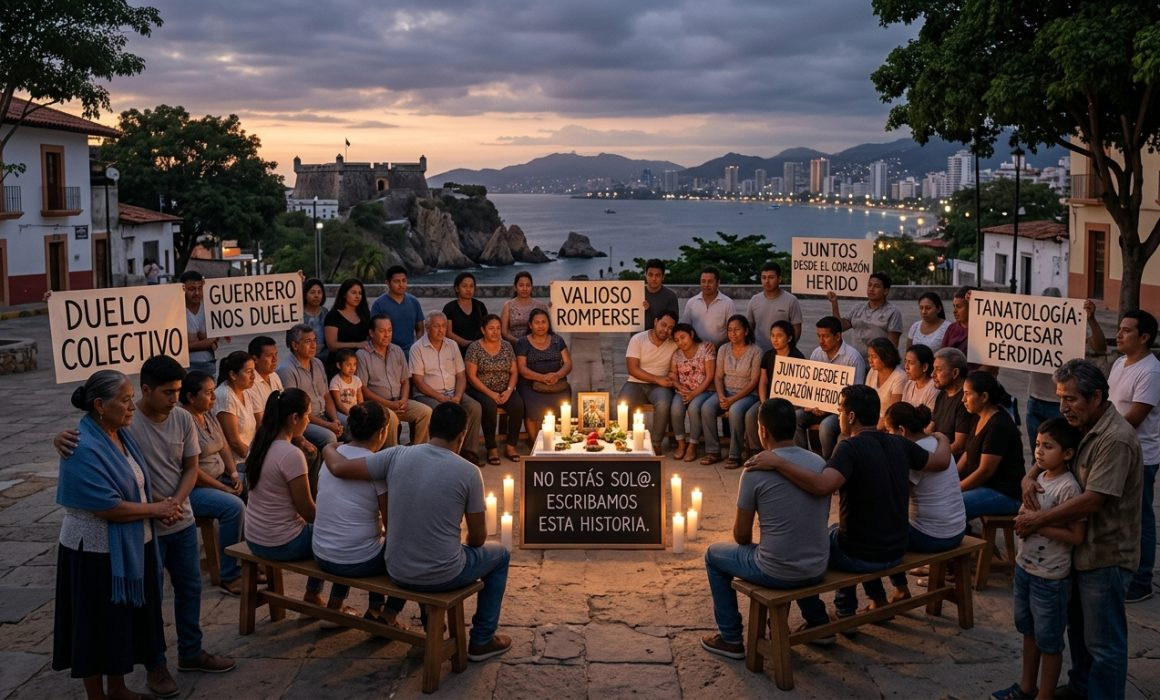
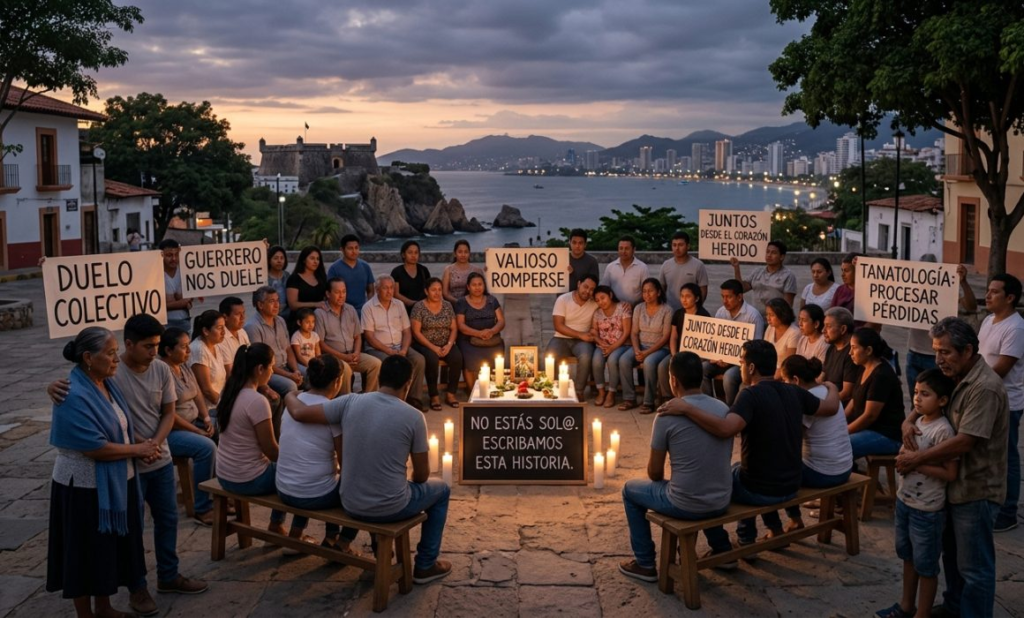
However, getting the body accustomed to surviving does not mean that the soul is not suffering. What we are experiencing as a society in Guerrero is not merely tiredness or stress: it is collective grief.
Grief does not only appear when a loved one dies; grief is triggered by any significant loss. Everyday violence has gradually and silently taken away our peace of mind, our trust in our surroundings, our freedom to inhabit our own spaces, and the certainty that we will return home safely. And when an entire community shares that same wound, the pain becomes social.
Every day we tell ourselves that “we have to keep going,” that “this is the life we were given,” and that there is no other option but to endure. But the truth, the one we feel when the house falls silent at night, is very different: we are deeply tired. This is not the kind of physical exhaustion that goes away after sleeping eight hours; it is the exhaustion of the soul that has spent months, or perhaps years, carrying a fear it never asked to bear.
We live in a state of permanent alert, breathing an atmosphere marked by daily gunfire, extortion payments that shut down entire businesses, news of missing people that makes our blood run cold, and roads traveled with our hearts in our throats. This pain that surrounds us all equally, that invades our neighborhoods, takes away our freedom, and enters our homes without permission, is what we call collective grief caused by violence.
The social rule in our state seems invisible, but impeccable: “The show must go on.” If crime knocks on your door and violently takes away a son, a husband, a brother, or your parents, the world does not stop to embrace you. The system gives you three days of leave from work, which are not even provided for by law, three days that disappear in cold procedures before the Public Prosecutor’s Office, funerals rushed because of fear, and restrained tears. On the fourth day, you have to stand in front of the desk, behind the counter, or behind the wheel. They tell you: “Keep your spirits up,” “life goes on,” and “you have to go to work.” But no one asks how that mother manages to smile at a customer while her womb is torn apart by absence, or how that father manages to hold himself together when a piece of his future was ripped away in the blink of an eye. We are forced to put a mask of normality over a wound opened by the impact of criminal violence.
It is a pain that cannot be healed with a “keep your spirits up,” because that phrase is not comfort; it is an order that minimizes suffering, ignores the horror of the violence surrounding us, and condemns us to loneliness. We have been taught to hide our tears so as not to make others uncomfortable, to swallow our anger in the face of impunity, and to keep walking as if nothing were happening. However, pain that is not cried out does not disappear; it accumulates in the shoulders, turns into insomnia, physical illnesses, and a profound social hopelessness that extinguishes the joy that once characterized us.
Faced with this darkness, it is vital to know that there is a deeply human discipline designed to support us: thanatology. Many people think that this field only deals with physical death or the final moments of life, but its scope is much broader and more compassionate. Thanatology is the discipline that studies grief and teaches us to process any type of significant loss; it works directly with the pain, emptiness, anger, and guilt that remain after a traumatic event. Thanatology is here to remind you that you are not alone, that it is valid to break down, but that it is also possible to put yourself back together, together, from the wounded heart of our people.
This space, which will meet us every weekend, is born with a promise: to be a corner without haste. A place where I will not ask you to force a smile, but where we will learn together to put a name to what hurts us so that we can begin to heal it.
WRITE TO ME AND LET’S TALK: What loss are you finding most difficult to carry today? What would you like us to talk about next Sunday? Leave your comment below or send me a private message at [email protected], on Facebook at Tanatóloga Patty Ugalde, or via WhatsApp at 7442946358. Your story will be read with absolute respect and complete anonymity. You are not alone in this storm.
Source: guerrero.quadratin