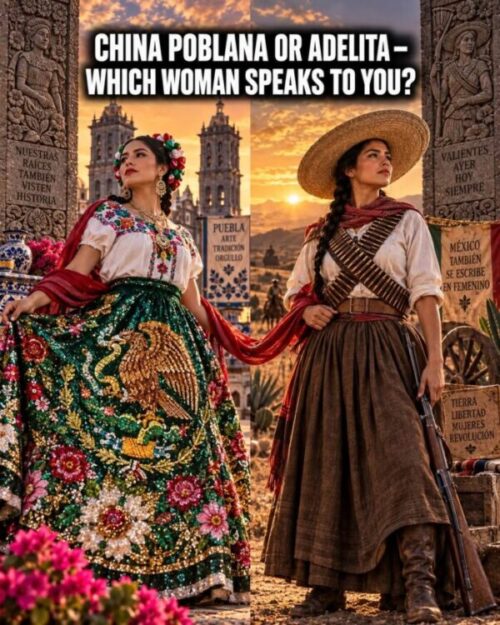

Traditional Mexican attire captures two of the most powerful and recognizable archetypes of femininity in the cultural imagination, embodying entirely different expressions of Mexican womanhood across history. The China Poblana is celebration transformed into fabric. Hailing from Puebla, this legendary folk costume features a wide green skirt shimmering with thousands of hand-sewn sequins forming the Mexican eagle, paired with an embroidered white blouse and vibrant hair ribbons. Every element of the costume exists to be seen and celebrated, representing Mexico at its most visually abundant. This is the attire of fiestas and folklorico dance, reflecting the cultural belief that beauty deserves full and unapologetic expression.
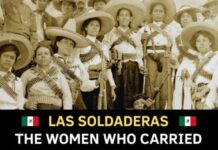
In stark contrast, the traje de Adelita represents dignity forged in struggle. Named after the soldaderas of the Mexican Revolution who served as fighters, medics, and logistically essential contributors, the Adelita’s dress was built entirely for utility. Featuring a practical skirt made for movement, crossed cartridge belts worn with militant pride, and a versatile rebozo used as clothing, baby carrier, and bandage, every piece of the outfit functioned under genuine hardship and danger. It stands not as a theatrical costume, but as a historic record of what Mexican women endured and achieved when the nation called upon them.
Both figures command equal reverence by illustrating the full spectrum of the national spirit. The China Poblana reminds us that joy and cultural pride are worth celebrating without apology, while the Adelita proves that Mexican women have always shattered assigned limitations, stepping up with unmatched courage to alter the course of history.