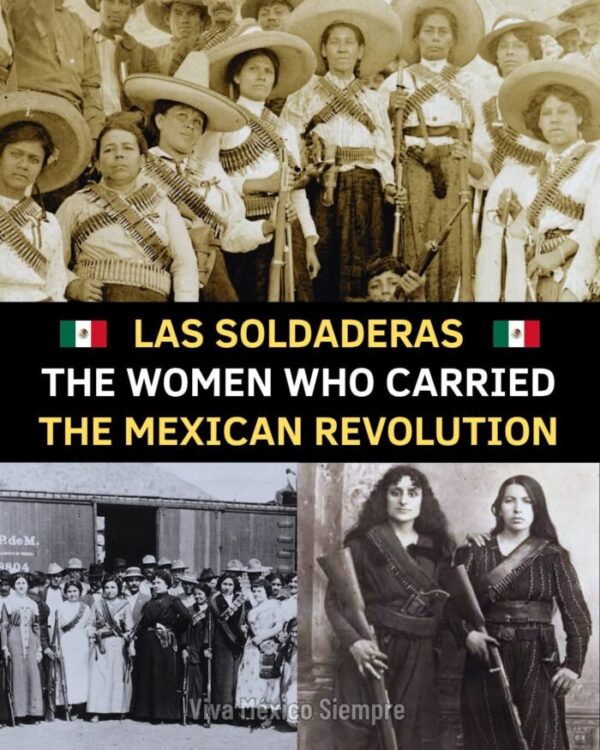

When historians recount the Mexican Revolution of 1910 to 1920, the popular narrative typically centers on iconic generals on horseback and troops of armed men. However, archival photographs reveal a different reality: women were present in nearly every frame. Known as soldaderas, these women formed the logistical backbone of the marching armies, undertaking the monumental task of keeping troops fed, clothed, and cared for across hundreds of miles of harsh terrain without the aid of modern supply trucks or field hospitals.
tWhile many performed essential survival labor—gathering food, securing water, and nursing the wounded under brutal wartime conditions—others actively reshaped the conflict. Figures like Petra Herrera disguised herself as a man to fight under Pancho Villa before commanding her own all-female brigade that was pivotal in taking the city of Torreon in 1914. Similarly, Amelio Robles Avila fought as a seasoned colonel in Guerrero, while Adela Velarde Perez—the purported inspiration behind the famous La Adelita corrido—dedicated her youth to tending the injured, earning formal recognition as a veteran decades later.
Living on crowded trains, sleeping in makeshift camps, and enduring constant hunger and danger, these women defied the limits imposed upon them by circumstance. Though the vast majority of their names were lost to history, their collective contribution ensured that the revolutionary armies survived. Far from being mere background figures, the soldaderas proved that Mexico’s historical transformation was driven just as much by the resilience, courage, and daily labor of ordinary women as it was by the famous generals in the textbooks.