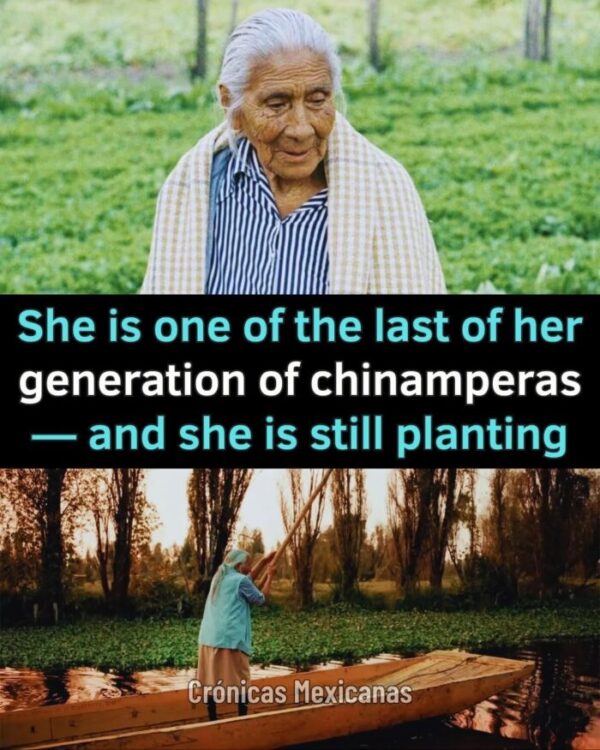

Deep within the southern canals of Mexico City, eighty-year-old Dona Susana navigates the murky waters on a wooden pole, tending to an agricultural legacy that predates the Spanish conquest by centuries. As one of the last surviving chinamperas of Xochimilco, she embodies an ancestral lineage of floriculturists and rural defenders, preserving traditional cultivation techniques and guarding rare botanical knowledge. Her daily labor on the chinampas—hand-built rectangular agricultural islands anchored to the lakebed by the extensive root systems of ahuejote willows—sustains an ingenious farming system that operates entirely without artificial pumps or irrigation, drawing life directly from the surrounding canals.
Despite holding status as a UNESCO World Heritage site and a Globally Important Agricultural Heritage System by the FAO, Xochimilco faces severe ecological threats. Unchecked urban sprawl, water pollution, and sinking ground levels are rapidly choking the ancient wetland network. This environmental degradation has devastated local biodiversity, most notably crashing the population of the endemic axolotl from thousands per square kilometer in the late 1990s down to near extinction in the wild just decades later, threatening an ecosystem deeply tied to Aztec mythology.
Nevertheless, resilience continues to thrive along the canals. Through educational projects like Chinampa Temachtiani, run by her niece Sara Sandoval, ancestral knowledge is actively passed on to a new generation of young girls learning to farm the fertile mud. Dona Susana’s enduring presence on her wooden boat represents a powerful stand against the loss of heritage, keeping a thousand-year-old agricultural civilization alive through hands-on teaching and unwavering dedication to the land.