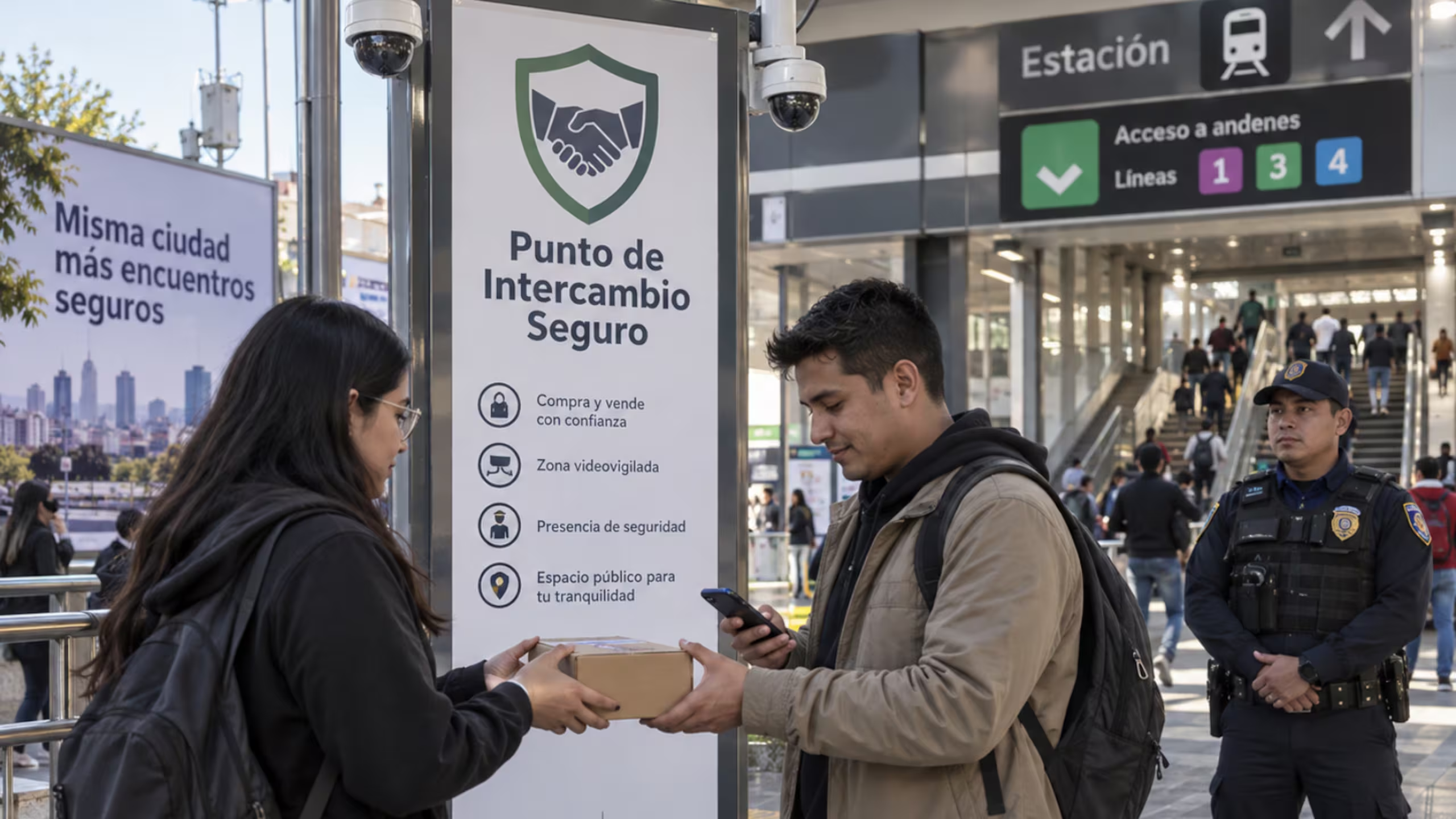

Mexico City Congress Analyzes Initiative to Create “Safe Exchange Points” for Online Purchases
The Mexico City Congress is analyzing an initiative to create Safe Exchange Points, identified, illuminated, and video-surveilled public spaces where buyers and sellers can hand over products purchased through the internet, social media, or applications.
The proposal was presented by PRI lawmaker Omar Alejandro García Loria and seeks to amend the laws governing the capital’s Citizen Security System and Mobility System in order to reduce the risks of theft, fraud, fake profiles, and identity theft during in-person meetings.

The project proposes establishing these points by taking advantage of existing public infrastructure and high-traffic locations, with lighting, video surveillance, and proximity to security facilities.
Online Purchases Generate New Security Risks
According to the initiative, the growth of digital platforms has changed the way individuals buy and sell products, as many transactions begin online but end with a physical meeting to deliver the item and make the payment.
“Today, it is common for two individuals to arrange the purchase and sale of a cell phone, a computer, a bicycle, a tool, a collectible item, or any other good online and subsequently have to meet in person to make the delivery and, when applicable, the payment. This phenomenon creates a new need for public security,” the document states.
Currently, people commonly choose shopping centers, parking lots, cafés, parks, or public transportation facilities to conduct these transactions.
The lawmaker noted that Mexico City Metro stations are particularly attractive because of their connectivity, user traffic, lighting, and presence of security personnel.
How Would Safe Exchange Points Work?
The initiative defines these spaces as locations expressly designated by authorities to facilitate, free of charge and voluntarily, the delivery and receipt of goods between individuals when the transaction has previously been arranged through digital platforms, social media, applications, or messaging services.
The sites should seek to have visible signage, lighting, video surveillance, accessibility, and proximity to security facilities.
The proposal would allow the Mexico City Government to coordinate its implementation with agencies, borough governments, and public organizations.
It also proposes that the Secretariat of Citizen Security (SSC) participate in its implementation and issue a protocol for these exchanges.

“This initiative seeks to address that gray area through a preventive and low-cost public policy: creating Safe Exchange Points in Mexico City, understood as identified, illuminated, and video-surveilled physical spaces where individuals can voluntarily carry out the delivery and receipt of goods resulting from transactions previously arranged through digital platforms, social media, applications, or electronic media,” García Loria stated.
Occasional Exchanges Would Not Be Considered Street Vending
Another objective is to clarify that occasionally delivering a product previously sold online would not, by itself, constitute street vending.
To this end, the initiative establishes that there must be no display of merchandise, public offering, storage, permanent intermediation, or habitual commercialization within these spaces.
It also clarifies that establishing a Safe Exchange Point would not make the Mexico City Government a guarantor, witness, or intermediary in the transaction.
Authorities would also not certify the ownership, authenticity, origin, functionality, condition, or value of the products being exchanged.
Likewise, these spaces could not be used to deliver goods whose possession or commercialization is illegal.

It Does Not Seek to Regulate Facebook Marketplace or Mercado Libre
The lawmaker said that the proposal does not seek to intervene in the platforms where transactions are arranged.
“The proposal does not seek to regulate Facebook Marketplace, Mercado Libre, WhatsApp, or other platforms, nor to turn public transportation facilities into marketplaces. Its purpose is strictly local: to prevent risks arising from in-person encounters between individuals and organize a social practice that already exists, taking advantage of public infrastructure and security capabilities that are already in place.”
The initiative was referred to the Joint Committees on Citizen Security and Sustainable Mobility and Road Safety, so it must still be analyzed and formally reviewed before any potential vote.

Source: publimetro