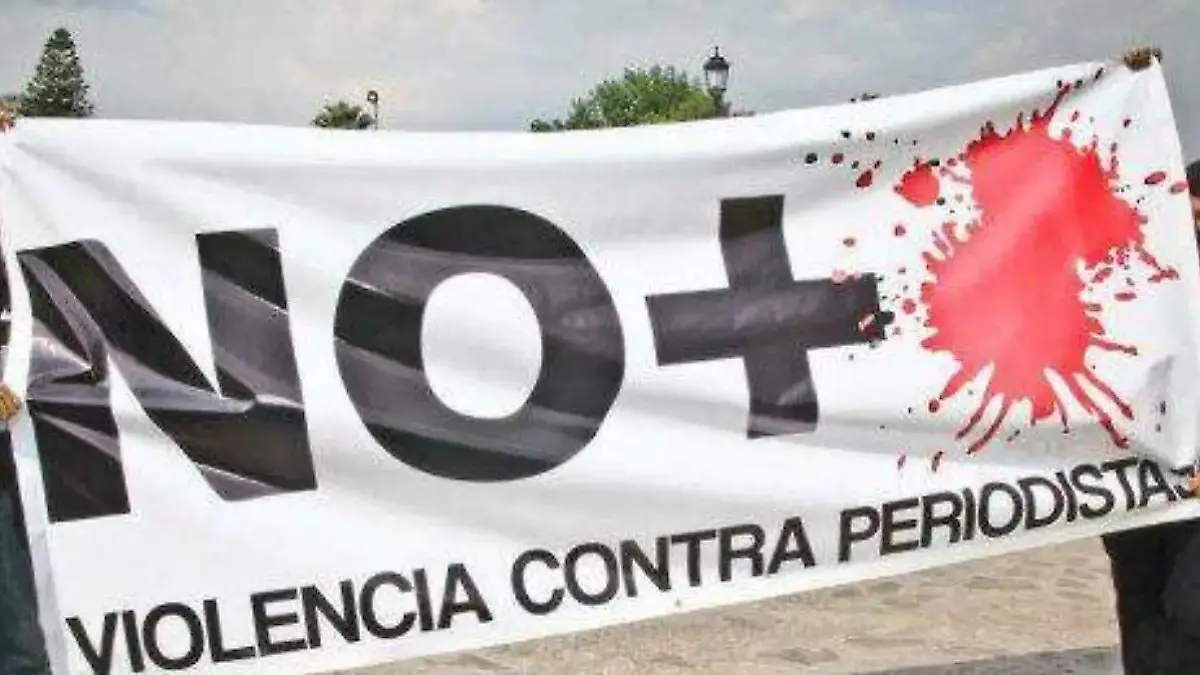

In the State of Mexico, the right to inform faces a contradiction: while laws, a state mechanism, and protocols have been created in recent years to protect journalists, attacks persist and, in several cases, the perpetrators have been authorities whose responsibility is precisely to guarantee security.
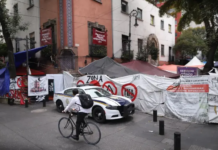
One of the most recent episodes occurred on October 2, 2025, in Toluca, during the commemorative march marking the Tlatelolco massacre. The demonstration ended in clashes between protesters and municipal police, with a patrol car set on fire and people injured and detained, but also with attacks against journalists who were documenting the events.
The Human Rights Commission of the State of Mexico (CODHEM) investigated what happened and, in March 2026, issued recommendations 01/2026 and 02/2026 against the Toluca City Council. The organization established violations of freedom of expression in the context of journalistic work, as well as impacts on personal integrity and security.
The municipal government subsequently acknowledged the attacks and, one month after the events, in November 2025, reported that nine police officers had been identified for their probable participation and would be subject to administrative proceedings. In addition, Toluca began working with journalists on a municipal protocol. By February 2026, it had formalized an agreement with the state mechanism to strengthen the prevention of and response to attacks against media workers.
These Are Not Isolated Incidents
In April 2024, journalist Giancarlo Serrano reported that he had been assaulted by Toluca municipal police while broadcasting live a suspected shooting in San Felipe Tlalmimilolpan. According to his testimony, officers took his phone and deleted material he had obtained during the coverage.
In July 2024, reporters Carlos Pérez and Víctor Castillo were detained by state police while covering a protest on Paseo Tollocan. ARTICLE 19 documented the detentions and stated that the communicators were criminalized while carrying out their journalistic work. The reporters also denounced irregularities during their transfer and accused the officers of attempting to incriminate them.
By September 2024, two journalists had been assaulted by private individuals while covering an event in the area of the Toluca bus terminal. The state mechanism incorporated both communicators and granted them urgent protection measures.
These cases help illustrate that violence against the press is not limited to homicides.
The State of Mexico Protection Mechanism for Journalists and Human Rights Defenders itself reported 199 attacks between May 2023 and June 2025. According to its coordinator, Israel Hernández Sosa, nearly 40% originated from public servants.
In October 2025, only 13 of the 125 municipalities had signed collaboration agreements with the state mechanism to facilitate assistance in cases of attacks. By 2026, expanding these agreements and ensuring that municipalities adopt specific protocols remained one of the pending tasks, according to the institution itself.
Coverage of protests has become one of the scenarios in which this vulnerability is most evident. In 2024, Toluca reported that it had trained more than 500 police officers in human rights and freedom of the press. However, one year later, the attacks of October 2 occurred.
The contrast shows that training alone does not guarantee respect for journalistic work if there are no controls, sanctions, and an institutional culture that recognizes that photographing, recording, and broadcasting the actions of authorities are part of the exercise of informing the public.
Homicides and Access to Justice
In the State of Mexico, the cases of Diego García Corona, murdered in Ecatepec in December 2018; Nevith Condés Jaramillo, found dead in Tejupilco in August 2019; Enrique García García, shot to death in Metepec in June 2021; and Calletano de Jesús Guerrero, murdered in Teoloyucan in January 2025, have been documented.
CODHEM had documented four homicides of journalists in the state between 2000 and 2019.
The most recent case, that of Calletano Guerrero, also exposed the limits of protection, as the journalist had been a beneficiary of the Federal Protection Mechanism since 2014 and had received threats before he was murdered.
Following the crime, the Attorney General’s Office of the State of Mexico (FGJEM) established that Salvador “N,” alias “Chava,” had allegedly ordered the homicide and obtained an arrest warrant against him.
That development represents a step forward in the investigation, but it does not yet amount to a conviction. In the other emblematic cases, there are also no public judicial results that would allow for speaking of a forceful response to the homicides.
The Inter-American Court of Human Rights has warned that when an attack, threat, or assault against a journalist produces no consequences, the risk increases that violence will ultimately function as a mechanism to discourage journalistic coverage, especially in areas where political, economic, or criminal interests converge.
From the Law to Effective Protection
Since 2021, the State of Mexico has had a Law for the Comprehensive Protection of Journalists and Human Rights Defenders, as well as a state protection mechanism. In 2026, reforms also advanced to expand social support for independent journalists, including healthcare, housing, and funeral assistance.
However, according to journalists from the Toluca Valley who were interviewed, the challenge is no longer simply to create regulations, but to ensure that they work in practice.
Several agreed that the greatest achievement of the law will be to respond quickly to a threat, investigate attacks while considering the journalistic line as a possible motive, punish those responsible, and provide comprehensive reparations to victims.
It also requires the 125 municipalities to know and apply protocols to prevent public security from ultimately becoming an obstacle to informing the public.
This September 8, International Journalists’ Day, the situation in the State of Mexico leaves a task that is still pending: ensuring that practicing journalism does not mean assuming risks simply for informing the public.
The existence of laws, mechanisms, and protocols represents progress, but their effectiveness will depend on attacks being prevented, authorities acting when they occur, those responsible being sanctioned, and victims having effective access to justice.

Source: oem