
The Secretariat for Tourism Development (Sefotur) created the Tourism Intelligence System in 2025, which makes it possible to obtain data about visitors and more precisely guide actions to promote Yucatán as a destination.
The head of Sefotur, Darío Flota Ocampo, says that this computer system produces very interesting results and unprecedented discoveries, but above all, it caused a change in the promotion strategy that, according to him, is already producing its first results, such as doubling the number of foreign tourists.
For example, statistics traditionally indicated that 80% of visitors were domestic and 20% were foreign. However, that figure changed radically.
The Percentage of Foreign Visitors to Yucatán Is Growing
Today, 60% are domestic visitors and 40% are foreign, meaning that the percentage of foreigners arriving in the state has doubled. The measurement also shows that 58% of visitors in 2025 said it was their first time coming to Yucatán.
This figure represents a great opportunity because it reveals that new people want to come and visit the destination, want to get to know and discover Yucatán, see its attractions, experience the state’s hospitality and security, and it is an indication that they will return, he shares.
“It is a good discovery to know how many come for the first time, but there are other interesting discoveries,” the official says in an extensive interview, the first part of which was already published by the Diario.
“We discovered that there is a segment of almost 20% who traditionally travel to visit families and couples, but now groups of friends are coming, young men and women who travel together. Once again, the issue of public safety is a factor that gives parents confidence to let them come without running any risk.”
People from Quintana Roo Are Interested in Visiting Yucatán
Another new piece of information from the Tourism Intelligence System is that the main source of tourists visiting Yucatán is Mexico City, which is not new, but the discovery was that the second state that contributes the most travelers to the state is Quintana Roo.
And these are not tourists who are staying in the neighboring state and come here to spend a few days, but rather people from Quintana Roo who decide to vacation in eastern Yucatán.
In fact, this wave of tourists from Quintana Roo boosts Valladolid, Río Lagartos, El Cuyo, and many of them make investments and purchase businesses such as hotels and restaurants.
“With this information, today we know where to carry out our promotion and place advertising to attract young people,” he emphasizes.
“We advertise in Cancún and Playa del Carmen so that more people from there will visit us, and of course in Mexico City.”
What Is Expected from Visitors to Yucatán?

Is the priority for visitors to come, walk around and enjoy all the attractions, or for them to spend more? he is asked.
“We have three objectives, but in reality, the goal, if we had to establish one, should be to have greater economic spillover, because that would benefit the people of Yucatán.”
“Although a visitor spends more money, it does not necessarily mean that more people are coming. One is linked to the other. If more people come, there will be greater economic spillover. However, we promote the luxury tourism segment a lot, and this has somewhat to do with the sociology of the traveler,” he explains.
“When we advertise that Yucatán has luxury hotels and experiences that are reserved for people with a lot of money, we seek to have them come, but there are also other people who know that they can have access because in Yucatán there are hotel rates at all levels.”
“They can swim in a cenote, which is the activity most sought after and recommended, and they can have the experience of visiting and eating at a hacienda and experiencing a holistic ceremony at some of the cenotes.”
“The visitor can experience some things that money cannot buy, which is why we promote it this way, so that people come and spend more money.”
Decentralization of Tourism
The government is implementing a tourism decentralization policy. How does this strategy work?
“We have seven Magical Towns in the state that we promote, but we decided to decentralize promotion away from Mérida,” he responds.
Three Tourism Hubs in Yucatán
“Our strategy is to promote three tourism hubs during the six-year administration, which are the places where people will travel to Yucatán and stay because there are hotel rooms.”
“The greatest concentration is in Mérida; that is one of our hubs. The second concentration is in Valladolid, to which we are dedicating many efforts, and the third, which will come over time, will be in the south of the state, where the Puuc Route is located.”
“There are actions for each of these tourism hubs, and we launched the ‘Conociendo Yucatán’ program, which emerged as an initiative so that people who come to live here can get to know the state.”
“The statistics gave us a surprise because now we know that many people from Mérida do not know the interior of the state, and they are already traveling,” he reiterates.
“As part of the discoveries, we now know that Yucatecans stay in local hotels and rank ninth among the states that contribute the most visitors to Yucatán.”
Growth in Tourism Investments
Flota Ocampo considers that the new promotion strategy is working, since even the statistics on tourism investments have increased.
At the beginning of the administration, they had projects worth 13 billion pesos, and in these two years that figure increased to 13.2 billion pesos. Half of the investments are for hotels, marinas, and tourist centers around cenotes, and most importantly, 40% is in Mérida and 60% is in the interior of the state.
This indicator is a sign that tourism entrepreneurs see opportunities in other areas of Yucatán, not only in Mérida.
What do those municipalities lack in order to develop their own projects and attractions?
“The greatest shortcoming is infrastructure,” he acknowledges. “We need better signage on the highways; we are working very hard on a training program for the development of tourism products,” he adds.
Tourism Infrastructure Needs to Be Improved
“We need to take the step of turning tourist attractions into tourism products. We have many cenotes, churches, haciendas, and historic sites; we need tourists to have a place where they can buy something, a guide who can help them with the tour and explain things to them.”
“In many places we have very beautiful cenotes, but they need infrastructure such as bathrooms, stairs, life jackets, and they need to comply with environmental requirements. We are working on this to help more municipalities that see tourism as a development option.”
Do you see any obstacle preventing a municipality from taking off as a tourist destination?
“No, no, not really. The most difficult obstacle is always resources. We have a very large, vast state, because there are not only 106 municipalities, but also many communities that have the possibility of developing tourism projects,” he emphasizes.
How many formal jobs does this activity generate in Yucatán?
“This year we have seen a decline. It is a strange situation. In the first quarter of 2026, we had 128,000 formal jobs, which is approximately 10% of all jobs in the state,” he explains, noting that in 2025 there were 135,158.
What caused employment to fall?
“We have no explanation,” he reiterates. “In the hotel industry, we are trying to understand whether, at the beginning of the year, due to tax situations or strategy, some companies dismiss personnel at the end of the year, and when they register them again in January, there is already a decline in registration with the Social Security system.”
“These are Inegi data, there is a decline and then people are rehired. We will have to see the accumulated figure for the second quarter to determine whether the decline in employment continued or whether it levels out.”
How can it be explained that millions of tourists arrive, as we see at the airport, which receives 3.5 million people, while restaurant and hotel operators say that occupancy and consumption are declining?
“It is an interesting phenomenon, let’s say, from a statistical point of view, because Mérida Airport is one of the few airports in the country where the number of passengers is growing. It has grown by more than 7%,” he states.
“The flights are full, but we do not see that influx reflected in hotel occupancy. There are several explanations for this. A lot of local people arrive at our airport who travel for business, and many people who live in another city arrive but have a residence here in Mérida, so they stay in their condominium or apartment.”
“A lot of people from Campeche use Mérida Airport as their airport because it is better connected,” he continues his explanation.
“So this means that not everyone who arrives at Mérida Airport ends up staying somewhere other than a hotel, and among those who do stay, many see Airbnb rentals as an option. On the other hand, the hotel industry has increasingly more rooms available, which means that even though slightly more visitors arrive, occupancy decreases. It is a problem that we are already addressing, and in the cumulative figure through July we see a 1.6% decrease. I believe that with the strategies we are applying, the final quarter of the year will improve.”
Tourism Crisis in Yucatán Ruled Out
Flota Ocampo rules out Yucatán being at a level of tourism crisis and, together with hotel operators, is seeking solutions to improve hotel occupancy.
“We hope to finish the year with figures at least equal to those of 2025, so that this decrease in June and July is not noticeable,” he emphasizes.
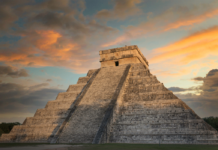
Archaeological sites are receiving fewer visitors, and this is reflected more strongly in Chichén Itzá because 80% of visitors come from Quintana Roo. We need to grow across all indicators so that people increasingly see tourism as a good alternative source of income.
Source: yucatan