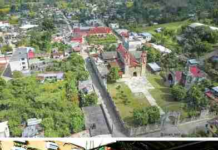

The Attorney General’s Office (FGR) is investigating leaders of the Mexican Electrical Workers’ Union (SME) for money laundering and electricity theft for cryptocurrency mining in Puebla.
Martín Esparza Flores and Puebla congressman Miguel Márquez Ríos are under scrutiny over the installation of clandestine cryptocurrency mining farms in the Necaxa region of Puebla.
In addition, a criminal complaint has been filed against them for money laundering, electricity theft, and illegal use of union assets.
Following the discovery of a new mining farm in the municipality of Tlaola, Puebla, specialists interviewed by CENTRAL suspect that the equipment was recycled.
It would allegedly be the same data center that was “dismantled” in January 2025, located at SME facilities in the municipality of Juan Galindo.
The SME went from being described as the “most democratic union in Mexico,” in the words of former Mexican President Andrés Manuel López Obrador (AMLO), to becoming embroiled in alleged illicit activities.
At the end of his administration, the former president even signed a decree granting lifetime pensions to former workers of Luz y Fuerza. This occurred despite the rupture that took place midway through his term with the electrical workers’ union over his energy policy.
However, Martín Esparza capitalized on his power through the company Generadora Fénix. The company was granted concessions for up to 30 years to operate 16 power plants following the dissolution of Luz y Fuerza.
Since then, SME members have accused Martín Esparza Flores and Puebla politician Miguel Márquez Ríos of various illicit activities, including electricity theft, for which they were reported to the FGR. The complaint progressed to a Federal Intelligence investigation that allegedly helped establish the new cryptocurrency-mining data center, now located in Tlaola, Puebla.
SME leaders face charges for money laundering, electricity theft for cryptocurrency mining, electricity theft, and illegal use of assets in Puebla
In an interview with CENTRAL, SME member and professor at the Faculty of Economics of the National Autonomous University of Mexico (UNAM), Mario Flavio Benítez, said that a complaint exists against union leaders.
The investigation file identifies Martín Esparza Flores, José Humberto Montes de Oca Luna, Román Olvera García, and Miguel Márquez Ríos as the alleged perpetrators.
The complaint accuses them of money laundering, water dispossession, criminal association, electricity theft, and illegal use of union assets.
According to the UNAM professor, in January 2025, the National Guard carried out an operation at the SME facilities. A cryptocurrency mining farm was found there, from which the union members distanced themselves.
A multipurpose room had been adapted to install the data center, where “megadiablos” were allegedly set up to steal electricity to keep the cryptocurrency farm operating 24 hours a day, seven days a week.
Despite the evidence and the multimillion-peso loss allegedly caused to the Federal Electricity Commission (CFE), the operation resulted in no arrests.
A group of former workers filed a complaint in June 2025; however, the investigation was “frozen” by the authorities, despite the subsequent discovery of three other mining farms in the State of Mexico, Hidalgo, and again in Puebla.
“If you don’t pay for electricity, then everything is profit, everything, everything, everything. And that is what they were doing, stealing electricity to mine cryptocurrencies. Now, whose cryptocurrencies were they mining? Who were they generating the virtual currency for? We don’t know, but we filed the complaint and formally submitted it.”
Mario Flavio Benítez added that, due to previous omissions and negligence by the FGR, a new complaint was filed with the FGR’s Internal Control Body, now under the leadership of Ernestina Godoy.
However, the result has been the same, as the complaint remains stalled while union leaders allegedly continue enriching themselves and enjoying impunity.
Cryptocurrency mining farms are not improvised
Flavio Benítez explained that specialized labor is required to install cryptocurrency mining farms. This is not simply because of the computers that operate day and night, but because of the operation and energy consumption required by these types of facilities.
The specialist explained that transformers and direct power lines are required to supply the farms, meaning that the noise inside is “hellish.” This is particularly significant because the first data center was located only a few meters from the Huauchinango Municipal Presidency.
He also suspects that the same equipment seized in Huauchinango was used in Tlaola.
“They take the electricity from the generator. They bring the cables, they bring the transformer, they bring the feeders, and they have the same 300 computers that they had in the union building, but now in Tlaola. So, I don’t think it’s very difficult to know who was doing it (…) You need to be close to the dam or the facilities. You need to know the dam. You need to know the facilities. You need to know the location. You need to know the specialized work. And that is Martín’s people, Miguel Márquez’s people, Martín Esparza’s people.”
The specialist said that these mining farms have an average electricity cost of 200,000 pesos per day. He described this as pure profit for those involved, since 70 percent of the value of the cryptocurrencies is equivalent to the electricity expense.
For this reason, he warned of alleged collusion between authorities, Generadora Fénix, and the CFE with SME leaders.
“They are not going after the union bosses who are stealing from the nation. In other words, they weren’t given the Necaxa dam to do this. How is it possible that the company doesn’t know that they are stealing from Fénix? It is illogical that they don’t realize that they are taking electricity from the plant to Tlaola. No, it cannot be that the company doesn’t know.”
The SME member demanded that authorities conduct an urgent investigation and arrest those responsible for this alleged financial damage to Mexicans.

Source: periodicocentral