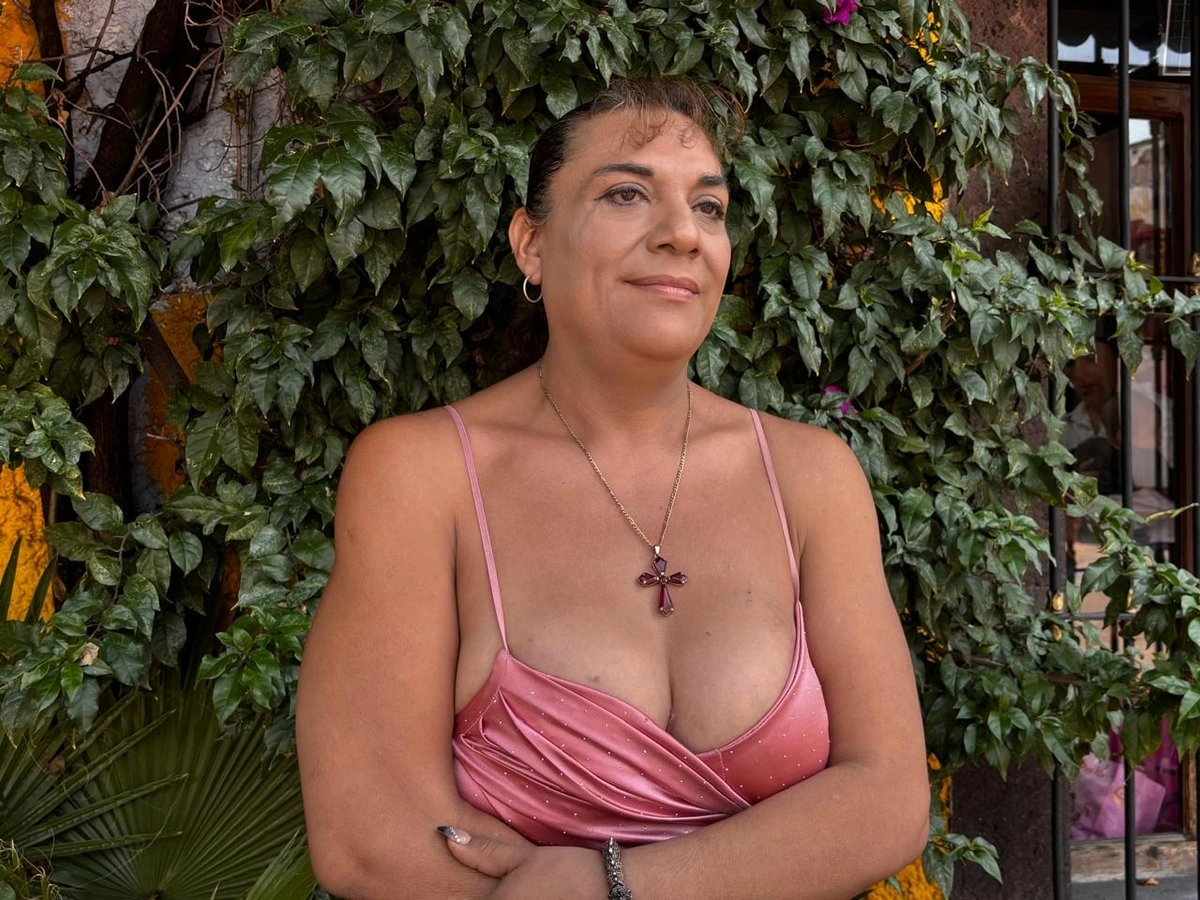

The activist and human rights defender appointed by the Judiciary, and member of the Transnational Non-Binary Assembly, María José González, went to the General Hospital of Querétaro to obtain her medications following gender-affirming surgery. After completing the bureaucratic process, an employee of the private security company SPEAL, identified as Ulises N., ordered the access doors to be closed and confronted her, shouting, “Today you’re going to get fucked, you’re going to hell.”
María José González, in an interview with La Jornada, explained that when she went to obtain her medication, she was told that there were no supplies available but that she had to complete the authorization process. So, “I went to see the authorization with the interhospital director who coordinates the five hospitals in the state of Querétaro, so that he could authorize it, because they say they are high-cost medications. But his assistant told me that he was not there, that she would handle the matter, but as I was leaving, I saw a security guard enter (I have known who he is since approximately 2020); he shouted, ‘close the doors.’ It had an impact on me, but I never thought it was directed at me. He pushed me toward the elevator and my head hit the wall; I turned around and said, ‘What’s wrong with you? I’m going to the director’s office.’ And he told me: ‘You’ve got me fed up, you’re always making a mess, you always do whatever you want and there’s no one who tells you anything. Today you’re going to get fucked, you’re going to hell.’ I replied that I am only defending my rights. ‘I don’t give a fuck, your rights end where mine begin,’ was his response. When he and six other male employees restrained me, I told him, ‘What’s wrong with you? You can’t touch me, I’m a woman.’ And they began beating me. He put his hand underneath my dress and told me, ‘You’re fucked.’ I thought they were going to kidnap me because he shouted, ‘Let’s take her out through the back.’ At that moment I panicked and began struggling and screaming.”
González suffered blows to her face, abdomen, and ribs. “What I can tell you is that Ulises does have a position, there is indeed a position within the health sector. He is receiving payment directly from the Secretariat of Health. The other employees are essentially outsourced through this company, Speal.” During the commotion, a bureaucrat from the legal department came out and asked what she was accusing them of. “The only thing Ulises said was, ‘I’m going to turn her over to the authorities.’”
This bureaucrat accompanied the activist to the exit while the aggressors had stopped beating her. She immediately left the hospital while making calls to her support network, and later went to the Querétaro Attorney General’s Office to file a complaint over the assaults.
Other Threats
María José González is also a medical surgeon and holds a master’s degree in pharmacology. She works with various collectives and the National Trans Non-Binary Lawyers’ Association. In recent months, she has taken a strong position in favor of the so-called Gender Identity Law.
Because of her activism, she has received threats. “I’m going to be clear, I want a working meeting with the governor. Because I issued a statement against the governor’s observations, regarding the video in which he promotes hatred and transphobia toward the LGBT+ community, mainly toward the transgender community,” she commented.
María José González is the first transgender woman nationally to undergo gender-affirming surgery ordered through an injunction proceeding with full outsourcing. Her case is symbolic because it took place in Querétaro, a state distinguished by PAN governance that has alternated with the PRI. After the first threats, which she also made public through social media, she explains, “I requested protection, which I also do not have. I have been requesting admission into the mechanisms for the protection of human rights defenders and journalists, but they have not granted it to me. I am currently vulnerable, without protection.”
A statement was requested from the person responsible for social communications at the Secretariat of Health; however, as of the publication deadline for this article, no response had been received.
Source: jornada