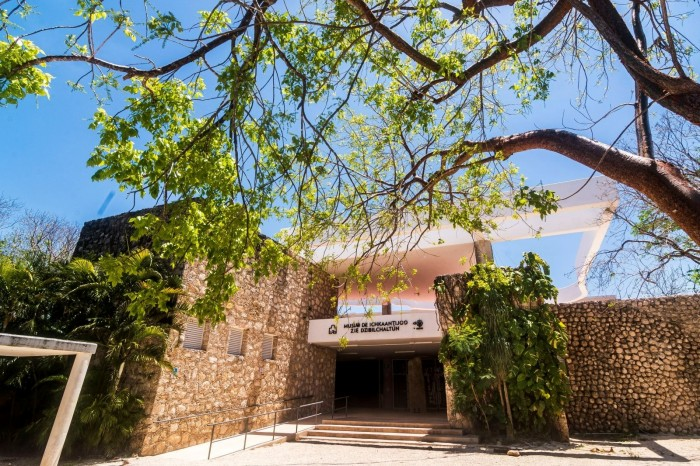

Almost two months after their inauguration, the Museo Arqueológico del Puuc (Musapuuc) and the Museo de Sitio Ichkaantijoo (MSI), built in Yucatán by the National Institute of Anthropology and History (INAH), are beginning to establish themselves as new spaces for learning about Maya heritage and culture.
Since their official opening, held on July 18 and 19, the two museums have received a total of 9,997 visitors, according to figures from INAH’s National Coordination of Museums and Exhibitions, recorded through Sunday, September 6.
The highest attendance corresponds to the Museo de Sitio Ichkaantijoo, located within the Dzibilchaltún Archaeological Zone, which accumulated 8,321 visitors: 2,714 in July, 5,193 during August, and 414 during the first days of September.
However, this museum’s attendance record is not limited to the period following its inauguration, as it had already been operating and had established ties with schools and residents of nearby communities, including Chablekal and Conkal, as well as residents of Mérida. So far in 2026, its galleries have received 38,977 people.
The MSI presents the history, worldview, and daily life of the ancient Maya city of Dzibilchaltún through a collection consisting of 300 archaeological pieces. Its approach seeks to offer visitors an understanding of the development of this urban center and the ways of life of its ancient inhabitants.
Meanwhile, the Museo Arqueológico del Puuc recorded 418 visitors during the final 13 days of July, 1,114 in August, and 144 so far in September. With this, the new museum has received a total of 1,676 visitors since its opening.
The Musapuuc is the first museum specifically dedicated to the history of the Puuc region, which includes archaeological sites such as Uxmal, Kabah, Sayil, Labná, and Xlapak, as well as the caves of Loltún and Chacmultún. Its collection consists of 189 heritage objects.
The exhibition also addresses the characteristics of the Puuc architectural style, considered one of the most elaborate in Mexico’s architectural history, and its relationship with the region’s geographical environment, marked by the presence of mountains and the absence of rivers, lakes, and surface cenotes.
Both museums are open Tuesday through Sunday, from 8:00 a.m. to 5:00 p.m. Admission to the Museo de Sitio Ichkaantijoo is included in the entrance ticket to Dzibilchaltún, while admission to the Museo Arqueológico del Puuc remains temporarily free.
Source: noticaribe