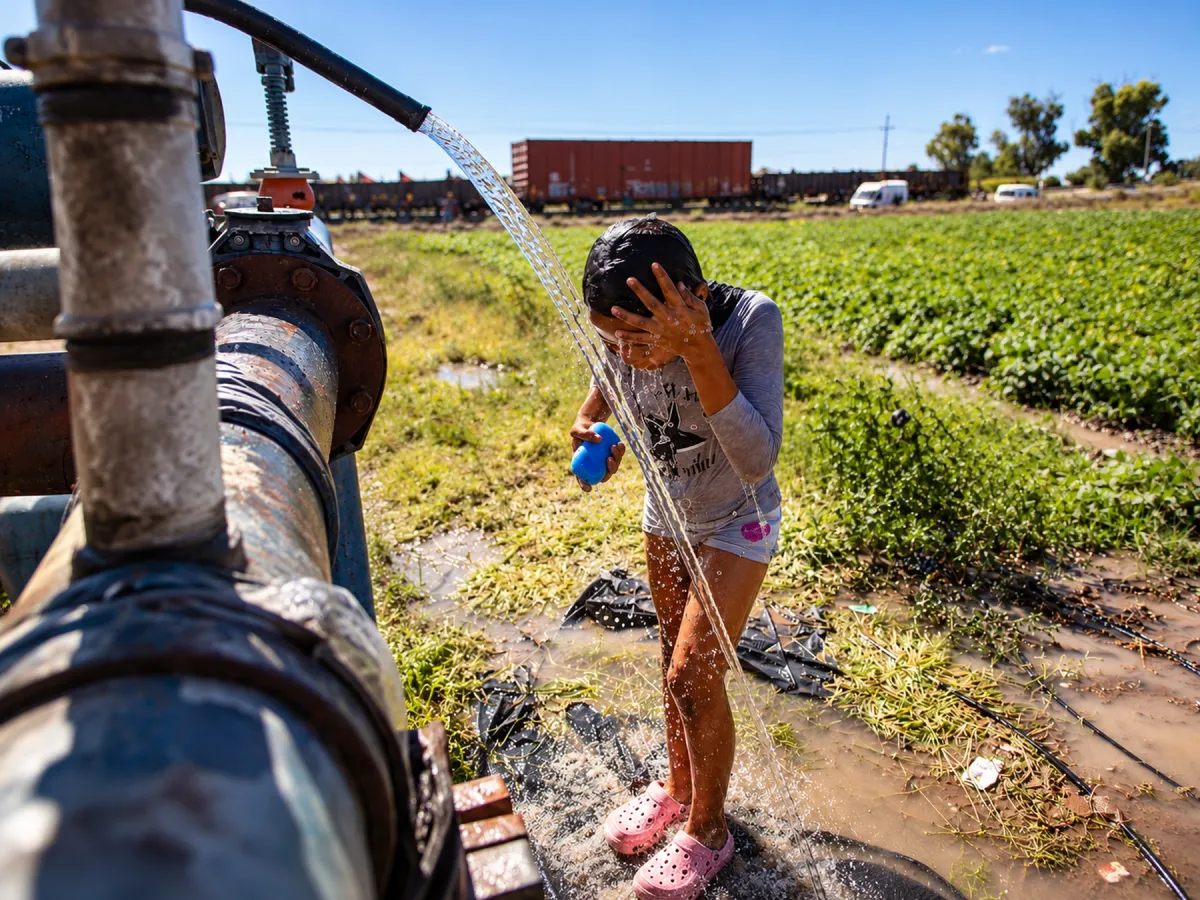

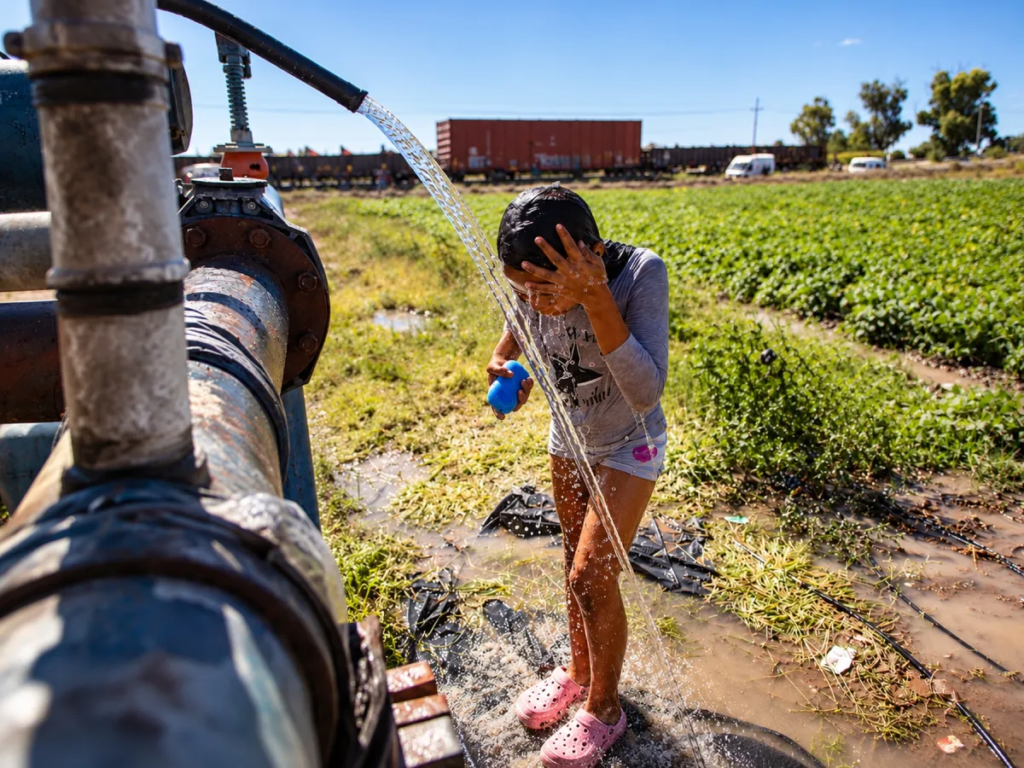
Nearly 4.3 million children and adolescents in Mexico do not have access to safe water, meaning that approximately one in nine people under the age of 18 faces this deprivation. The gap persists even though formal water service coverage exceeds 85% nationwide, a difference that shows that having access to a network does not guarantee having safe water available continuously.
The problem is not limited to having a connection to the network. The continuity and quality of the supply also determine whether children and adolescents actually have water available to drink, wash their hands, use restrooms, or attend school under adequate conditions, World Vision Mexico reported Tuesday.
According to data from ENSANUT 2022-2024 analyzed by UNICEF, only 36.5% of households in Mexico have a continuous water supply. The difference between coverage and effective availability shows the scale of a problem that particularly affects communities in the southern part of the country and peripheral urban areas.
Guerrero, Chiapas, and Oaxaca are among the states where the lack of access to safe water represents a particularly significant challenge for children and adolescents, the organization World Vision Mexico pointed out.
The organization seeks to address part of this gap by 2030. Its goal is to impact 277,500 people through drinking water, sanitation, and hygiene projects, known as WASH for their acronym in English.
“In our country, the water challenge is not only about how much water we have, but who can access it safely, sustainably, and continuously. Mexico ranks 24th worldwide in water stress, and currently nearly 4.3 million children and adolescents lack access to safe water,” said Abraham García, Director of Strategy and Innovation at World Vision Mexico.
Water Also Determines Access to School
For the organization, guaranteeing safe water during childhood has consequences that go beyond supply. The availability of this resource in schools makes it possible to maintain basic hygiene conditions, reduce health risks, and promote appropriate environments for learning.
“When a school has access to water, it does not only mean that a girl or boy can turn on a faucet. It means they can wash their hands, have better conditions for learning, prevent diseases, and grow up in a dignified environment,” García explained.
During 2026, World Vision Mexico has focused part of its efforts specifically on school infrastructure. So far, seven schools that previously did not have regular access to water have incorporated rainwater harvesting systems.
These systems make it possible to use water for activities such as handwashing and restroom operation, while also helping prevent diseases.
The problem has a regional dimension. Although Latin America and the Caribbean account for approximately 30% of the planet’s renewable freshwater, 28 million people lack access to improved sources of safe water and 83 million do not have adequate sanitation services.
Globally, progress toward meeting Sustainable Development Goal 6 — which seeks to guarantee the availability and sustainable management of water, as well as sanitation for all people by 2030 — is also not advancing at the necessary pace.
World Vision estimates that the pace of work would have to accelerate 14 times to achieve the targets related to safe water and seven times to meet the sanitation targets.
The organization states that proper implementation of water, sanitation, and hygiene services could help prevent diseases and save up to 1.4 million lives each year worldwide.
Among the main impacts associated with the lack of these services are diarrheal diseases, which are closely related to insufficient access to safe water, sanitation, and hygiene. These diseases contribute to malnutrition and are among the leading causes of death among children under five.
A Goal Based on Previous Results
The goal of reaching 277,500 people by 2030 builds on more than a decade of work by World Vision Mexico.
Between 2013 and 2025, the organization contributed to 520,478 people gaining access to safe water, while 36,296 gained access to dignified sanitation services and 68,567 implemented improved hygiene practices and facilities.
Now, the organization seeks to expand these interventions and bring together governments, businesses, civil society, and communities to develop solutions that can guarantee sustainable access to water.
The challenge, according to World Vision, is not only to increase service coverage. It is to ensure that children and adolescents can effectively have access to safe, sufficient, and continuous water as a condition for exercising other fundamental rights.
Source: politica.expansion