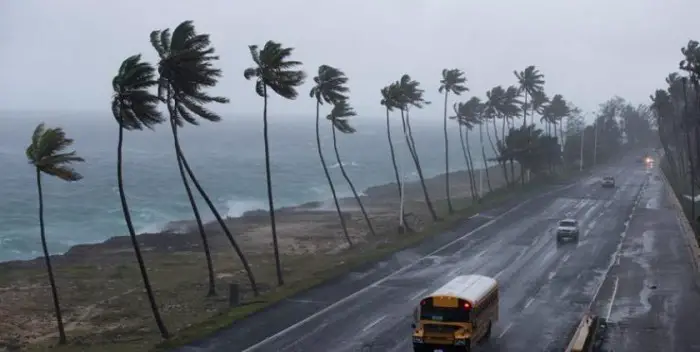

Hurricane Aletta is approaching the coast of Mexico and one of the states that will be affected is Baja California. Review all the details of this natural phenomenon and how to be prepared for its imminent arrival.
:quality(75)/cloudfront-us-east-1.images.arcpublishing.com/elcomercio/WYKYKAZLFNBEHBBWUCAESFPDH4.jpg)
Hurricane Aletta will be the first to hit Mexico, during the hurricane season in that area of the region, and is estimated to affect 11 states, including Baja California. For this reason, the National Meteorological Service (SMN) provides information on the forecast of the imminent tropical storm, as well as when it will arrive and where it will hit worst in Mexican territory.
As the cyclone season approaches in the Pacific Ocean, Mexico faces a potential threat such as Hurricane Aletta. According to weather forecasts, this natural phenomenon would generate adverse weather conditions.
It should be remembered that the last time a hurricane with that name reached Mexico was on June 5, 2018, when, according to a report from the Mexican government, it reached category 4 and for 12 hours it recorded maximum sustained winds of 220 kilometers per hour and gusts. of 270 kilometers per hour. Although, it is worth saying that in that case it was formed further away from the Mexican coast.
When does Hurricane Aletta arrive in Baja California?
The National Hurricane Center (NHC) of the United States predicts the formation of a tropical depression in the Mexican Pacific Ocean last Wednesday, May 15, which would evolve into Hurricane Aletta in the following days, affecting Baja California.
These coastal regions of the Pacific could experience heavy rains, hurricane-force winds and storm surges, so you must be alert and safeguard the safety of people and infrastructure in the area.
In its alert on May 15, the National Water Commission (Conagua) reported that an area of atmospheric instability in the Pacific Ocean has a 40% probability of evolving into Hurricane Aletta in a period of seven days and that the development The cyclone remains in this area located off the coasts of Guerrero, Oaxaca and Chiapas.
What day does Hurricane Aletta make landfall?
As the NHC mentions, between May 18 and 20, Hurricane Aletta would form. The most affected states in Mexico would be those that border the Pacific Ocean.
Thus, the hurricane season would begin in the North Pacific Basin, and it is expected to end until November 30; Meanwhile, the Atlantic Ocean area will last from June 1 to November 30, 2024.
What is the path of Hurricane Aletta?
The path of Hurricane Aletta is difficult to predict, but the SMN has issued an alert to all Pacific states, as well as any potentially affected states. Forecasts are constantly reported by both the SMN, as well as Conagua and other meteorological institutions.
This would be the path of Hurricane Aletta on the Pacific coast, mainly to the states of:
Baja California
Baja California Sur
Colima
Chiapas
Warrior
Jalisco
Michoacan
Nayarit
Oaxaca
Sinaloa
Sonora
History of Hurricane Aletta in Mexico
In 2018, Hurricane Aletta hit the Mexican Pacific as a category 4, leaving strong winds and rain in its wake. This year, the threat of a new Aletta seems to loom over the country, with the formation of a tropical storm in the Pacific Ocean with the potential to become a hurricane.
What measures to take into account when Hurricane Aletta arrives?
The corresponding authorities have offered a series of recommendations to take care of the integrity of Mexicans, which are:
Stay informed: Follow forecasts and warnings from the National Weather Service and local authorities. Pay attention to instructions and warnings.
Make a family plan: Determine a safe meeting place for your family in case you must evacuate. Defines an emergency contact outside the affected area.
Protect your home: Make sure the doors, windows and roof of your home are in good condition. Close the blinds or put up shutters. Remove loose objects from outside that could become projectiles.
Make sure you have: Cash, important documents (birth certificates, identification, insurance policies, etc.), and phone chargers.
Source: gestion.pe